I’ve sat in too many boardrooms where someone says, “We need AI.”
No clarity. No strategy. Just pressure.
Usually driven by competitors. Or headlines. Or fear.
Here’s the truth: Advanced AI solutions are not about technology. They’re about solving bottlenecks that are suffocating your business.
If your operations are manual, your decisions are slow, and your growth feels capped—AI solutions for business aren’t optional anymore.
They’re structural.
But let me ask you something uncomfortable.
Do you want AI because it sounds impressive?
Or because you want measurable transformation?
That difference decides success.
Let’s simplify this.
Basic automation follows rules. Advanced AI solutions learn from data.
Automation says: If X happens, do Y. AI says: Based on patterns, this will likely happen next.
Artificial intelligence solutions analyze historical data, detect patterns, predict outcomes, and improve continuously.
That’s the difference.
And it’s massive.
Basic tools reduce workload. Advanced AI solutions improve intelligence.
That’s why custom AI development is exploding across industries.
Why Traditional Business Models Are Failing
I’ve audited dozens of companies before starting AI implementation services.
The pattern is predictable.
Teams wasting hours on repetitive data entry. Approval chains moving at the speed of email.
Reports generated weekly. Decisions made monthly. Markets changing daily.
More hiring to fix inefficiencies. More software to manage complexity.
Here’s the painful part.
Most companies try to fix structural inefficiencies with more people.
Not smarter systems.
And that’s where AI for business transformation becomes non-negotiable.
Let’s remove the hype and focus on outcomes.
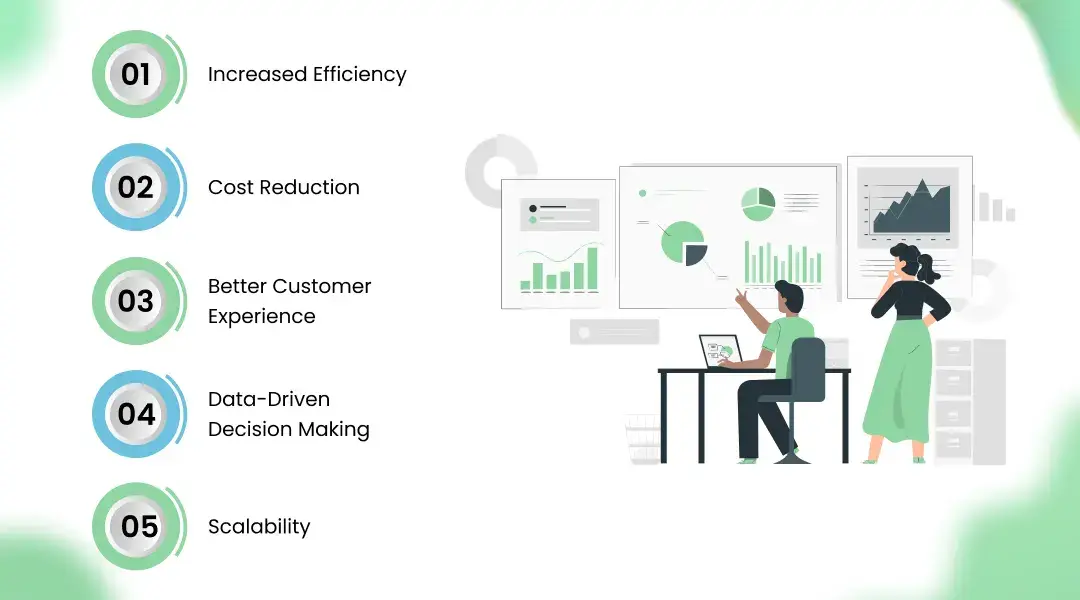
AI automation solutions reduce repetitive tasks. I’ve seen operations teams cut manual work by 40% within six months.
AI-driven decision making minimizes waste. Predictive systems optimize inventory, staffing, and pricing.
AI-powered business solutions personalize engagement at scale. Customers feel understood, not processed.
Instead of intuition. Instead of guesswork. You get insights backed by patterns.
Enterprise AI solutions grow with your data. They don’t break under expansion.
These are not theoretical benefits of AI in business.
I’ve watched CFOs shift from skepticism to advocacy after seeing numbers.
Not all AI is the same. Let’s break it down.
Process automation powered by learning models. Smart workflows. Intelligent approvals.
Predict demand. Detect fraud. Forecast sales.
Content creation. Code assistance. Document automation. Internal knowledge bots.
24/7 intelligent customer support.
Quality inspection. Surveillance analytics. Medical image analysis.
Data forecasting that guides strategy, not just reports history.
Each of these requires proper AI integration services. Otherwise, they remain disconnected tools instead of cohesive systems.
Digital transformation with AI is not about replacing your workforce.
It’s about augmenting it.
I once worked with a logistics firm drowning in spreadsheet chaos. Within nine months of implementing enterprise AI solutions, route optimization reduced fuel costs by 18%.
Eighteen percent.
No new trucks. Just smarter decisions.
That’s AI for business transformation done right.
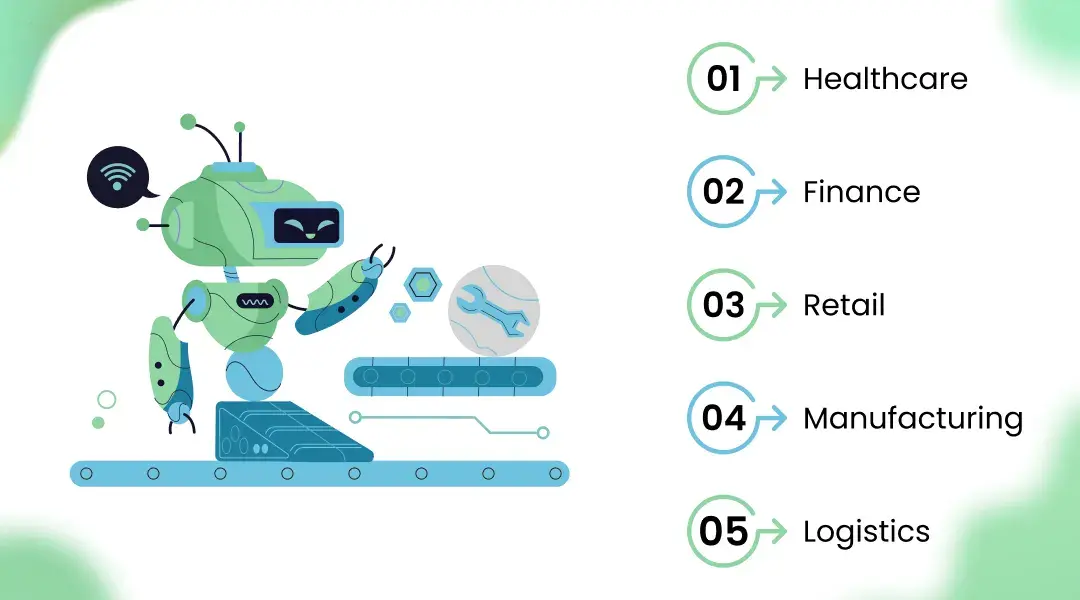
Predictive diagnostics and patient data analysis.
Fraud detection and risk modeling.
Personalized recommendations and demand forecasting.
Predictive maintenance and defect detection.
Route optimization and supply chain forecasting.
Is AI for business transformation suitable for traditional industries?
Absolutely.
The industries that hesitate the longest often benefit the most.
This is where most businesses make a costly mistake.
They choose vendors. Not partners.
An AI software development company should ask hard questions about your data maturity before proposing solutions.
If they jump straight into models without assessing infrastructure, run.
At KriraAI, we begin with strategic audits. Because advanced AI solutions fail without clarity.
You need a Best AI development Company that prioritizes alignment over speed.
And yes, I’m saying that deliberately.
Here’s the practical roadmap I use in AI consulting services.
Start with bottlenecks. Not technology.
No data. No intelligence.
Build tailored systems through custom AI development.
AI integration services connect models with existing workflows.
Continuous monitoring. Continuous refinement.
How long does AI implementation take in an enterprise?
Typically 3–9 months depending on complexity. Anyone promising two weeks is selling fantasy.
Advanced AI solutions are not magic.
They are structured systems built on data, strategy, and discipline.
If you’re overwhelmed, that’s normal.
If you’re skeptical, that’s healthy.
But if you ignore AI for business transformation entirely?
That’s risky.
I’ve seen businesses stagnate because they waited too long.
And I’ve seen competitors leap ahead because they acted strategically.
The choice is rarely dramatic.
It’s incremental.
Until it isn’t.
Costs vary based on complexity and data readiness, but most structured AI implementation services range between mid five to six figures.
Improved efficiency, reduced operational costs, enhanced customer experience, and data-backed strategic decisions.
No. SMEs benefit significantly, especially when adopting targeted AI automation solutions.
Quality matters more than volume. Structured and clean data is far more valuable than massive, unorganized data.
Because strategy, integration capability, and long-term optimization determine ROI, not just model accuracy.
Founder & CEO
Divyang Mandani is the CEO of KriraAI, driving innovative AI and IT solutions with a focus on transformative technology, ethical AI, and impactful digital strategies for businesses worldwide.