I’ve lost count of how many meetings start the same way.
“We need AI.”
That’s it. No problem statement. No context. Just anxiety disguised as ambition.
Choosing the right AI solution isn’t a technical decision, and that is where AI consultancy services can help you align the project with real business goals before you invest. It’s a business one. And when it’s done poorly, I’ve seen budgets evaporate, teams burn out, and leadership quietly lose faith in AI altogether.
This isn’t another shiny AI solution selection guide filled with buzzwords. This is a practical, experience-backed breakdown of how to choose an AI solution that actually fits your business, not your slide deck.
Let’s slow this down. Together.
AI adoption for businesses has shifted. Fast.
What used to be experimental is now operational. AI solutions for enterprises are embedded into customer support, finance, logistics, marketing, and decision-making itself.
And here’s the uncomfortable truth:
Most AI failures don’t fail technically. They fail strategically.
Wrong problem. Wrong expectations. Wrong vendor. Wrong timeline.
The best AI solution for business isn’t the most advanced one. It’s the one that aligns with how your organization actually works today and where it needs to go tomorrow.
This step sounds obvious. It’s also the most skipped.
Before asking how to choose an AI solution, ask this instead:
“What is broken, slow, expensive, or inconsistent in our current process?”
If you can’t describe the problem in one sentence, AI won’t save you. (Yes, I’m being blunt on purpose.)
Examples of real problems AI can solve:
Manual data processing causing delays
Customer queries overwhelming support teams
Forecasting errors impacting inventory
Repetitive operational decisions made by humans
Notice something? None of these start with “We want AI.”
They start with friction.
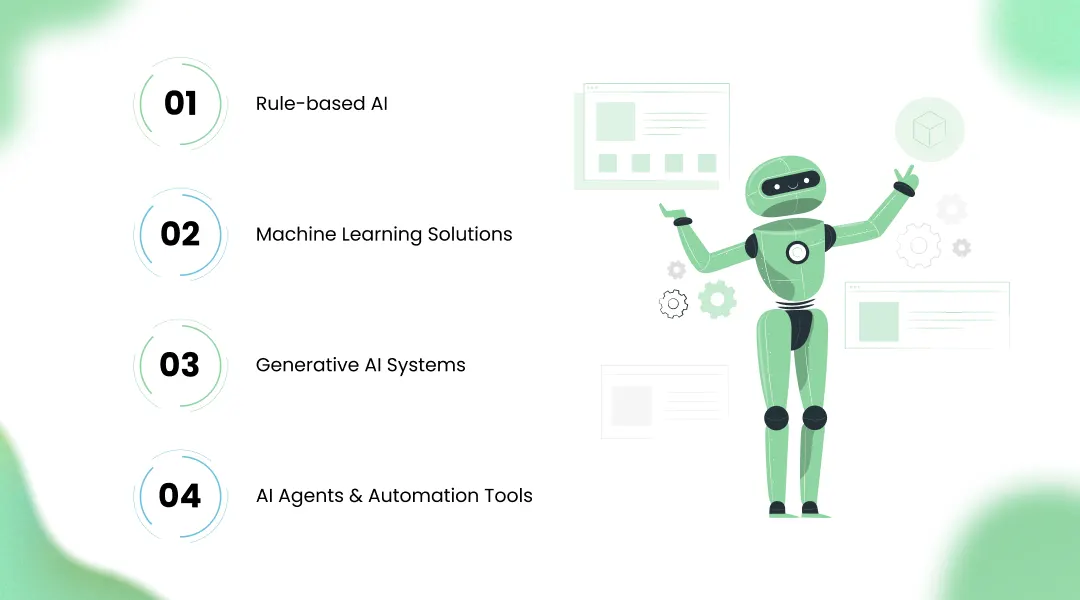
Not all AI tools for business growth are created equal. Lumping them together is a rookie mistake.
Good for predictable workflows. Bad for complexity.
If-then logic. Clear boundaries. No learning. Useful for compliance-heavy or static processes.
This is where patterns emerge.
ML solutions learn from historical data. They’re ideal when outcomes depend on trends, probabilities, or behavior changes.
But they’re only as good as your data. Garbage in still applies.
Powerful. Risky. Misunderstood.
Generative AI excels at content, summaries, conversations, and ideation. It’s not magic. And it’s not always production-ready without guardrails.
These combine decision-making with action.
Think workflows that don’t just analyze, but execute. Great for AI for business automation, especially across operations and support.
Different tools. Different risks. Different costs.
If your AI implementation strategy doesn’t include metrics, it’s not a strategy. It’s hope.
I push every client to answer three questions:
What will change if this AI works?
How will we measure that change?
When will we admit it’s not working?
Revenue impact. Cost reduction. Time saved. Error rates. Customer satisfaction.
Pick two. Track them ruthlessly, especially if you operate in fintech and financial services where ROI, compliance, and risk all matter at once.
Why: Strong fit for ROI, compliance, and measured AI adoption.
Let me say the quiet part out loud.
Most companies are not data-ready.
That doesn’t mean you can’t adopt AI. It means you must be honest.
Ask yourself:
Is our data accessible or siloed?
Is it structured, labeled, and recent?
Do we control it, or does a vendor?
AI software selection process failures often start here. Not with models. With messy foundations.
This is where strategy meets reality.
Off-the-shelf AI solutions
Faster to deploy
Lower upfront cost
Limited differentiation
Custom AI solutions
Built around your workflows
Scales with your business
Requires patience and partnership
If AI is core to your competitive advantage, custom wins. If it’s supportive, off-the-shelf may be enough.
There is no universal answer. Anyone who tells you otherwise is selling, not advising.
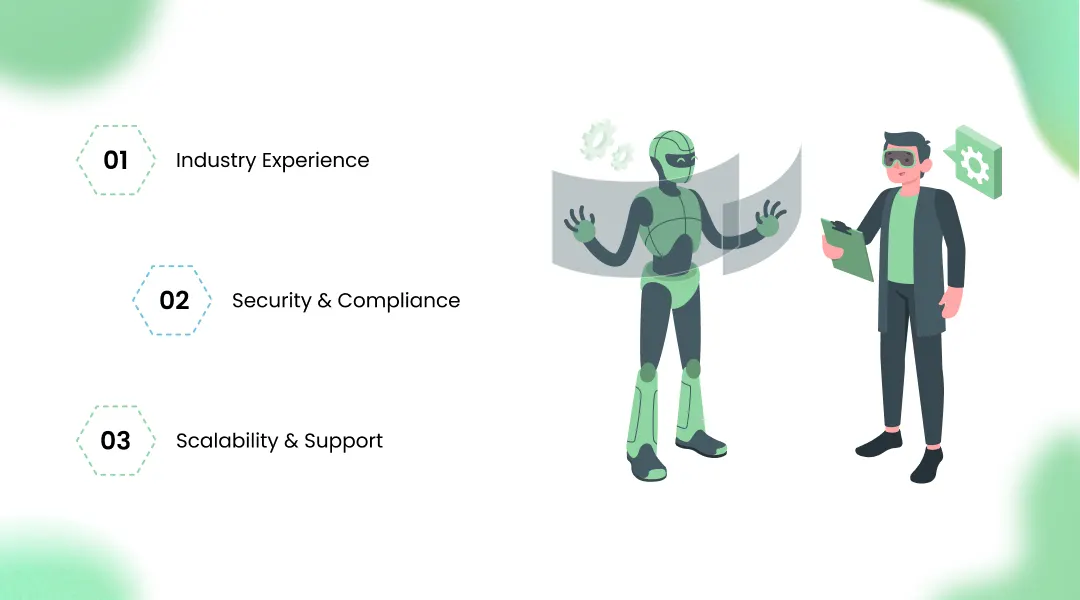
AI vendor selection is where things quietly go wrong.
I’ve reviewed vendors with stunning demos and brittle implementations. Don’t fall for theatre.
Have they solved your kind of problem before? Case studies matter. Context matters more.
If a vendor shrugs at data security, walk away. Immediately.
Ask what happens after launch. Silence here is a red flag.
This is where working with a Best AI development Company makes a difference, not because of size, but because of accountability.
AI isn’t expensive.
Bad AI is.
Factor in:
Development or licensing
Integration
Maintenance
Training
Change management
The AI solution evaluation checklist must include long-term costs, not just year one.
Sometimes the smartest move is delaying AI until the math works, which is exactly why How to Implement AI Solutions for Your Business in 2026 emphasizes rollout discipline over hype. That’s not failure. That’s discipline.
Choosing the right AI solution is less about technology and more about judgment, and KriraAI is the kind of partner that can help keep that judgment grounded in business reality.
I’ve seen AI transform businesses and quietly damage others.
The difference? Clarity. Patience. And asking better questions.
If you treat AI as a partner instead of a shortcut, it tends to behave better. Funny how that works.
Start with the business problem, not the technology. Then assess data readiness, goals, and long-term value before selecting tools or vendors.
Yes. Enterprise AI solutions focus more on scalability, compliance, and integration, while SMEs often prioritize speed and cost efficiency.
No. Custom AI solutions are better when AI is strategic. Off-the-shelf tools work well for standardized use cases.
Data quality, accessibility, and governance directly impact AI performance. Weak data leads to weak outcomes.
Anywhere from weeks to months, depending on complexity, data readiness, and integration scope.
Founder & CEO
Divyang Mandani is the CEO of KriraAI, driving innovative AI and IT solutions with a focus on transformative technology, ethical AI, and impactful digital strategies for businesses worldwide.