
Generative AI vs Traditional AI: What Businesses Need to Know
A few months ago, a CEO asked me a question during a strategy call.
“Everyone is talking about generative AI. Do we actually need it… or is it just hype?”
I paused.
Because I’ve heard that question many times.
Businesses today are flooded with AI terminology. Machine learning. Predictive analytics. Generative models. AI assistants. Automation systems.
And somewhere inside that noise sits a genuine question:
What is generative AI vs traditional AI and which one actually matters for your business?
If you’re a founder, CTO, or product leader trying to figure this out, you’re not alone. I’ve worked with companies that jumped straight into generative AI tools… only to realize later they needed traditional AI models first.
Others had the opposite problem.
They built predictive models but ignored the creative potential of generative systems.
So let’s slow down for a moment. Strip away the buzzwords. And talk about the real difference between Generative AI vs Traditional AI - the way someone building these systems sees it.
What is Traditional AI?
Traditional AI refers to systems designed to analyze data and make predictions or decisions based on patterns.
It doesn’t create new content.
It evaluates existing data and produces insights.
Think of it as analytical intelligence.
These systems answer questions like:
Will this customer churn?
Is this transaction fraudulent?
Which product should we recommend next?
That’s traditional AI doing its job.
How Traditional AI Works
Traditional AI relies on structured training data and statistical models.
You feed it historical data. The model learns patterns. Then it predicts outcomes.
Example:
If a bank trains a model using millions of past transactions, it can identify suspicious activity in real time.
Nothing magical.
Just extremely powerful pattern recognition.
Key Technologies Used in Traditional AI
Several technologies fall into this category:
Machine learning models
Decision trees
Random forest algorithms
Support vector machines
Predictive analytics engines
These technologies power many systems businesses already rely on every day.
And most companies don't even realize it.
Examples of Traditional AI in Business
Let me give you some real-world examples I’ve implemented for clients.
Recommendation Systems
E-commerce platforms analyze customer behavior to suggest products.
If you've ever seen “Customers who bought this also bought…”
That's traditional AI.
Fraud Detection Systems
Banks monitor transactions and flag unusual activity instantly.
Traditional AI models compare patterns across millions of transactions.
When something looks wrong - alert triggered.
Predictive Analytics
Retail companies forecast product demand using historical data.
This helps reduce inventory waste and improve planning.
Rule-Based Automation
Some AI systems automate repetitive decisions using predefined rules combined with machine learning insights.
Simple idea. Huge operational impact.
What is Generative AI?
Now we step into a very different category.
Generative AI refers to systems that create new content instead of just analyzing existing data.
Text. Images. Audio. Code. Even product designs.
These models learn patterns from large datasets and generate something new based on that knowledge.
That’s the core idea behind Generative AI for business.
How Generative AI Works
Generative AI systems use advanced neural networks - particularly transformer models.
They train on massive datasets and learn language structures, visual patterns, and contextual relationships.
Then they generate outputs based on prompts.
Ask it to write a product description. It writes one.
Ask it to generate an image concept. It creates it.
Ask it to help write code.
Yes. That too.
(And honestly, as someone who started as a developer… that part still feels slightly surreal.)
Popular Generative AI Technologies
Several well-known technologies belong to this category:
Large Language Models (LLMs)
Generative Adversarial Networks (GANs)
Diffusion models
AI code generation systems
These technologies power many modern AI tools businesses are experimenting with today.
Examples of Generative AI in Business
Now let’s talk about practical Generative AI applications in business.
Because theory is nice.
But implementation is what matters.
AI Content Generation
Marketing teams use generative AI to draft blog posts, product descriptions, and marketing copy.
It speeds up content workflows significantly.
AI Chatbots and Virtual Assistants
Advanced conversational agents can answer customer questions naturally.
Not scripted responses.
Actual conversations.
AI Image Generation
Companies generate product visuals, marketing graphics, and concept designs without hiring large creative teams.
AI Code Generation
Developers use generative AI tools to write code snippets, debug errors, and accelerate development cycles.
Let me ask you something.
Would your engineering team complain if routine coding tasks took half the time?
Exactly.
Generative AI vs Traditional AI: Key Differences
So what is the difference between generative AI and traditional AI in practical terms?
Let’s break it down.
Data Usage
Traditional AI uses structured datasets designed for prediction.
Generative AI trains on extremely large and diverse datasets.
Output Generation
Traditional AI predicts outcomes.
Generative AI produces new content.
Big difference.
Learning Approach
Traditional AI focuses on statistical relationships in historical data.
Generative AI models learn patterns across massive information ecosystems.
Business Capabilities
Traditional AI improves operational decisions.
Generative AI enhances creativity, productivity, and communication.
Different tools.
Different problems.
Benefits of Generative AI for Businesses
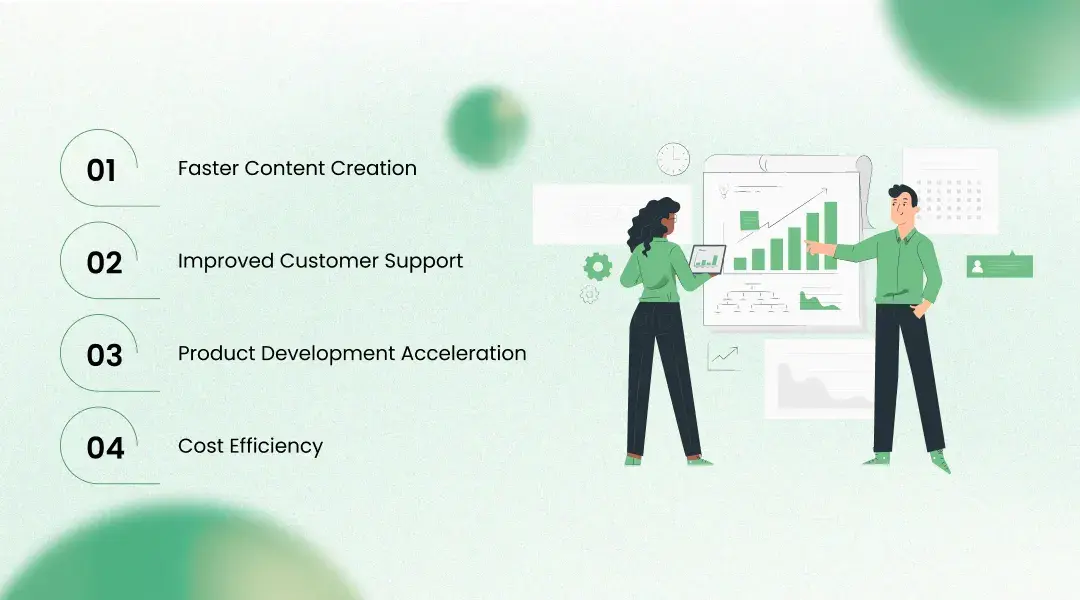
I’ve seen businesses adopt generative systems for several reasons.
Faster Content Creation
Marketing teams produce articles, product descriptions, and campaign ideas much faster.
Improved Customer Support
AI assistants respond to customer questions instantly.
This reduces support workload significantly.
Product Development Acceleration
Teams generate prototypes, documentation, and design ideas rapidly.
Cost Efficiency
Certain repetitive tasks become partially automated, reducing manual effort.
But here’s the truth many vendors won’t say.
Generative AI alone doesn’t solve everything.
Sometimes traditional AI models are still the smarter choice.
When Businesses Should Use Traditional AI
There are situations where traditional AI remains the better option.
Predictive Analysis
Forecasting demand, predicting churn, and estimating revenue growth rely heavily on predictive models.
Risk Detection
Fraud detection, anomaly detection, and cybersecurity systems still depend on traditional AI.
Operational Optimization
Supply chains, logistics systems, and manufacturing analytics rely on predictive algorithms.
In these cases, generative AI isn’t necessary.
When Businesses Should Use Generative AI
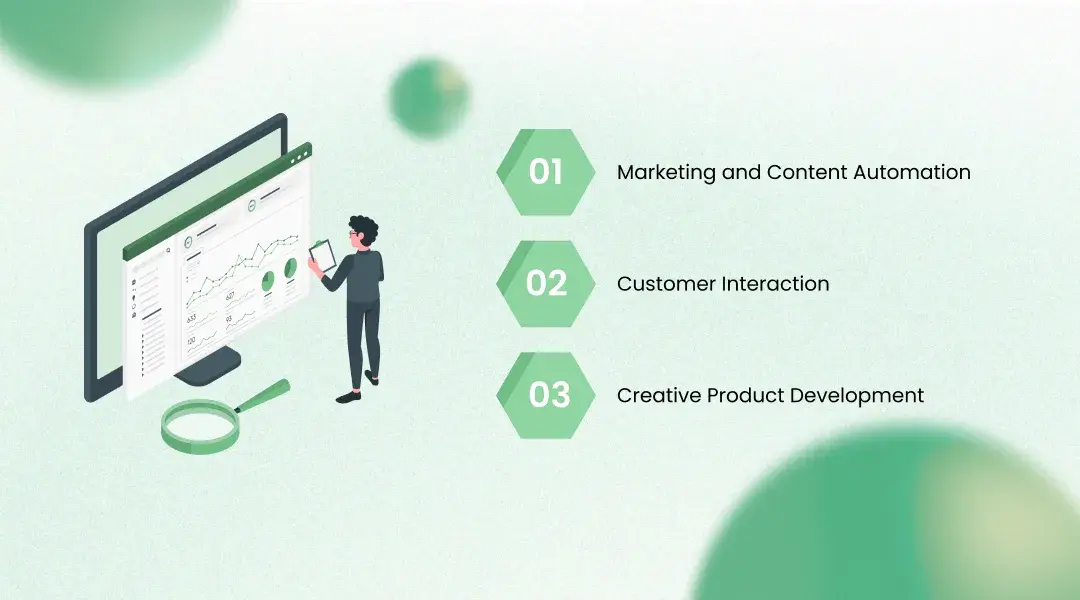
Generative systems shine in different areas.
Marketing and Content Automation
Companies producing high volumes of content benefit greatly from AI assistance.
Customer Interaction
Conversational AI agents can handle large volumes of support queries.
Creative Product Development
Design teams use generative models for concept exploration and product ideation.
If your company builds digital products, this capability can accelerate experimentation.
The Future of AI in Business
Now let's zoom out for a moment.
Because the future isn't Generative AI vs Traditional AI in business.
It's both.
Companies will combine predictive systems with generative models.
One analyzes.
The other creates.
Together they form intelligent workflows.
For example:
Predictive AI identifies customer behavior patterns.
Generative AI writes personalized marketing messages based on those insights.
That combination is where businesses see real transformation.
And this is exactly why many organizations now search for the Best AI development Company — not just tool vendors.
They need strategic partners who understand how different AI technologies work together.
At KriraAI, this is something I discuss with founders regularly.
Not just what AI can do.
But what it should do for their business.
Conclusion
Let’s simplify everything we discussed.
Traditional AI analyzes data and predicts outcomes.
Generative AI creates new content and ideas.
Both are powerful.
Both serve different purposes.
And the smartest companies don’t choose between them.
They combine them.
If you're exploring AI adoption, the real question isn't just what is generative AI vs traditional AI.
The real question is this:
Which problems in your business should AI solve first?
Once that becomes clear, the technology decisions become much easier.
FAQs
Traditional AI analyzes data to make predictions, while generative AI creates new content such as text, images, or code based on learned patterns.
Traditional AI helps businesses predict outcomes and detect patterns, while generative AI supports creative tasks such as content generation, automated conversations, and design assistance.
Generative AI is useful for companies focusing on content creation, customer interaction, and product ideation. Businesses focused on analytics and prediction may rely more on traditional AI.
Yes. Many modern AI systems combine predictive models with generative tools to improve decision-making, automation, and customer experience.
Businesses typically work with experienced partners or the Best AI development Company to design AI systems aligned with their operational goals and data infrastructure.
Founder & CEO
Divyang Mandani is the CEO of KriraAI, driving innovative AI and IT solutions with a focus on transformative technology, ethical AI, and impactful digital strategies for businesses worldwide.