Picture a Tuesday morning in 2029. You run a 14-person marketing consultancy. You walk into your office at 8:30 and open your laptop. Overnight, something handled three hours of work you used to dread.
Your weekly client performance reports are already drafted. The latest numbers have been pulled in automatically. Each report is customised to each client's preferred format. A summary of key takeaways sits at the top of every document. Your email has a short note explaining what was done. It also flags two items that need your judgement before sending.
You did not schedule this. You did not write a detailed prompt at midnight. An AI agent that understands your business did the work while you slept. It made dozens of small decisions along the way. Which metrics to highlight? Which comparison period does each client prefer? Which charts to include and which to skip. It knew how to flag the unusual data rather than guessing. Now your morning starts with review and decision-making.
This is not science fiction. This is where the future of AI agents is heading. Every signal in the technology landscape points toward this shift. Not AI that waits for you to type instructions. AI that understands your goals and takes initiative. AI that completes complex work on your behalf. The gap between today's chatbots and tomorrow's agents is enormous. One answers questions when asked. The other gets things done without being asked. Businesses adopting autonomous workflows often begin by developing custom AI agents tailored to their operational processes rather than relying on generic automation platforms.
This blog is your honest guide to what is coming. We will walk through a clear timeline. You will learn when AI agents will be ready for real use. We will look at how AI agents will change jobs. We will explore what this means for small businesses. We will address real concerns about trust and privacy. And we will give you a practical preparation framework.
Whether you run a business or lead a team, this matters. Even if you want to understand the future of work, read on. This is the trend that will shape professional life for the next decade. The future of AI agents affects everyone who works with information. It affects everyone who handles communication or coordination. That includes nearly every professional alive today.
The shift we are describing is not about a single new app or tool. It is about a fundamental change in how work gets distributed. For centuries, if you wanted something done, a person had to do it. Over the next five years, that assumption will begin to dissolve. Routine cognitive work will flow to AI agents as naturally as manufacturing work flowed to assembly lines. But unlike manufacturing automation, this shift will reach every office, every profession, and every industry. It will reach them faster than most people expect.
Most people today think of AI as a chat window. You type a question and get an answer. You paste in some text and ask for a rewrite. This is useful, but it is fundamentally limited. You are the driver. AI is the passenger offering directions. The moment you stop typing, AI stops working.
AI agents change this relationship entirely. An AI agent pursues a goal across multiple steps. It does not need instructions for each one. Think about the difference between two kinds of requests. Asking a colleague a question gets you one answer. Giving a colleague a project gets you a result. Your colleague plans the approach and gathers information. They make interim decisions and deliver a finished product. That is the leap AI agents represent.
Today's AI tools are like a fast, knowledgeable intern. They can only do exactly what you tell them. AI agents will be more like capable junior employees. They will understand the objective and figure out the steps.
The shift is straightforward to understand. Current AI systems process one request and produce one response. AI agents will process a goal and produce a series of actions. They will use software, access databases, and send communications. They will coordinate across multiple systems independently.
This distinction matters enormously for practical use. Consider two interactions that illustrate the difference. Today, you might say, "Write me a follow-up email to this client." The AI writes one email and stops. In the near future, you will give a broader instruction. "Handle follow-ups with clients who haven't responded this week." The agent will then take over entirely. It will check your CRM and identify the relevant clients. It will review each proposal and draft personalised follow-ups. Then it will present them for your approval. One instruction replaces an hour of work.
This is becoming possible because AI systems are learning to use tools. They can browse websites and fill in forms. They can read spreadsheets and interact with software. They are also developing what researchers call "planning" capabilities. This simply means breaking a large task into smaller steps. When tool use combines with planning, a passive assistant becomes something more. It begins to look like an autonomous worker.
Predictions about AI replacing work have existed for decades. What makes this moment different is a convergence of three forces. First, AI systems have crossed a reasoning threshold. They can genuinely work through multi-step problems. Second, the infrastructure for AI to use business software is being built rapidly. Third, capable AI now costs a fraction of human labour for routine tasks.
These forces together explain the trajectory. The future of AI agents is not a distant possibility. It is an approaching reality for the next two to four years. The question is not whether it will happen. The question is how quickly it reaches your industry. Companies like KriraAI are already helping businesses prepare for this specific transition. Understanding when AI agents will be ready matters for planning.
Technology predictions tend toward two extremes. They are either breathlessly optimistic or dismissively sceptical. The reality usually lies in between. It arrives later than enthusiasts expect. It arrives sooner than sceptics believe. Here is a grounded forecast of when AI agents will be ready.
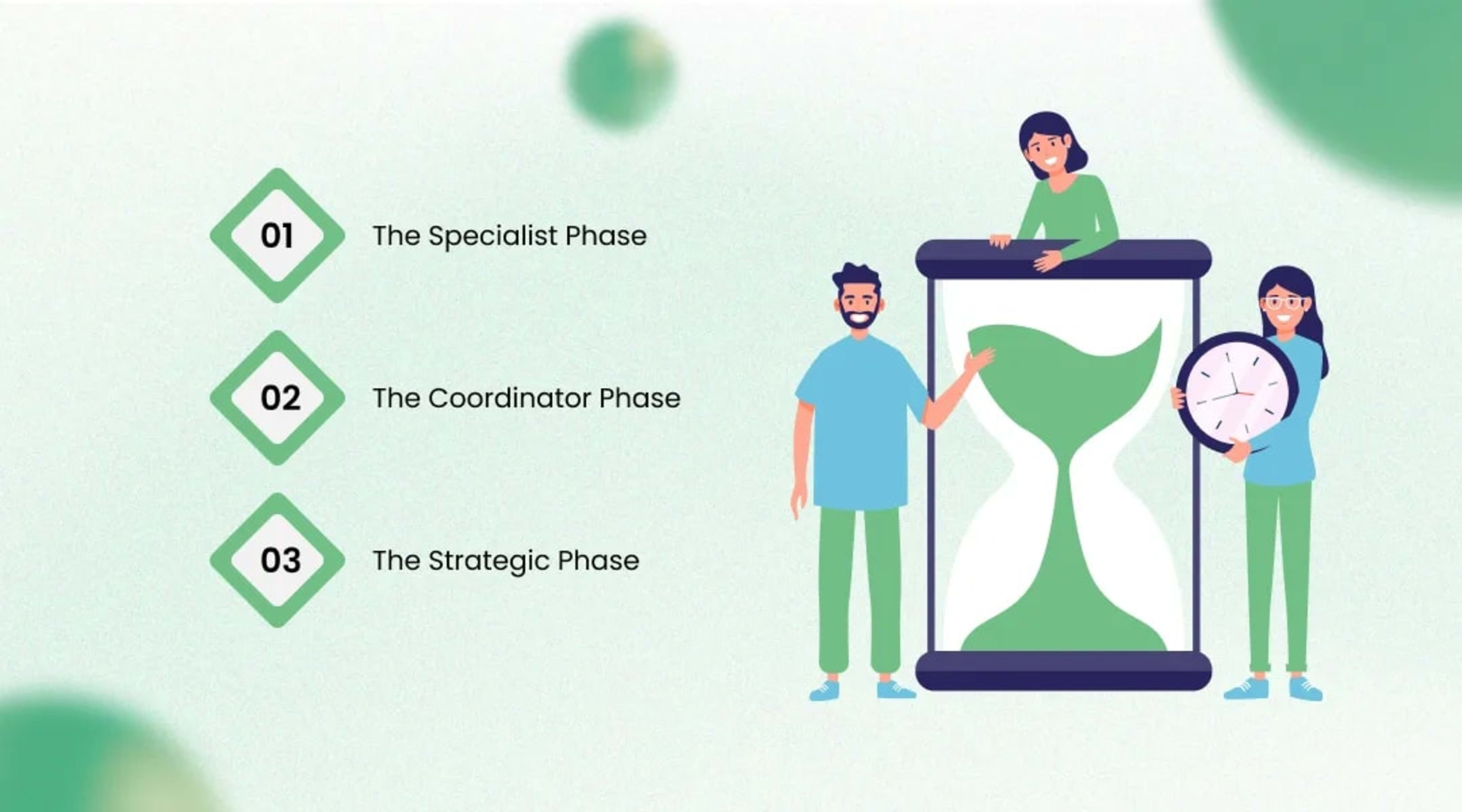
We are entering what you might call the specialist phase. AI agents are beginning to handle narrow, well-defined tasks. These are not general-purpose assistants. They are focused tools that excel at specific workflows.
During this phase, businesses will see AI agents that reliably perform tasks like these:
Scheduling meetings by coordinating across calendars, time zones, and participant preferences without human back-and-forth.
Processing invoices by reading documents, extracting key information, and flagging discrepancies for human review.
Monitoring brand mentions across social media, news sites, and review platforms, then producing daily summary reports.
Handling first-level customer support by accessing account information, resolving common issues, and escalating complex problems with full context.
Managing data entry between business systems, reducing the hours spent on manual information transfer each week.
By the end of 2027, roughly 30 percent of midsize businesses will use at least one AI agent. This will not look dramatic from the outside. It will feel like a new software subscription. It will quietly remove a chunk of tedious work. KriraAI is already helping businesses identify which workflows suit this first wave of deployment.
The second phase is where things become genuinely transformative. AI agents will move beyond single tasks. They will coordinate across multiple steps and systems. Instead of handling one piece, they will manage entire processes.
Consider an AI agent working for an accounting firm. It might handle the full monthly close for a small business client. It will gather financial data from multiple sources. It will reconcile accounts and prepare draft financial statements. It will flag unusual transactions for human review. It will generate the management report and distribute it. The accountant shifts from doing the work to reviewing it.
By 2029, AI agents will coordinate with each other. Your sales agent will check capacity with your operations agent. It will confirm a delivery date before committing. Your marketing agent will adjust campaign spending automatically. It will act on real-time performance data. This coordination is when the impact becomes impossible to ignore.
An estimated 60 percent of routine knowledge work tasks will be agent-assisted by late 2029. This does not mean 60 percent fewer jobs. It means the tedious, repetitive portions of existing jobs get automated. Professionals will focus on work requiring human judgement, relationships, and creativity.
Beyond 2030, AI agents will participate in higher-level activities. They will help with planning, analysis, and decision support. An agent might analyse market conditions, competitor actions, and internal capabilities. It will then recommend which new product to develop next. It will present its reasoning and cite its sources. It will explain its assumptions in plain language. Human leaders will evaluate the recommendation critically.
This phase will also bring deep personalisation. Your AI agent will learn your decision patterns over months. It will understand your communication style and priorities. It will become useful because it knows you specifically. Not because it is generically smart, but because it adapts.
The trajectory beyond 2030 is harder to predict with confidence. What is clear is the direction of travel. AI agents will become as fundamental to work as email is today. Every professional will work with them daily. Those who learn to collaborate effectively will have an enormous advantage. Those who resist or ignore them will find their competitive position eroding steadily.
This is not about technology replacing humanity in the workplace. It is about technology handling the mechanical parts of work. Humans will be freed to do the distinctly human parts better. The best professionals of 2032 will look back and wonder how anyone managed without AI agent support. Just as we now wonder how offices functioned before email and spreadsheets.
The question everyone asks first is the most important. Will AI agents take my job? The honest answer is nuanced. AI agents will change jobs dramatically. They will eliminate some roles. But for most professionals, the job transforms rather than disappears.
Certain categories of work will be almost entirely handled by agents. These tasks share common characteristics. They are repetitive and follow clear rules. They involve processing information from one format into another. They require consistency more than creativity.
Specific types of work that AI agents will absorb include:
Data entry and transfer between systems, which currently consumes roughly 20 percent of administrative hours across all industries.
Standard report generation from existing data, including status reports, performance summaries, and compliance documentation.
First-level screening and triage in customer service, human resources, and technical support.
Routine scheduling, calendar management, and meeting coordination require dedicated administrative support.
Basic bookkeeping tasks include transaction categorisation, invoice processing, and expense reconciliation.
The people doing this work will not all lose their jobs immediately. Many will see their roles evolve in meaningful ways. The administrative assistant's role will shift toward higher-value coordination. The bookkeeper will become more of a financial analyst. The customer service representative will handle only complex, sensitive cases. But some roles that exist primarily for routine tasks will gradually disappear. Understanding how AI agents will change jobs helps every professional plan ahead.
The transition will not happen overnight. It will happen in waves over three to five years. Some companies will move quickly. Others will wait and see. The professionals who watch these signals closely will have time to adapt. Those who ignore them will find the ground shifting beneath them more suddenly than they expected. Every professional should be evaluating which parts of their current role are most routine. Those are the parts that AI agents will handle first.
As AI agents handle the routine, distinctly human capabilities become more valuable. This is not a vague platitude. It points to specific skills that will command premium pay.
Judgement in ambiguous situations will become the most prized skill. AI agents will present options, data, and recommendations. Humans will make the final call when answers are unclear. Weighing competing priorities will define professional value. Considering stakeholder relationships will be essential. Making decisions with incomplete information will be the core of leadership.
Relationship building and trust will matter more than ever. Clients and colleagues will still prefer building trust with humans. The professional who combines AI agent efficiency with genuine human connection will be exceptionally effective. This blend of technical leverage and personal warmth is the future of high-value work.
Creative problem-solving will also rise in value. AI agents will handle problems with known solutions efficiently. Problems requiring novel thinking will still need human minds. Communication and persuasion will remain deeply human strengths. An AI agent can draft a proposal. But reading a room and adjusting your pitch remains a human capability. Building consensus through conversation is not something agents will replicate soon.
Perhaps nowhere will the impact be more profound than in small businesses. For decades, small businesses have faced a fundamental disadvantage. Large corporations afford specialised teams for every function. Marketing, finance, legal, customer service, and data analysis all get dedicated staff. A small business owner handles many of these personally. Often late at night, after the real work is done.
AI agents for small businesses will begin to erase this gap. Within three to five years, a solo entrepreneur will access agent capabilities previously requiring a full department. This is not about replacing employees. For most small businesses, it means gaining capabilities they never had.
Consider a small law practice with three attorneys. They spend hours weekly on client intake and document preparation. Billing and scheduling consume even more time. An AI agent handling these operational tasks could free 15 to 20 hours per week. That equals a half-time employee without salary or benefits. Those reclaimed hours go directly to billable client work.
The economics are striking. By 2028, a suite of AI agents for core operations will cost roughly 500 to 1500 dollars monthly. Compare that to even one part-time employee's cost. For businesses on tight margins, AI agents for small businesses represent a generational opportunity. The operational playing field is about to level dramatically.
KriraAI works with businesses of all sizes on exactly this question. The approach is not to automate everything at once. It is to find the two or three workflows with the most impact. Starting with high-impact, low-risk tasks builds confidence. It delivers returns before expanding to more complex processes.
Small business owners who learn how to prepare for AI agents now will have a significant head start. The preparation does not require technical expertise. It requires clear documentation of your business processes. It requires an honest assessment of where your time goes. And it requires a willingness to let well-designed systems handle routine work.
The psychological shift may be the hardest part. Many small business owners pride themselves on doing everything personally. They see hands-on involvement as a strength. And it is for the work that truly requires their expertise. But handling invoices at 11 pm is not a strength. It is a bottleneck. AI agents will help small business owners return to what they do best. They will spend more time on the work that made them start the business in the first place. Less time on the administrative burden that slowly consumes every entrepreneur.
The competitive implications are also worth noting. When AI agents for small businesses become widely available, early adopters will gain real advantages. They will respond to customers faster. They will produce better reporting. They will operate with lower overhead. Late adopters will find themselves competing against businesses that are simply more efficient. The window for early adoption advantage is roughly 2027 to 2029.
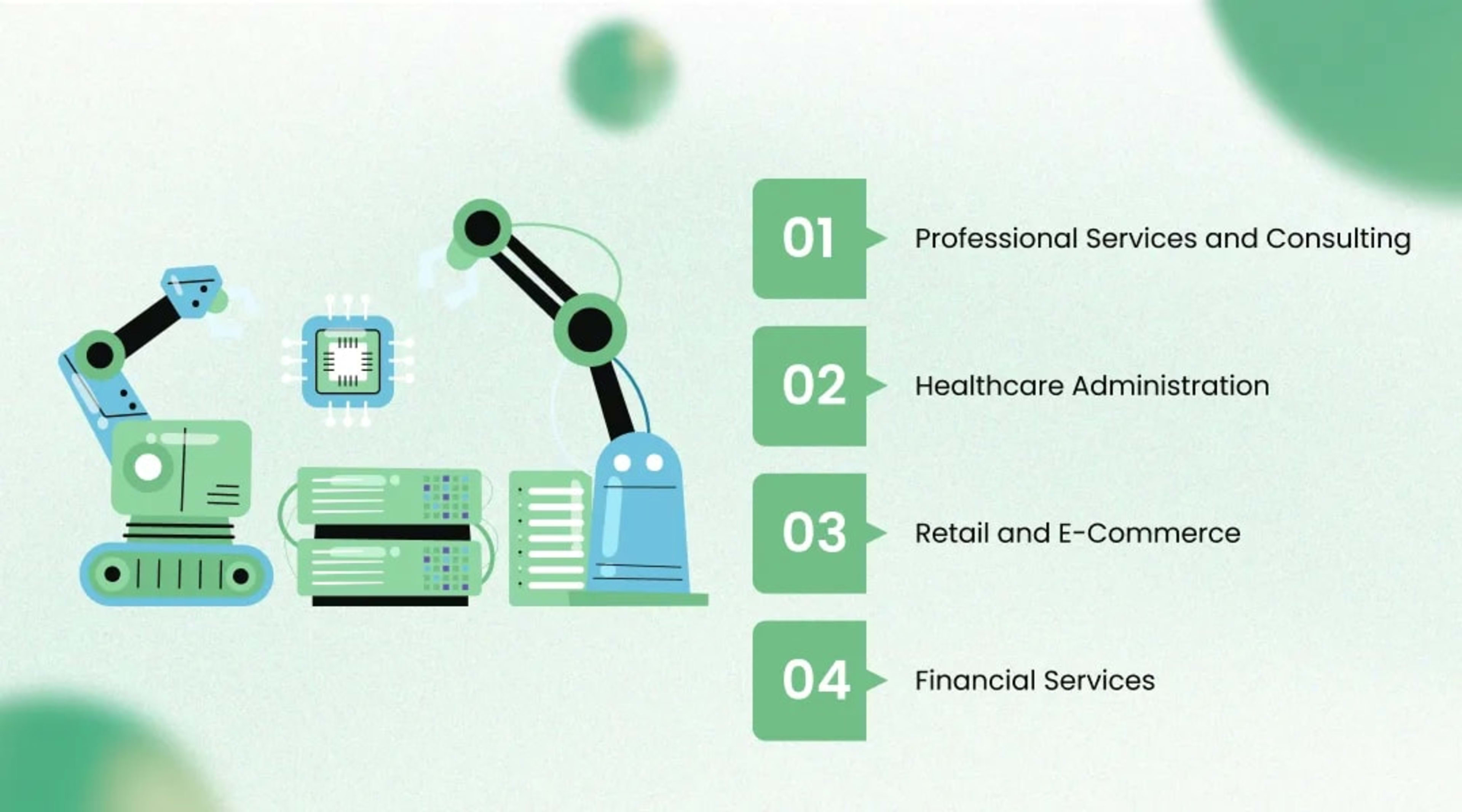
AI agents will eventually touch every industry. But some sectors will adopt them sooner. Their work involves more structured, information-heavy tasks. Understanding which industries move first helps you gauge your own timeline.
Law firms, accounting practices, and consultancies will be early adopters. These businesses are built on expertise and client relationships. But a surprising proportion of the work is routine. Document review, research compilation, and report generation follow repeatable patterns. By 2028, competitive firms will use AI agents for 40 percent of operational work.
The early adopters will gain a pricing advantage. They will deliver equal quality work at a lower cost. Or they will deliver significantly more work at the same cost. Late adopters will compete against firms with fundamentally better economics.
Clinical healthcare will adopt AI agents cautiously. That caution is appropriate for patient care. But healthcare administration is drowning in paperwork. Scheduling, insurance verification, prior authorisation, and billing consume enormous resources. AI agents will handle these administrative workflows at scale by 2027.
The impact on patient experience will be substantial. Shorter wait times and fewer billing errors will be visible results. Clinical staff will spend less time on paperwork. Within five years, AI agents will save an estimated 150 billion dollars annually in US healthcare administrative costs alone.
Online retail is already automated in warehousing and logistics. The next frontier is cognitive retail operations. Inventory forecasting, pricing decisions, and product description writing will be handled by an agent. Customer service and marketing campaign management will follow. Small e-commerce businesses will benefit the most. Modern AI for retail enables businesses to automate inventory forecasting, pricing optimization, and customer engagement at scale.
By 2029, an AI agent managing a small online store will handle inventory reordering. It will respond to customer questions and adjust pricing based on demand. It will write and schedule social media posts. It will produce weekly performance reports. The store owner's role shifts from managing operations to setting strategy.
Banking, insurance, and wealth management will deploy agents for client onboarding. Compliance monitoring, claims processing, and financial planning support will follow. The regulatory environment will slow adoption slightly. But the economic incentive is enormous. Routine compliance tasks alone consume 10 to 15 percent of operating costs.
Any honest discussion of the future of AI agents must address legitimate concerns. Not every worry is equally valid. But dismissing all concerns would be irresponsible. Thoughtful people have real questions that deserve real answers.
The biggest practical concern is trust. When an AI agent sends an email on your behalf, who is responsible? When it makes a customer decision or files a regulatory document, who is accountable? Today, the answer is unclear. By 2028, legal frameworks will begin catching up. But the transition period will be messy.
The practical solution emerging is "supervised autonomy." AI agents will operate with defined boundaries. They will handle routine decisions independently. They will escalate anything unusual or high-stakes to a human. The boundaries will widen over time as trust is established. Think of managing a new employee. You start with close supervision and extend autonomy gradually.
Businesses should be cautious about high-stakes agent authority. Starting with lower-stakes tasks is not just prudent. It is the approach that produces the best outcomes. This is central to preparing for AI agents responsibly.
There is also a cultural adjustment required. Organisations will need to develop new norms around AI agent oversight. Who reviews the agent's work? How often? What triggers an escalation? These questions feel new, but they mirror challenges organisations have always faced. Delegating to a new employee requires similar thinking. The difference is that AI agents will follow their rules perfectly every time. They will never cut corners or forget a step. But they may also miss the context that a human would catch instinctively. The balance between agent efficiency and human wisdom will define well-run organisations in the years ahead.
AI agents need access to business data to be useful. Your customer records and financial information must be accessible. Internal communications and proprietary processes must be available too. This creates real privacy and security risks. These risks deserve serious attention.
The good news is that security infrastructure is developing quickly. Businesses will define exactly what data each agent can access. Audit trails will record every action an agent takes. Encryption and access controls will protect sensitive information. But these protections only work with thoughtful implementation.
European and Asian markets will likely lead in regulatory standards. This follows the pattern set by recent data protection regulations. North American businesses should meet these higher standards proactively. Waiting for domestic regulation to catch up is a risky strategy.
The most emotionally charged concern is about jobs. Will AI agents cause widespread unemployment? History offers a pattern here. Every major productivity technology has caused short-term displacement. But long-term employment has grown each time. New categories of work emerge that nobody predicted.
That said, the pace of this transition matters enormously. If agents absorb 30 percent of routine knowledge work within five years, affected workers need time to transition. Businesses, governments, and educational institutions all have roles to play. The transition will be smoother in some industries than others.
Honest preparation requires acknowledging this disruption. Do not minimise it. Do not catastrophise about it either. The best thing any professional can do is start building complementary skills. Understanding when AI agents will be ready for your specific field helps you plan your own adaptation timeline.
Preparation does not require technical expertise or massive investment. It requires clarity about your own business. It requires honest thinking about where your time and money go. Here is a practical framework for how to prepare for AI agents. Strong AI agents rely on accurate predictions and continuous learning, making machine learning development a critical component of long-term automation success.
Spend one week tracking every repetitive task in your business. Not just the obvious ones. Look for tasks that follow the same pattern every time. Look for tasks requiring little creative judgement. Look for tasks consuming significant staff hours.
Write these down with as much detail as possible. How long does each task take? How often does it happen? What systems are involved? What decisions come up along the way? This inventory becomes your AI agent deployment roadmap. The clarity this exercise provides is valuable even before agents arrive.
AI agents work best when your business data is organised. If customer information lives in three different spreadsheets, agents will struggle. If financial data requires manual exports, agents will be limited. If processes exist only in people's heads, agents cannot follow them.
Start organising your data today. Document your processes clearly. Consolidate your systems where possible. This investment pays off immediately. Better organised data means better business decisions right now. Think of it as renovating your office before hiring a new team. The space needs to be ready for productive work.
When AI agents become available for your workflows, resist automating everything at once. Choose one well-defined, moderate-stakes task. Deploy an agent for that task alone. Monitor the results closely for 60 to 90 days. Learn what works and what needs adjustment. Then expand to the next task with confidence.
KriraAI recommends this phased approach for every business. The companies that succeed with AI agents build competence gradually. They develop an understanding of what agents do well. They learn where human oversight remains essential. They build trust through demonstrated results.
If you lead a team, helping your people understand what is coming is essential. The professionals who thrive will learn to direct and supervise autonomous systems. They will learn to collaborate with AI agents effectively. Invest in training that develops critical thinking and decision-making. Help your team evaluate AI-generated work with confidence.
Do not let your team learn about AI agents from fear-driven headlines. Create a culture where people understand the purpose. AI agents will handle the parts of their jobs they enjoy least. The goal is to move everyone toward more interesting, more impactful work.
The most common mistake with new technology is buying first and strategising second. With AI agents, this wastes money and creates frustration. Choose partners who understand your business challenges first. Then let them apply AI agent capabilities to solve real problems.
The question is never "what can AI agents do?" The right question is different entirely. "What problems does my business need solved?" Start there. Can AI agents solve those problems better than current approaches? Work with solution providers who begin with your needs. Technology for its own sake never delivers lasting value.
The future of AI agents is not a distant abstraction. It is a practical reality reshaping business operations. Professional roles and daily work will transform within three to five years. Three key insights from this exploration deserve emphasis.
First, AI agents represent a fundamental shift. They move from tools that wait for instructions to systems that pursue your goals. This changes professional work more than any technology since the Internet. The transition will happen in clear phases. It will start with specialist tasks and expand to full workflow coordination.
Second, the impact on jobs will be significant but nuanced. AI agents will absorb routine knowledge work. They will free humans to focus on judgement, relationships, and creativity. The professionals and businesses that prepare now will navigate from a position of strength. Those who wait will face a steeper climb.
Third, preparation is practical and accessible. You do not need a technical background to get ready. You need clarity about your workflows. You need organised data. You need the willingness to start small. And you need trusted partners who understand both technology and your business reality.
The next five years will be the most significant period of workplace transformation since the internet arrived. The internet changed how we communicate and access information. AI agents will change how work itself gets done. The professionals and businesses who understand this shift clearly will shape its direction. Those who ignore it will be shaped by it instead.
KriraAI helps businesses move from uncertainty about AI to confident, practical action. The focus is always on measurable outcomes for your specific challenges. Whether you run a small business or lead an enterprise, the approach is the same. The conversation starts with understanding your specific needs. Explore how KriraAI can help your business prepare for the changes ahead at kriraAI. The future favours those who prepare with clarity rather than react with haste.
For the vast majority of professionals, AI agents will change what your job involves rather than eliminate it. Roles consisting entirely of routine, repetitive information processing face the highest risk. But most jobs include significant human judgement, relationship-building, and creative problem-solving. AI agents will not replicate these capabilities soon. The professionals who adapt by focusing on distinctly human skills will find their roles becoming more valuable over time.
AI agents are already handling narrow tasks in some businesses today. By late 2027, reliable agents will be available for common workflows like scheduling, reporting, and financial processing. By 2029, agents will coordinate across multiple systems and handle full business processes. The timeline depends on your industry and workflow complexity. Professional services and e-commerce will see practical deployment sooner than heavily regulated sectors.
Current pricing trends point to clear numbers. By 2028, a suite of operational AI agents will likely cost 500 to 1500 dollars monthly for a small business. This covers scheduling, communication, bookkeeping, and reporting functions. The cost is significantly less than hiring additional staff for these roles. Most small businesses will see measurable return on investment within 90 days through reduced labour hours on routine tasks.
AI agents require data access to function, which creates legitimate security concerns. The emerging standard is supervised autonomy with defined boundaries and audit trails. Businesses should start with lower-stakes tasks and verify security credentials carefully. Maintain human oversight for sensitive financial, legal, or customer decisions. Regulatory frameworks for AI agent data handling are developing rapidly and will reach maturity within two to three years.
Start by documenting your repetitive workflows in detail. Note how long each takes and what systems are involved. Organise your business data so it is accessible and well structured. Identify two or three tasks where automation saves the most time with the least risk. Connect with experienced partners who evaluate agent solutions based on your actual needs. Choose partners who solve problems rather than sell technology.
Founder & CEO
Divyang Mandani is the CEO of KriraAI, driving innovative AI and IT solutions with a focus on transformative technology, ethical AI, and impactful digital strategies for businesses worldwide.