
I’ve sat in too many boardrooms where someone says, “We need AI,” and no one in the room can explain why.
That’s usually where things go wrong.
Deep learning isn’t magic. It’s not a plug-and-play tool you install and watch profits rise. It’s a powerful, but demanding, approach to solving complex problems. And without the right guidance, it becomes expensive experimentation.
This is exactly where deep learning consulting services step in.
Not to sell you technology. But to stop you from making costly mistakes.
Let’s simplify this.
Deep learning consulting services are about helping you figure out:
Whether deep learning is even right for your problem
What data you need (and whether you already have it)
How to design a solution that actually works in your environment
Now here’s where most people get confused…
Consulting = Strategy, planning, feasibility, architecture
Development = Building, training, deploying models
Think of consulting as the blueprint. Development is the construction.
Skip the blueprint and you’re just guessing.
Let me ask you something.
Do you actually need deep learning… or do you just think you do?
That question alone has saved my clients months of wasted effort.
Poor data quality or insufficient data
Choosing the wrong model for the problem
Overengineering simple problems
Underestimating infrastructure requirements
Lack of internal AI expertise
You’re exploring AI but unsure where to start
Your current AI project is stuck
You want to scale an existing solution
You need expert validation before investing heavily
I’ve seen startups burn through budgets chasing “AI features” that users didn’t even want.
Brutal. But common.
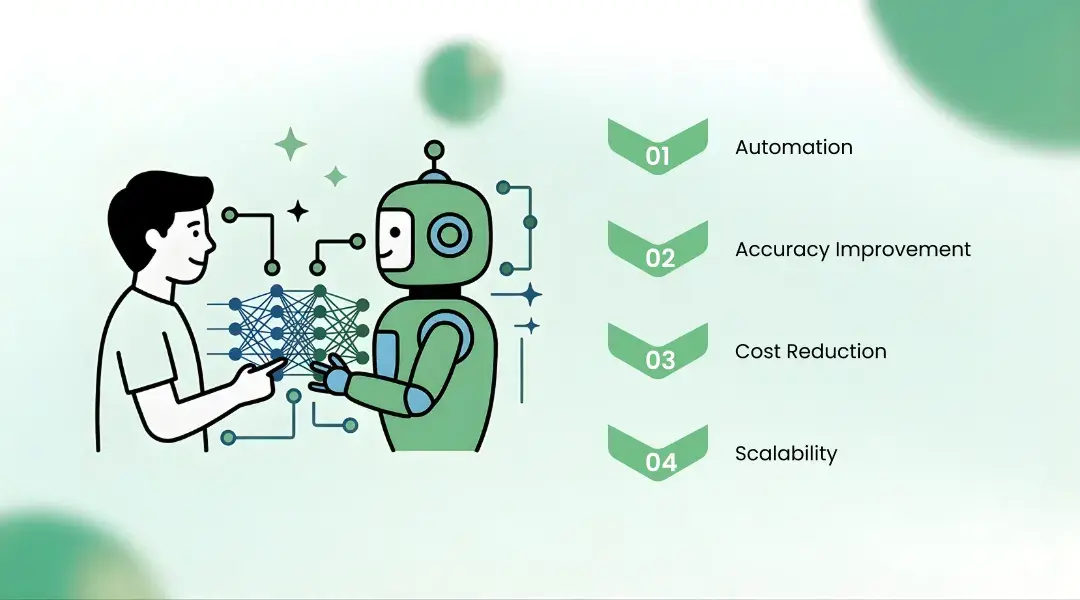
Tasks that once needed human intervention—image classification, anomaly detection, can run independently.
Deep learning models excel at pattern recognition. Especially where traditional logic fails.
Yes, AI can be expensive upfront. But when done right, it reduces long-term operational costs significantly.
Once deployed, models can handle increasing workloads without proportional cost increases.
But here’s the catch…
These benefits only show up if the problem is worth solving with deep learning in the first place.
I’ll keep this practical.
Medical imaging analysis, disease detection, patient risk prediction.
Fraud detection, credit scoring, algorithmic trading insights.
Recommendation systems, demand forecasting, visual search.
Defect detection, predictive maintenance, quality control.
AI-powered features like chatbots, personalization engines, and intelligent automation.
I’ve personally worked on a manufacturing project where defect detection accuracy jumped from 78% to 96%.
Not because of a fancy model. Because we fixed the data pipeline first.
Let’s clear this up.
Aspect | Machine Learning | Deep Learning |
Data Requirement | Moderate | Very High |
Complexity | Lower | Higher |
Feature Engineering | Manual | Automatic |
Performance | Good | Excellent (for complex tasks) |
Use Cases | Structured data | Images, speech, text |
If your data isn’t large or complex…
You probably don’t need deep learning.
(Yes, I just saved you money.)
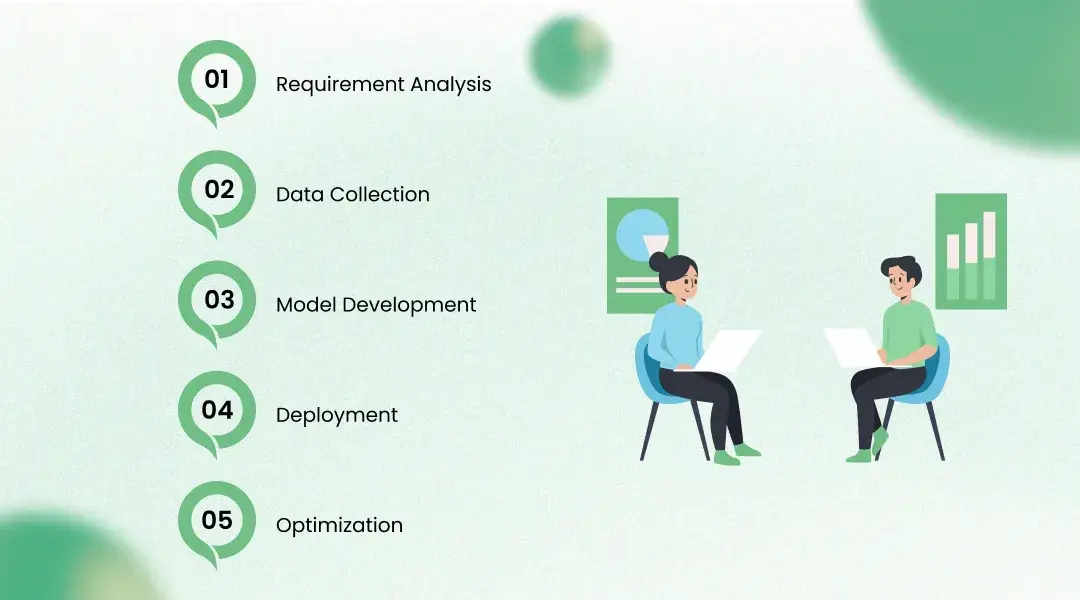
This is the part most blogs oversimplify.
Here’s how it actually works when done properly.
Understanding the business problem—not just the technical request.
Assessing availability, quality, and gaps.
Choosing architectures, training models, validating performance.
Integrating models into real-world systems.
Monitoring, retraining, improving performance over time.
Notice something?
Model development is just one step. Not the whole story.
Not all deep learning consulting firms are equal.
Some sell dreams. Others deliver systems.
Here’s how to tell the difference:
Have they worked on real-world problems - not just demos?
Look for measurable results, not vague claims.
Do they use modern, flexible tools?
Transparent. No hidden surprises.
Post-deployment support is non-negotiable.
If you’re evaluating options, working with a Best AI development Company that also offers deep learning development services ensures continuity from strategy to execution.
Let’s talk numbers. Honestly.
Data availability and quality
Problem complexity
Model requirements
Infrastructure needs
Team expertise
Deep learning consulting services in India: More cost-efficient, strong technical talent
Global providers: Higher cost, sometimes better domain specialization
A typical project can range from:
$5,000 (basic consulting)
$50,000+ (end-to-end implementation)
But here’s the truth…
Cheap consulting is expensive if it leads to the wrong direction.
We’re entering a phase where AI is no longer optional.
But deep learning will evolve in very specific ways:
More automation in decision-making
Better integration into business workflows
Increased focus on real ROI (finally)
Growth of AI-first products
The hype is fading.
What’s left is what actually works.
And that’s a good thing.
If you remember just one thing from this article, let it be this:
Deep learning is not about technology. It’s about solving the right problem - correctly.
The role of a deep learning consulting company isn’t to push AI into your business.
It’s to protect you from using it the wrong way.
And if you find the right partner, one that values clarity over complexity - you don’t just build models.
You build outcomes.
They help businesses plan, design, and validate AI solutions before development begins, ensuring the right approach is taken.
Costs vary from $5,000 to $50,000+ depending on complexity, data, and project scope.
When exploring AI, facing project challenges, or before making large AI investments.
Consulting focuses on strategy and planning, while development involves building and deploying models.
No. They are best for complex problems involving large datasets like images, audio, or unstructured data.
Founder & CEO
Divyang Mandani is the CEO of KriraAI, driving innovative AI and IT solutions with a focus on transformative technology, ethical AI, and impactful digital strategies for businesses worldwide.
