Let me guess.
You’ve heard the term computer vision thrown around in meetings. Maybe by a vendor. Maybe by your CTO. Maybe in a LinkedIn post that promised miracles and delivered… vibes.
And now you’re wondering: Is this actually useful for my business? Or just another expensive science experiment?
I’ve been on both sides of that table. As a developer who once rolled his eyes at flashy AI decks. And now, as someone who has helped businesses quietly save crores by teaching machines to see what humans miss.
So let’s slow this down. Strip the jargon. Keep the truth.
A computer vision service is a business-ready system that allows computers to understand images and videos the way humans do - but faster, cheaper, and without getting tired.
That’s it.
No mysticism.
When businesses talk about what is computer vision service, they’re really asking: “Can software look at visual data and make decisions for us?”
The answer is yes. And it already is.
From identifying damaged products on a factory line to spotting empty shelves in retail stores, computer vision services for business turn visual chaos into structured, usable insight.
Think of computer vision like this.
Your CCTV cameras are already watching everything. Your mobile phones are already taking photos. Your warehouses are already full of visual data.
Computer vision AI solutions simply teach software how to interpret what’s already visible.
Not smarter humans. Smarter systems.
(And no, it doesn’t mean replacing people. We’ll get to that.)
Here’s the non-technical flow I explain to every business leader:
Images or videos are captured (cameras, drones, phones, CCTV).
The system is trained using thousands of real examples.
Patterns are learned (defects, faces, movements, objects).
The system starts recognizing things in real time.
Actions or alerts are triggered automatically.
No math. No code.
Just an outcome.
This is the foundation behind modern AI computer vision services and visual AI solutions used across industries.
Here’s the uncomfortable truth.
Most businesses don’t have a data problem. They have a visibility problem.
Things happen on factory floors, store aisles, loading docks, and hospital rooms that never reach decision-makers.
Computer vision technology for enterprises fixes that blind spot.
Human error
Manual inspections
Delayed reporting
Missed anomalies
Inconsistent monitoring
I’ve seen companies lose millions because “nobody noticed” something obvious, in hindsight.
Machines don’t get hindsight. They get consistency.
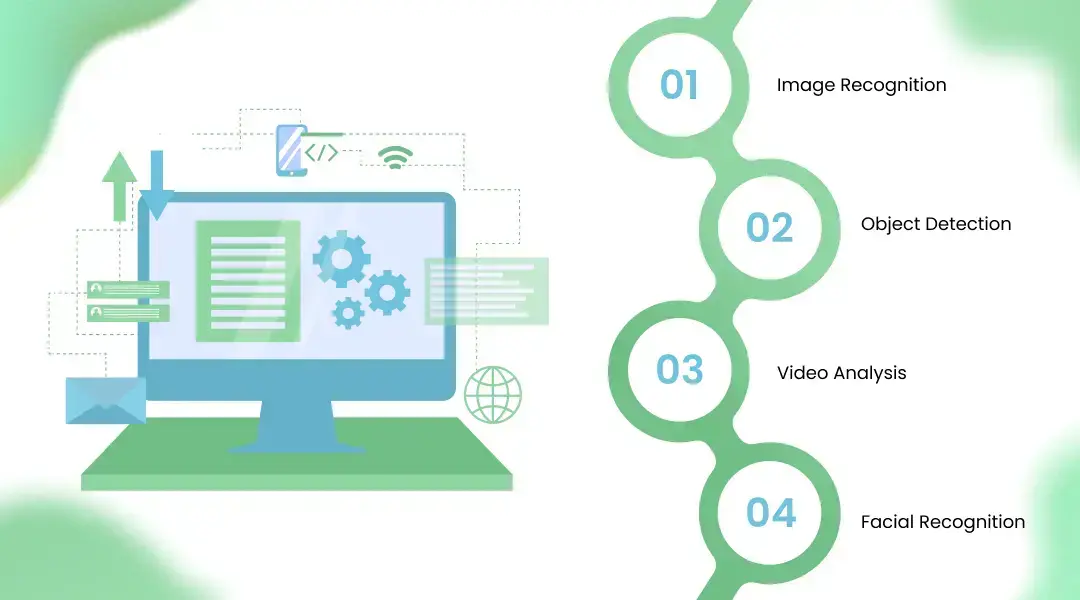
A proper computer vision service provider doesn’t sell “AI.” They deliver components that solve specific problems.
Identifying products, defects, documents, or faces using image recognition services.
Tracking movement, behavior, and events through video analytics services.
Locating and classifying objects in real time (people, vehicles, items).
Used carefully, for access control or verification, not surveillance theatrics.
(Yes, ethics matter. We design for consent and compliance.)
Empty shelf detection
Customer movement analysis
Theft prevention
Defect detection
Quality checks
Safety compliance
Medical image analysis
Patient monitoring
Equipment usage tracking
Package counting
Damage detection
Inventory accuracy
Intrusion detection
Restricted zone monitoring
These are real computer vision applications in business—not demos.
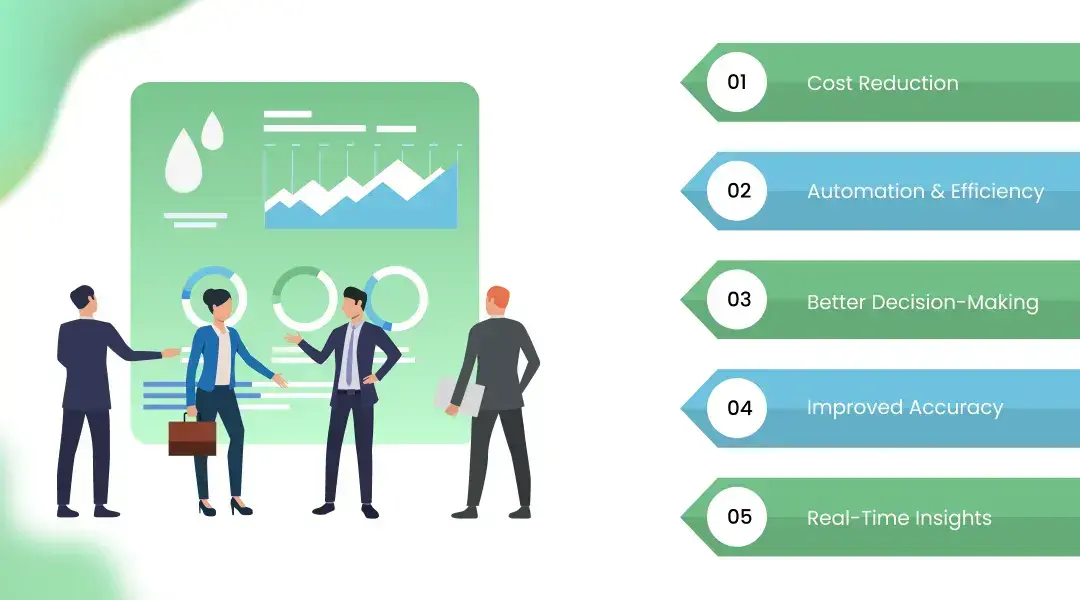
Less manual inspection. Fewer errors.
Systems don’t sleep. Or complain.
Visual data becomes measurable data.
Machines don’t get distracted.
Problems are caught when they happen, not weeks later.
That’s the quiet advantage of computer vision automation.
Manual checks
Sample-based inspections
Delayed reports
Continuous monitoring
100% coverage
Instant alerts
Once businesses switch, they don’t go back. I’ve never seen it happen.
This is where most businesses get burned.
Industry experience
Custom model development
Ethical data practices
Deployment support
At KriraAI, our Computer Vision Services are built around your workflows—not generic models.
Have you solved this problem before?
How do you handle data privacy?
What happens after deployment?
If they dodge these questions, walk away.
There’s no fixed price. And anyone who gives one upfront is guessing.
Use case complexity
Data availability
Camera infrastructure
Integration needs
For some businesses, it’s cheaper than hiring two inspectors. For others, it’s a strategic investment.
If you’re exploring broader automation, teams often pair vision systems with AI Chatbots, collaborate with an AI Voice Agents Company, or even Hire AI Developer teams for internal scaling. It’s an ecosystem.
Conclusion
Computer vision isn’t magic.
It’s not hype.
It’s simply the ability to stop guessing and start seeing.
If your business depends on physical operations, visual accuracy, or real-world monitoring, ignoring computer vision AI service options isn’t cautious.
It’s risky.
And when you’re ready, talk to a computer vision company that treats you like a partner—not a pitch.
No. Many computer vision solutions for businesses are designed specifically for mid-sized and growing companies.
Often no. Most systems work with existing infrastructure.
It depends on scope. Many projects pay for themselves within months.
Anywhere from a few weeks to a few months, based on complexity.
It should be. Choose providers who design privacy-first systems.
Founder & CEO
Divyang Mandani is the CEO of KriraAI, driving innovative AI and IT solutions with a focus on transformative technology, ethical AI, and impactful digital strategies for businesses worldwide.