Let’s start with the obvious: customer calls are messy. Long queues, inconsistent answers, agents under pressure. I’ve watched entire support teams drown in repeat queries while complex cases languish.
That’s where AI voice agents step in, not as another shiny gadget, but as a calm layer of intelligence between chaos and clarity.
Voice AI isn’t a vague promise anymore. It’s real software answering real calls right now, smoothing customer journeys and helping humans focus on complex issues instead of rote scripts.
Companies are adopting AI voice agents for customer service because customers won’t tolerate clumsy IVR menus or endless holds. They want quick, clear answers on the phone, in apps, across every touchpoint.
Support leaders are under pressure to do more with less. Hiring more staff rarely solves the surge of seasonal calls or late-night tickets. That’s why AI call automation has become a serious contender.
Automation scales without compromising empathy (if done well). It also generates data to reveal what customers really need.
The magic is mostly math.
Modern conversational AI voice agents rely on NLP to decode spoken words, detect sentiment, and craft relevant replies.
From checking delivery status to resetting passwords, AI can triage and resolve thousands of repetitive issues faster than human teams.
No coffee breaks. No timezone headaches. A well-trained AI voice bot for support can scale to thousands of simultaneous calls while keeping quality steady.
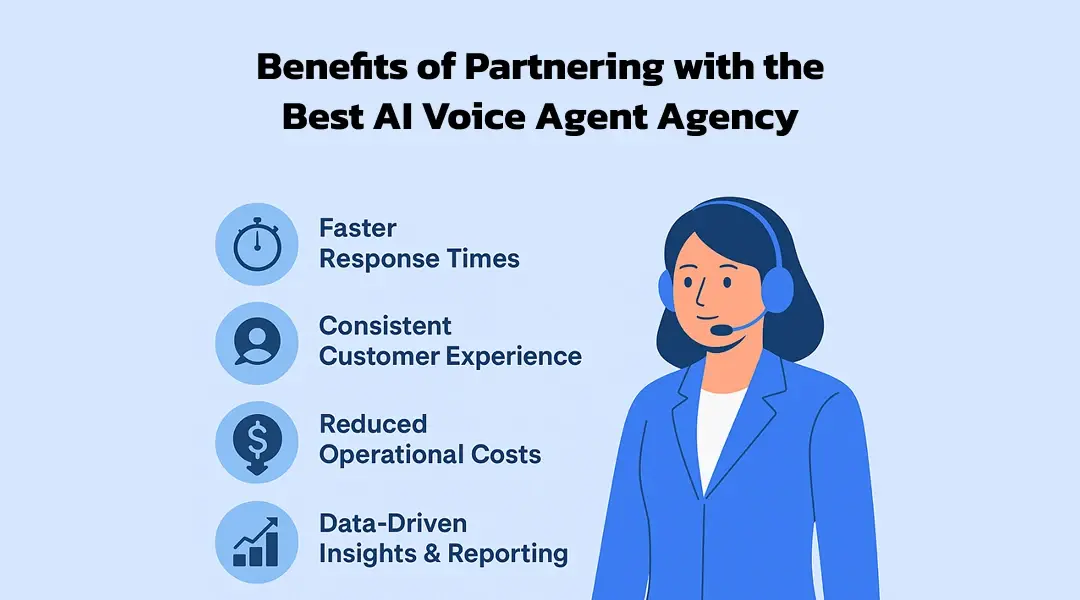
Here’s why businesses from scrappy startups to global banks are paying attention.
No one likes waiting on hold. AI-powered call centers keep queues short and satisfaction high.
AI doesn’t forget scripts or drift in tone. It delivers steady service, every single time.
Shifting routine work to AI call handling software saves headcount without hurting quality.
Every interaction becomes structured data. That’s gold for CX teams looking to refine policies or train staff.
Not all agencies deserve your trust. When you evaluate vendors, watch for:
Omnichannel support: Calls, chat, social everything should connect.
Integration with CRM/Helpdesk tools: Smooth sync with systems you already use.
Customizable conversational flows: Tailored scripts fit your brand voice.
Security & compliance standards: Especially vital for banking, healthcare, or insurance.
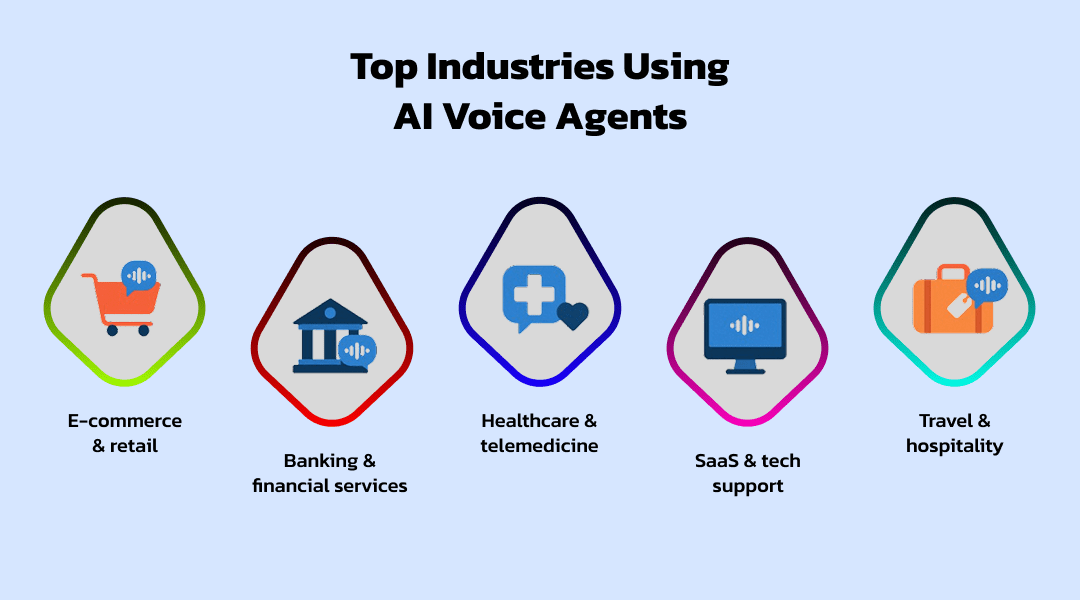
I’ve built systems for very different worlds. Here’s where they thrive:
E-commerce & retail: Order status, returns, product info.
Banking & financial services: Balance inquiries, card blocking, loan updates.
Healthcare & telemedicine: Deploying AI voice agents in healthcare streamlines appointment scheduling, patient reminders, and symptom triage.
Travel & hospitality: Bookings, flight changes, loyalty programs.
SaaS & tech support: Account management, bug reports, onboarding guidance.
The big win isn’t just speed; it’s quality.
A good agent remembers preferences and adapts tone. That’s how you enhance customer experience with AI.
Customers don’t wait. Problems don’t pile up.
Voice AI can even remind customers of renewals or upcoming offers without sounding robotic.
A quick warning: don’t get dazzled by glossy decks or promises of “instant ROI.”
Look for proven work, real integrations, and clear post-launch support. Check if they also provide AI Chatbots or let you hire AI developers for bespoke flows.
Agencies like KriraAI (yes, we’re proud of what we build) stand out by pairing technical depth with empathy for frontline teams.
Customer calls don’t have to be a burden. With the right partner, AI contact center solutions can turn them into a strategic advantage.
If you’re exploring the best AI voice agent solutions, start with a pilot, see how it fits your processes, then scale with confidence.
They handle repetitive tasks, leaving human agents free for complex conversations—speeding up resolutions.
Yes, provided the provider follows strict compliance standards (GDPR, HIPAA, PCI DSS, etc.).
Most quality vendors offer direct integrations or APIs for CRMs, ticketing tools, and analytics platforms.
A basic system can be live in 2–8 weeks; larger deployments may take 3–6 months, depending on complexity.
Chatbots rely on text; voice agents understand speech, tone, and intent—designed for hands-free support.
Founder & CEO
Divyang Mandani is the CEO of KriraAI, driving innovative AI and IT solutions with a focus on transformative technology, ethical AI, and impactful digital strategies for businesses worldwide.