Let me guess.
You’ve heard “AI agents” thrown around in meetings, LinkedIn posts, maybe even by your competitors. Everyone sounds confident. Nobody explains it properly.
I’ve sat in those rooms. I’ve built these systems. And I can tell you this most of the noise? It’s recycled hype.
So let’s cut through it.
This isn’t theory. This is what AI agents actually are, how they work inside real businesses, and why enterprise teams are quietly reorganizing around them in 2026.
AI agents are software systems that can independently perform tasks, make decisions, and improve over time without constant human input.
Not scripts. Not bots. Not static automation.
They think. Act. Adjust.
Autonomy: They don’t wait for step-by-step instructions
Learning: They improve from data and interactions
Decision-making: They choose actions based on context
Here’s the real shift: instead of telling software how to do something, you tell it what outcome you want.
Big difference.
At their core, AI agents follow a loop:
Input → Processing → Action → Feedback → Improvement
They:
Receive data (customer query, system signal, user behavior)
Process it using AI models
Take action (reply, trigger workflow, update systems)
Learn from the result
And yes they integrate with your existing stack. CRMs, APIs, internal tools.
That’s where most implementations fail, by the way. Not because of AI—but because of messy systems. (I’ve seen it too many times.)
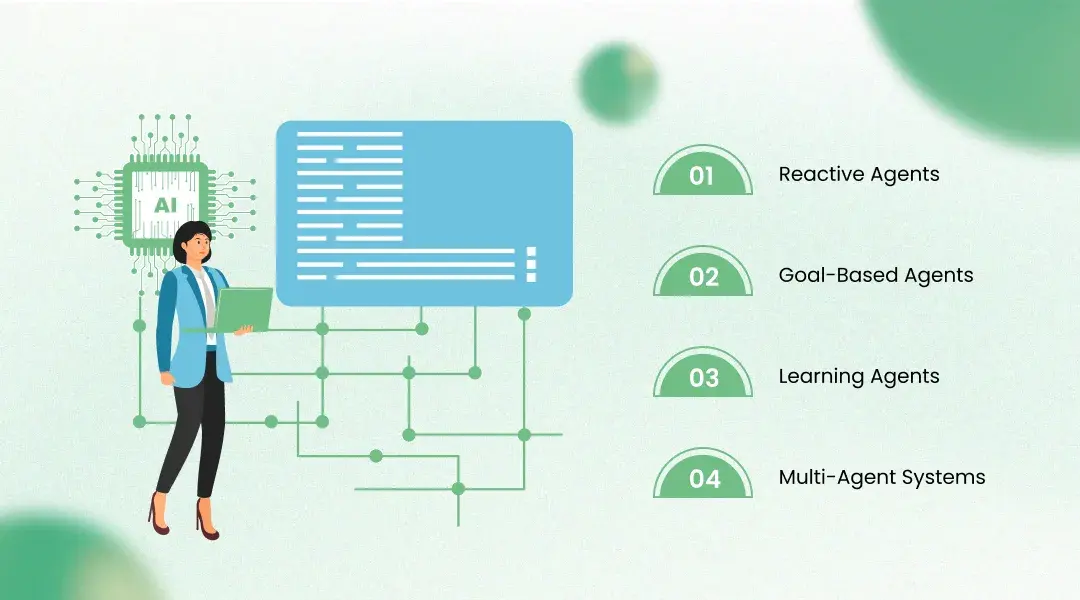
Not all AI agents are equal. Let’s break it down.
They respond to immediate inputs. No memory. Fast, but limited.
They work toward defined objectives. Smarter. More strategic.
They improve over time using data. This is where things get interesting.
Multiple agents working together. Coordinating tasks. Sharing information.
This is what enterprise AI agents 2026 really looks like—systems, not tools.
Let’s clear this up.
Feature | Traditional Automation | Chatbots | AI Agents |
Flexibility | Low | Medium | High |
Learning | No | Limited | Yes |
Decision-making | Rule-based | Scripted | Contextual |
Autonomy | None | Partial | Full |
Here’s the uncomfortable truth:
Most “AI chatbots” businesses use today? They’re just decision trees with better marketing.
AI agents are different. They adapt. They evolve.
That’s why companies are switching.
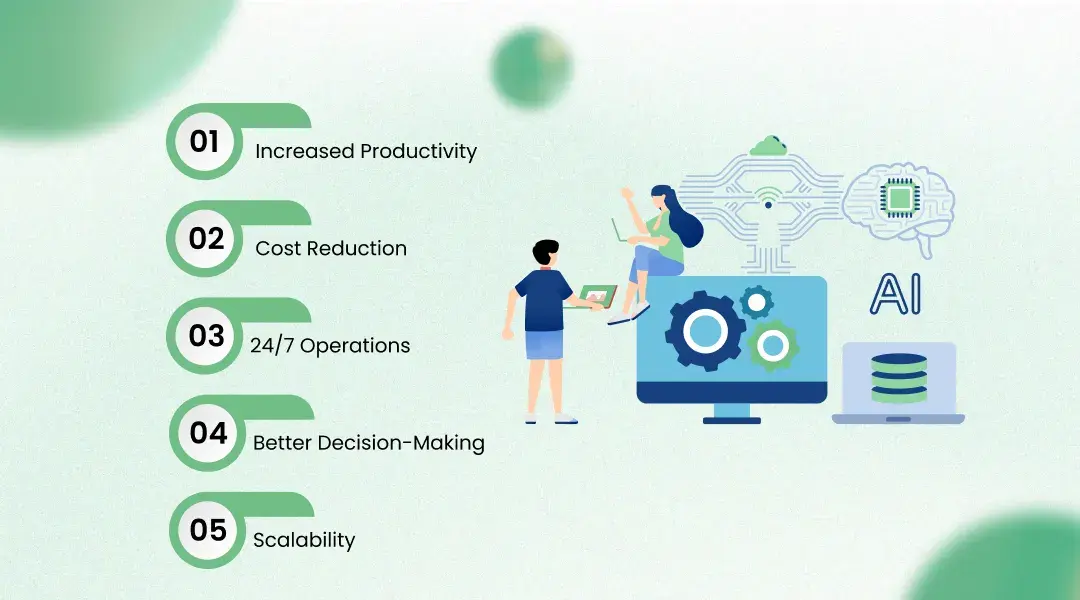
Let’s talk outcomes. Real ones.
Teams stop doing repetitive work. Agents handle it.
This is where AI to Save Time and Cut Costs becomes real—not a slogan.
I’ve personally seen companies reduce support costs by 30–40%.
No breaks. No burnout. No delays.
AI agents analyze data faster than teams ever could.
Your system grows without hiring chaos.
And when businesses invest in an Enterprise AI Assistant, this is exactly what they’re aiming for.
Let’s get practical.
AI agents resolve queries, escalate when needed, and learn from interactions.
They identify high-intent leads. Filter noise. Prioritize outreach.
Resume screening. Interview scheduling. Candidate engagement.
Real-time monitoring. Pattern detection. Risk alerts.
Automated troubleshooting. System monitoring. Incident response.
And yes this is where Enterprise AI Assistant Development becomes critical. Because off-the-shelf rarely fits enterprise reality.
Fraud detection. Risk modeling. Customer interaction.
Patient data handling. Appointment automation. Diagnostics support.
Personalization. Inventory management. Customer experience.
User onboarding. Support automation. Growth insights.
Different industries. Same principle.
Automate thinking, not just tasks.
Let’s not pretend it’s perfect.
Sensitive data needs protection. Always.
Legacy systems don’t play nicely.
Yes, there’s investment upfront.
Quick question.
Would you rather pay once to fix a system or keep paying forever for inefficiency?
Here’s how I guide clients at KriraAI.
Start where inefficiency is obvious.
Bad data = bad AI. Simple.
Single agent or multi-agent system?
This is where a tailored Enterprise AI Assistant makes a difference.
CRMs, APIs, workflows.
Launch small. Scale fast.
Best practice?
Don’t try to automate everything at once. That’s how projects fail.
Here’s where things get interesting.
Rise of multi-agent ecosystems
Autonomous decision systems
Deeper enterprise integration
AI agents will become default infrastructure—not optional tools.
Businesses won’t compete on whether they use AI agents.
They’ll compete on how well they implement them.
Let me be blunt.
AI agents aren’t magic. They’re not here to replace your team.
They’re here to remove friction.
And the companies that understand this early? They move faster. Operate smarter. Scale cleaner.
I’ve seen it happen.
The real question is are you building systems for today…
Or for what your business will need tomorrow?
AI agents are intelligent systems that can perform tasks, make decisions, and improve over time without constant human guidance. Unlike traditional automation, they adapt based on context and data.
They follow a continuous loop of input, processing, action, and learning. They integrate with enterprise tools like CRMs and APIs to automate workflows and decision-making processes.
Chatbots typically follow predefined scripts, while AI agents can learn, adapt, and make independent decisions. AI agents offer far greater flexibility and long-term value.
Yes especially for enterprises dealing with scale, complexity, and repetitive processes. They reduce costs, improve efficiency, and enable smarter operations.
Costs vary depending on complexity, integrations, and customization. A basic system may start affordable, but enterprise-grade solutions require strategic investment for long-term ROI.
Founder & CEO
Divyang Mandani is the CEO of KriraAI, driving innovative AI and IT solutions with a focus on transformative technology, ethical AI, and impactful digital strategies for businesses worldwide.
