Textile and Printing
Print alignment monitoring, fabric defect detection, border and lace QC.
Give your robots and production lines the power to see, decide and act. KriraAI is a Surat-based AI development company that builds vision guided robotics software, machine vision systems and AI-powered visual inspection for manufacturers in India and worldwide. Backed by an in-house AI research team, we help factories pick, place, inspect and verify with higher accuracy, faster cycle times and fewer defects.

Vision guided robotics (VGR) is an automation technology where an industrial robot uses cameras and image-processing software to locate, identify and handle parts. Instead of following a fixed, pre-programmed path, a vision guided robot "sees" each object, calculates its exact position and orientation, and adjusts its movement in real time.
A typical robot vision system has three parts: a 2D or 3D camera that captures the image, machine vision software (often AI-based) that analyses it, and a robot guidance system that sends precise coordinates to the robot controller. The result is flexible automation that handles randomly placed parts, mixed products and changing production lines without costly fixtures.
Print alignment monitoring, fabric defect detection, border and lace QC.
Part loading, weld seam inspection, assembly verification.
Label, cap and blister inspection, vial handling.
Sorting, case packing, seal and print inspection.
PCB inspection, component placement, connector checks.
Parcel picking, depalletizing, sorting.
AI photo verification of field installations, such as solar panels.
Our computer vision models are built and trained with PyTorch, TensorFlow and Hugging Face, and deployed on NVIDIA GPUs, edge devices or cloud platforms (AWS, Google Cloud, Azure) using Docker and Kubernetes. We work with 2D area-scan and line-scan cameras, 3D cameras and smart cameras, and connect the vision output to your robots, PLCs and MES through APIs, so the system fits into your existing automation.
5+ years of AI and software delivery
100+ enterprise and startup projects delivered
In-house AI research team working on computer vision, LLMs and agentic AI
Trusted by Bajaj Allianz, the Indian Navy, Mittsure, Kriam Pharma and PM KUSUM solar verification
Global clients across India, the USA and other markets
Production-ready systems, not demos: testing on your real data before go-live, then monitoring and retraining after launch
Head office in Surat, Gujarat: C2-1310, Pragati IT Park, Mota Varachha, Surat 394101
As an AI and automation company in Gujarat serving clients across India, KriraAI focuses on vision systems that pay back in measurable savings, not just impressive demos.
From textile printing QC that saves ₹2.9 Cr a year to solar installation photo verification that runs in under 40 seconds, see how our vision systems perform in production.
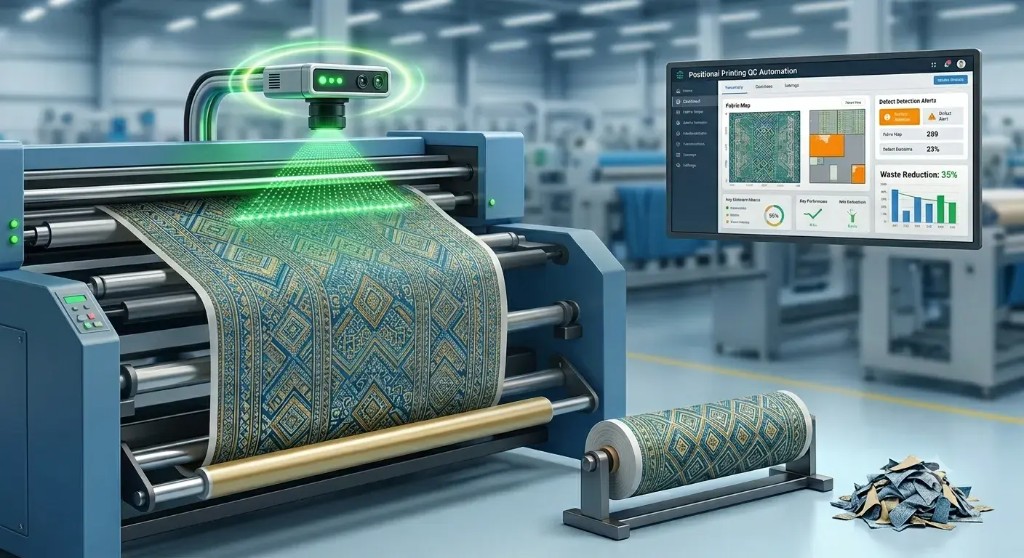
How screen-level visual monitoring replaced 18 QC operators per day watching for misalignment across jacquard, saree border, and lace printing lines.
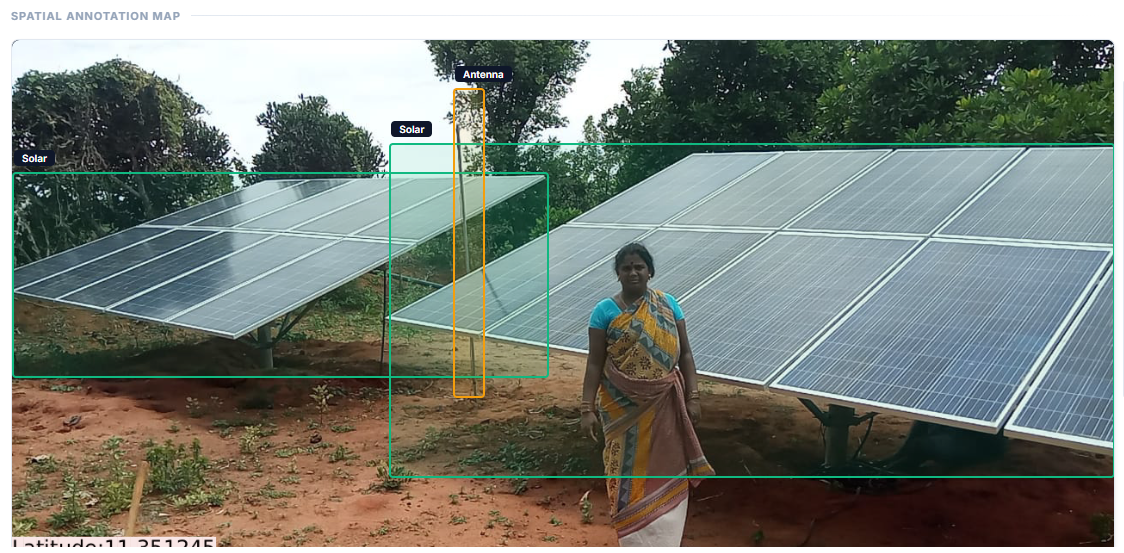
Replacing manual field photo audits with AI that detects pixel-level fraud no human reviewer can see.
Tell us about your parts, process and production targets. KriraAI's engineers will assess feasibility, recommend the right robot vision system and share a clear, scope-based quote with an ROI estimate. Call +91 98795 76875 or email [email protected].





Vision guided robotics is automation where a robot uses cameras and machine vision software to find, identify and handle parts. The vision system calculates each part's position in real time, so the robot can work with randomly placed or varied objects instead of fixed positions.
Machine vision is the camera and software that inspects or measures parts. Robot vision uses that same technology to guide a robot's movement. In short, machine vision "checks" while robot vision "checks and directs" the robot to act.
The cost depends on the camera type (2D or 3D), number of inspection points, cycle time and integration scope. A simple 2D inspection upgrade costs far less than a full 3D bin picking cell. KriraAI provides a transparent, scope-based quote and ROI estimate after understanding your requirements, so you pay only for what your line needs.
Yes. Most modern industrial robots and cobots from ABB, FANUC, KUKA, Yaskawa and Universal Robots support vision integration. KriraAI builds the AI vision layer and connects it to your current setup, so you get vision guidance without replacing the robot.
3D bin picking is when a robot picks randomly piled parts from a bin. A 3D camera scans the bin, software identifies the best part to pick and calculates a collision-free path, and the robot picks and places it, repeating the cycle continuously.
Choose 2D vision when parts lie flat in a known plane, such as on a conveyor, for reading, measuring or locating. Choose 3D vision when parts vary in height, are stacked or randomly oriented, or when depth measurement is needed.
Automated visual inspection is widely used in automotive, pharmaceuticals, food and beverage, packaging, electronics, textiles and metal fabrication. Any process that needs consistent, 100% quality checking at production speed can benefit.
Well-designed AI vision inspection systems typically achieve very high defect detection rates and outperform manual inspection on consistency. Actual accuracy depends on lighting, optics, part variation and training data, which is why we validate every system on your real samples first.
At KriraAI, most AI projects take 4 to 16 weeks from discovery to deployment, depending on complexity. A focused visual inspection system is faster, while multi-camera or robot-guided cells take longer for data collection, model training and line integration. Optimization continues after go-live.
ROI comes from lower inspection labour, less waste, fewer rejects and multi-shift operation. For example, KriraAI's AI printing QC system for a textile manufacturer cut fabric waste by 35%+ and saves ₹2.9 Cr a year. KriraAI shares a project-specific ROI estimate before you invest.