Edge AI for Manufacturing
Automated visual quality inspection, surface defect detection, assembly verification and worker safety (PPE) monitoring on the production line.
Real-time, on-device vision AI that runs fast, works offline and keeps your data private.
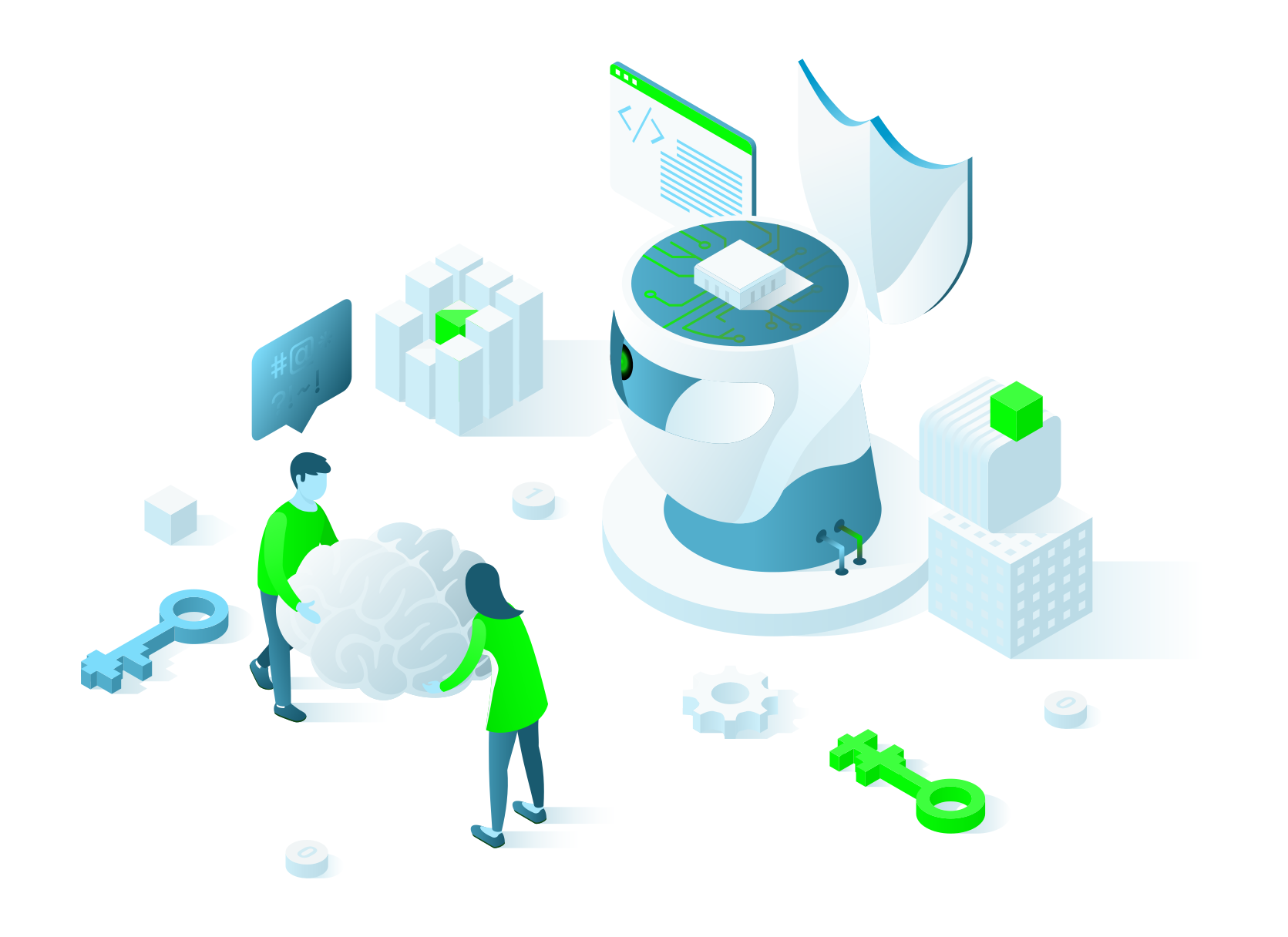
KriraAI is an AI development company that designs, trains and deploys computer vision models directly on cameras, gateways, mobile phones and on-premise servers. Instead of sending video to the cloud, our edge AI solutions process images where they are captured. Your systems detect, count, inspect and respond in milliseconds.
With 5+ years of AI delivery, 100+ projects shipped and a dedicated in-house AI research team, we handle the full on-device AI lifecycle, from proof of concept to production rollout.
5+
Years of AI Delivery
100+
Projects Delivered
In-House
AI Research Team
Global
Clients Across India, USA & Global Markets




Edge AI means running artificial intelligence models on local hardware, at the "edge" of the network, instead of in a remote data center. When edge AI works on images and video, it is called on-device vision or edge vision AI.
AI at the edge removes the round trip to the cloud. A camera running an edge AI model can spot a product defect, read a number plate or flag a safety violation in under 50 milliseconds, even without internet access.
Edge computing AI also cuts bandwidth costs, because only results and alerts leave the device, not raw video. And when sensitive footage never leaves your premises, privacy compliance becomes far simpler.
We offer end-to-end edge AI and computer vision development services, from a single smart camera to a fleet of connected devices.
Edge AI makes decisions on the device; cloud AI sends data to remote servers for processing. The right choice depends on speed, privacy and connectivity needs.
Factor
Edge AI
Cloud AI
Latency
Milliseconds, on the device
Higher, depends on network
Internet needed
No, works offline
Yes, always
Data privacy
Data stays on-device
Data leaves your premises
Bandwidth cost
Low, only results are sent
High for continuous video
Compute power
Limited by device hardware
Practically unlimited
Best for
Real-time detection, remote sites
Model training, heavy analytics
Most production systems use a hybrid setup: edge AI for real-time decisions and the cloud for training, retraining and fleet-wide reporting. We design both sides.
NVIDIA Jetson development services: we build multi-camera vision pipelines on NVIDIA Jetson Orin Nano, Orin NX and AGX Orin using JetPack, DeepStream and TensorRT. That gives you GPU-accelerated inference in a compact, industrial-ready module.
Automated visual quality inspection, surface defect detection, assembly verification and worker safety (PPE) monitoring on the production line.
Footfall counting, queue monitoring, shelf and planogram checks, and loss prevention, all without streaming store video to the cloud.
Automatic number plate recognition (ANPR), vehicle counting and classification, and traffic violation detection at the roadside.
Patient fall detection, room occupancy monitoring and medical device vision, with sensitive data kept on-premises.
Crop and livestock monitoring, perimeter intrusion detection and smart surveillance cameras for remote sites.
Package counting, damage detection at loading docks, and vehicle and container tracking in yards and warehouses.
Handwritten answer-script evaluation and document vision, as in our AI exam grading system that scores thousands of scripts in minutes per paper.
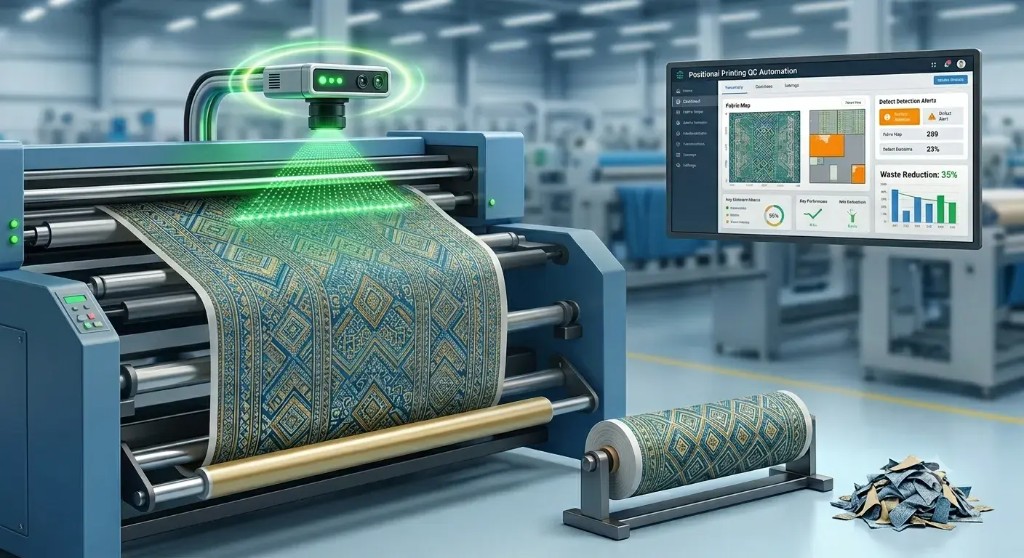
How screen-level visual monitoring replaced 18 QC operators per day watching for misalignment across jacquard, saree border, and lace printing lines.
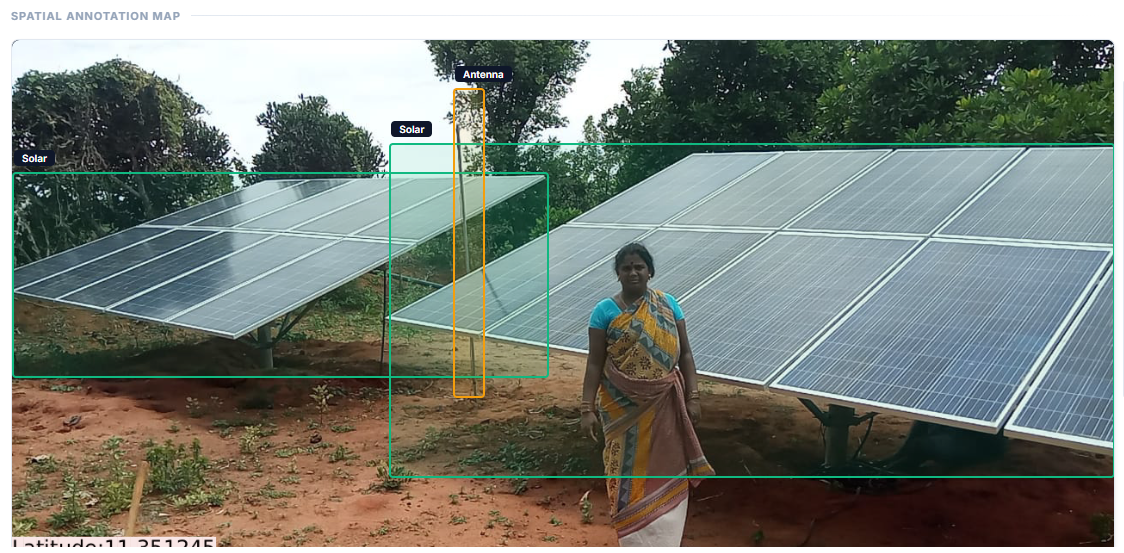
Replacing manual field photo audits with AI that detects pixel-level fraud no human reviewer can see.
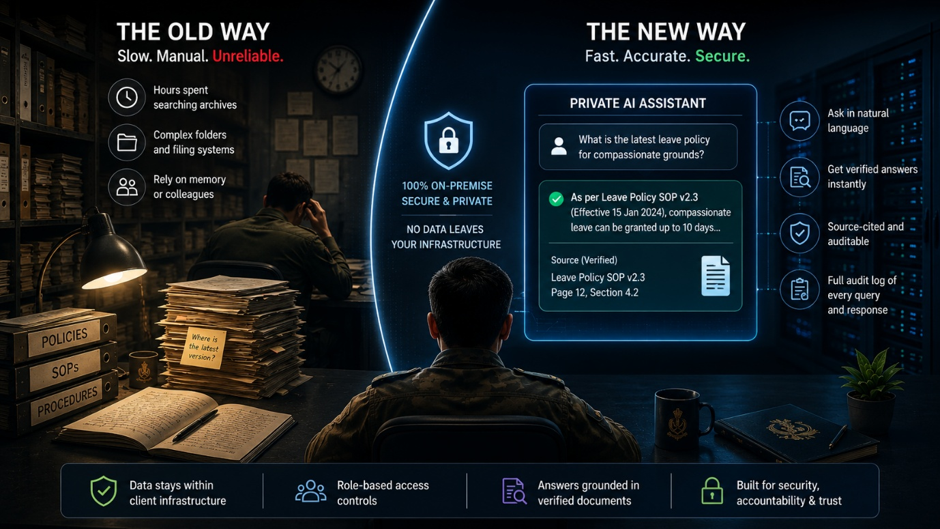
Built entirely inside the client's own infrastructure, the system grounds every answer in verified internal documents instead of open internet knowledge.
100+ enterprise and startup projects shipped to production, not just demos.
We test new vision models and optimization methods before we recommend them.
From textile print QC to fraud detection in field photos.
On-premise and on-device setups trusted by the Indian Navy.
Clients across India, the USA and global markets, with time-zone-aligned communication.
Monitoring, retraining and model updates after launch.
100+ enterprise and startup projects shipped to production, not just demos.

Edge AI is artificial intelligence that runs directly on local devices such as cameras, phones or embedded boards instead of in the cloud. It processes data where it is created, which gives faster responses, offline operation and better data privacy.
On-device computer vision is when a device analyzes images or video itself, using a built-in AI model, without sending footage to a server. Examples include a smart camera detecting intruders or a phone app recognizing products in real time.
Edge AI processes data on the device, while cloud AI sends data to remote servers for processing. Edge AI is faster, works offline and keeps data private; cloud AI offers more computing power for training and large-scale analytics. Many businesses combine both.
The main benefits are real-time decisions, lower bandwidth and cloud costs, stronger data privacy and reliable offline operation. These make edge AI ideal for manufacturing, retail, traffic, healthcare and security use cases.
The best hardware depends on your workload, budget and power limits. NVIDIA Jetson suits multi-camera, high-accuracy vision; Google Coral and Hailo suit low-power acceleration; Raspberry Pi suits prototypes; and microcontrollers like ESP32 suit TinyML products.
Yes, optimized AI models can run fully offline on small devices. Techniques like quantization, pruning and TinyML let models fit on phones, single-board computers and even microcontrollers with a few hundred kilobytes of memory.
We optimize models using quantization, pruning, knowledge distillation and hardware-specific compilers such as TensorRT, OpenVINO and TensorFlow Lite. This usually makes models up to 4x smaller and several times faster with minimal accuracy loss.
Yes, most IP and CCTV cameras can be connected to an edge AI device that runs video analytics on their feeds. This adds object detection, people counting or ANPR without replacing your cameras.
Most KriraAI projects take 4 to 16 weeks from discovery to deployment. A focused proof of concept sits at the shorter end, while multi-camera or multi-site rollouts take longer, depending on data, model complexity and hardware.
Edge AI cost depends on the use case, data, hardware and number of devices. Projects range from a few thousand dollars for simple builds to six figures for enterprise-scale systems, and KriraAI shares a transparent, scope-based quote after a free discovery call.