Business-First Approach
We start with your goals, not with a tool to sell.
AI use case discovery is the process of identifying where artificial intelligence can create measurable value in your business, then ranking those opportunities by impact, feasibility and cost. Our AI use case discovery and prioritization service turns scattered AI ideas into a focused, data-backed AI implementation roadmap, so you invest in the right projects first.
Most businesses know AI matters. Few know where to begin. Teams collect dozens of ideas, vendors pitch tools, and leadership asks for results, yet nothing moves past the pilot stage.
Common challenges we hear:
Too many AI ideas and no clear way to choose between them
No reliable estimate of ROI before investing
Pilots that stall because data, skills or budget were not ready
No AI adoption strategy that connects technology to business goals
The problem is rarely the technology. It is the lack of a structured way to discover and prioritize AI use cases.
Our AI consulting services help you answer three questions: where can AI help, which opportunities matter most, and what should you do first. We combine business analysis, data assessment and AI strategy consulting to build a prioritized list of AI use cases for your business. The service suits founders, CXOs, operations heads and IT leaders who want AI results without guesswork. It works whether you are just starting with AI or already running pilots that need direction.
We rank every idea on an AI use case prioritization matrix that plots business impact against feasibility. This keeps decisions objective and easy to explain to leadership.
Criterion
What we measure
Business value
Revenue gain, cost savings, customer experience impact
Data availability
Volume, quality and access to the required data
Technical feasibility
Fit with current systems and available AI models
Cost and effort
Build cost, licensing, time and people required
Risk
Compliance, privacy, accuracy and change-management risk
Time-to-value
How quickly results become measurable
The matrix sorts use cases into four groups:
Every industry has different high-value opportunities. Here are common AI use cases, including generative AI use cases, we help clients evaluate:
Industry
Example AI use cases
Retail & eCommerce
Demand forecasting, personalized recommendations, AI product descriptions
Healthcare
Appointment scheduling, medical document summarization, patient query chatbots
Finance & Banking
Fraud detection, credit risk scoring, automated report generation
Manufacturing
Predictive maintenance, visual quality inspection, supply chain optimization
Real Estate
Lead scoring, AI-generated listings, virtual property assistants
Education
Personalized learning paths, automated grading, AI tutoring assistants
You do not need a large budget to benefit from AI. The best AI use cases for small business are low-cost and quick to launch:
AI chatbots for customer support and lead capture
Automated invoicing, bookkeeping and data entry
Generative AI for marketing content, emails and social posts
Sales forecasting and inventory planning
Meeting notes and document summarization
We help SMEs pick two or three quick wins that pay back within months, not years.
A prioritized list of AI use cases ranked by impact and feasibility
ROI and cost estimates for each top use case
An AI readiness report with data and skill gaps identified
A phased AI implementation roadmap with timelines and KPIs
A risk and compliance checklist for each initiative
We start with your goals, not with a tool to sell.
We recommend what fits, whether off-the-shelf AI, custom models or no AI at all.
A repeatable scoring method that leadership can trust and audit.
5+ years of AI delivery and 100+ projects for enterprise clients across 22+ industries.
We stay with you through pilots and scale-up.
We start with your goals, not with a tool to sell.
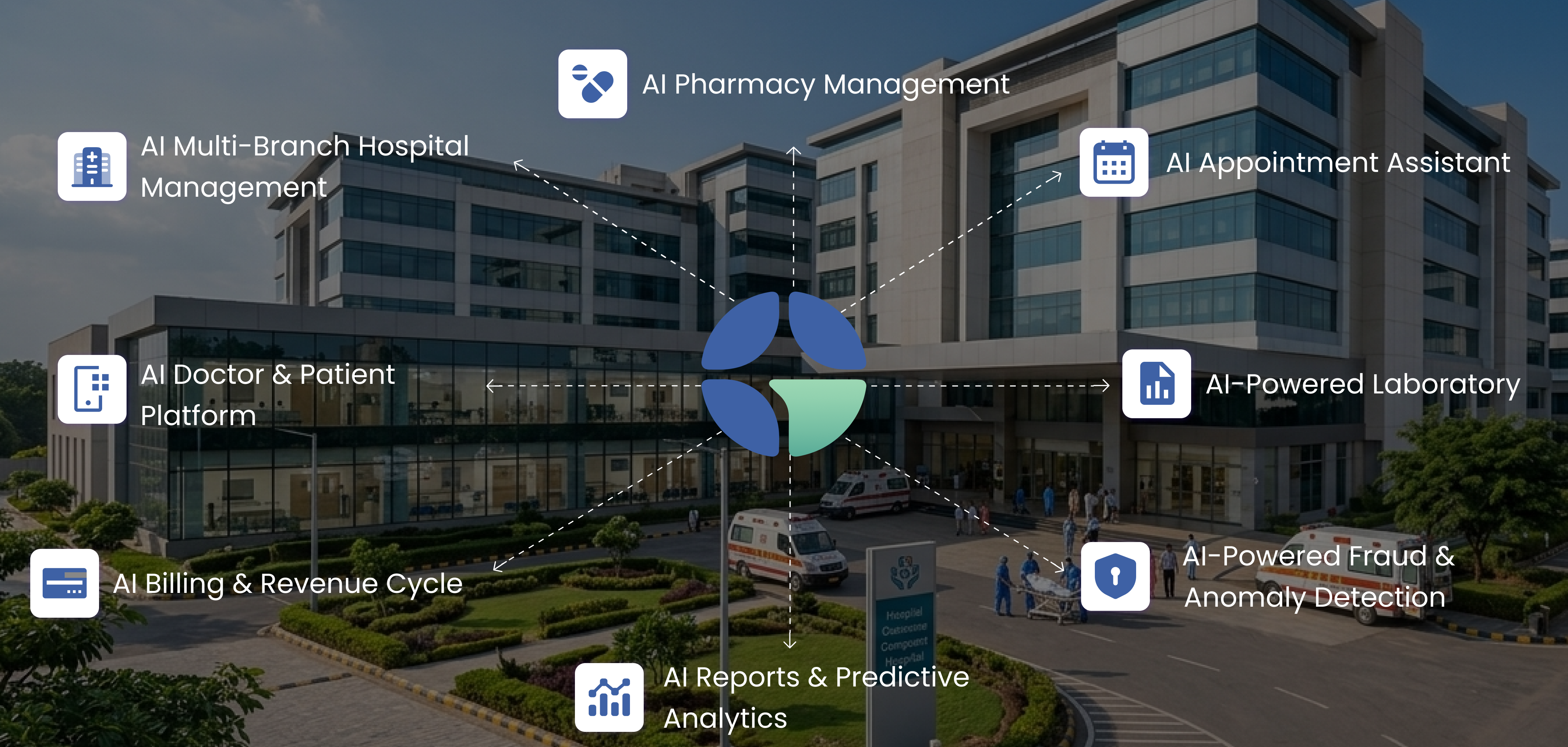
One system for multi-branch hospitals, from AI-assisted front desk and consultation to pharmacy, lab and final bill.
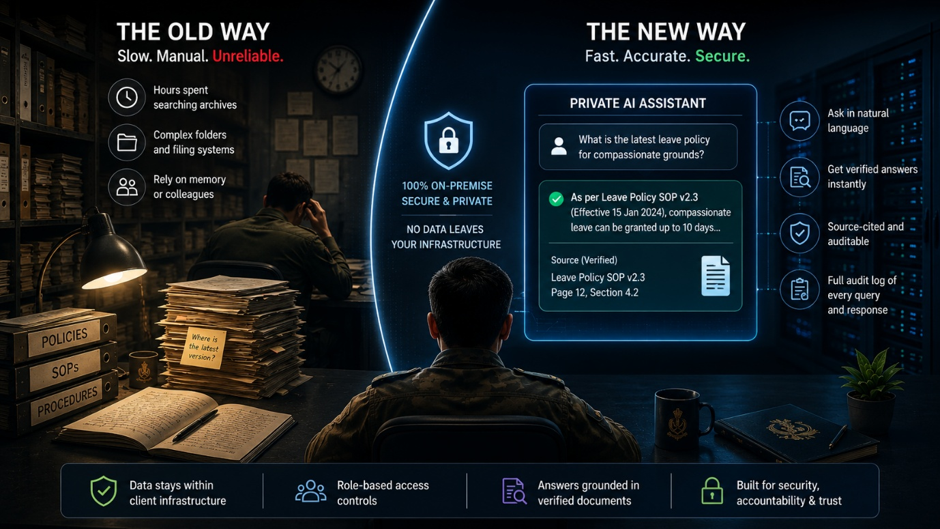
Built entirely inside the client's own infrastructure, the system grounds every answer in verified internal documents instead of open internet knowledge.
Our five-step process takes you from ideas to action in 3 to 6 weeks.




AI use case discovery is the process of finding specific business tasks where AI can create measurable value. It involves analyzing workflows, data and goals to list realistic AI opportunities before any investment is made.
You identify AI use cases by mapping business processes and spotting tasks that are repetitive, data-heavy or prediction-based. Stakeholder interviews, an AI discovery workshop and a data review then confirm which ideas are practical.
AI use cases are prioritized by scoring each one on business value, feasibility, data availability, cost and risk. The scores are plotted on an impact versus feasibility matrix, and high-impact, high-feasibility quick wins are done first.
An AI use case prioritization matrix is a 2x2 grid that plots business impact against implementation feasibility. It groups use cases into quick wins, strategic bets, easy add-ons and ones to deprioritize.
An AI readiness assessment evaluates whether your data, technology, people and governance are prepared for AI. It identifies gaps that must be fixed before AI projects can succeed.
An AI discovery workshop usually takes 1 to 2 days. The complete AI use case discovery and prioritization engagement typically runs 3 to 6 weeks, depending on business size.
The best AI use cases for small businesses are customer support chatbots, automated bookkeeping, generative AI for marketing content, sales forecasting and document summarization. They are low-cost and show results quickly.
AI consulting services cost depends on scope, company size and the number of departments covered. KriraAI shares a transparent, scope-based quote after a free discovery call.
An AI implementation roadmap includes prioritized use cases, project phases, timelines, required resources, budget estimates and KPIs. It shows what to build first and how to scale AI across the business.
No, you do not need perfect data to start. The discovery process itself assesses your data quality and shows which use cases are possible now and which need data improvements first.