
Production focus
Software is built to run inside live workflows from the first sprint.
KriraAI builds custom AI energy solutions for utilities, renewable energy producers and oil and gas operators. Our software forecasts demand, balances grids, predicts asset failures and automates emissions reporting using data you already collect. Every system is integrated with your operational stack and measured against KPIs agreed upfront.
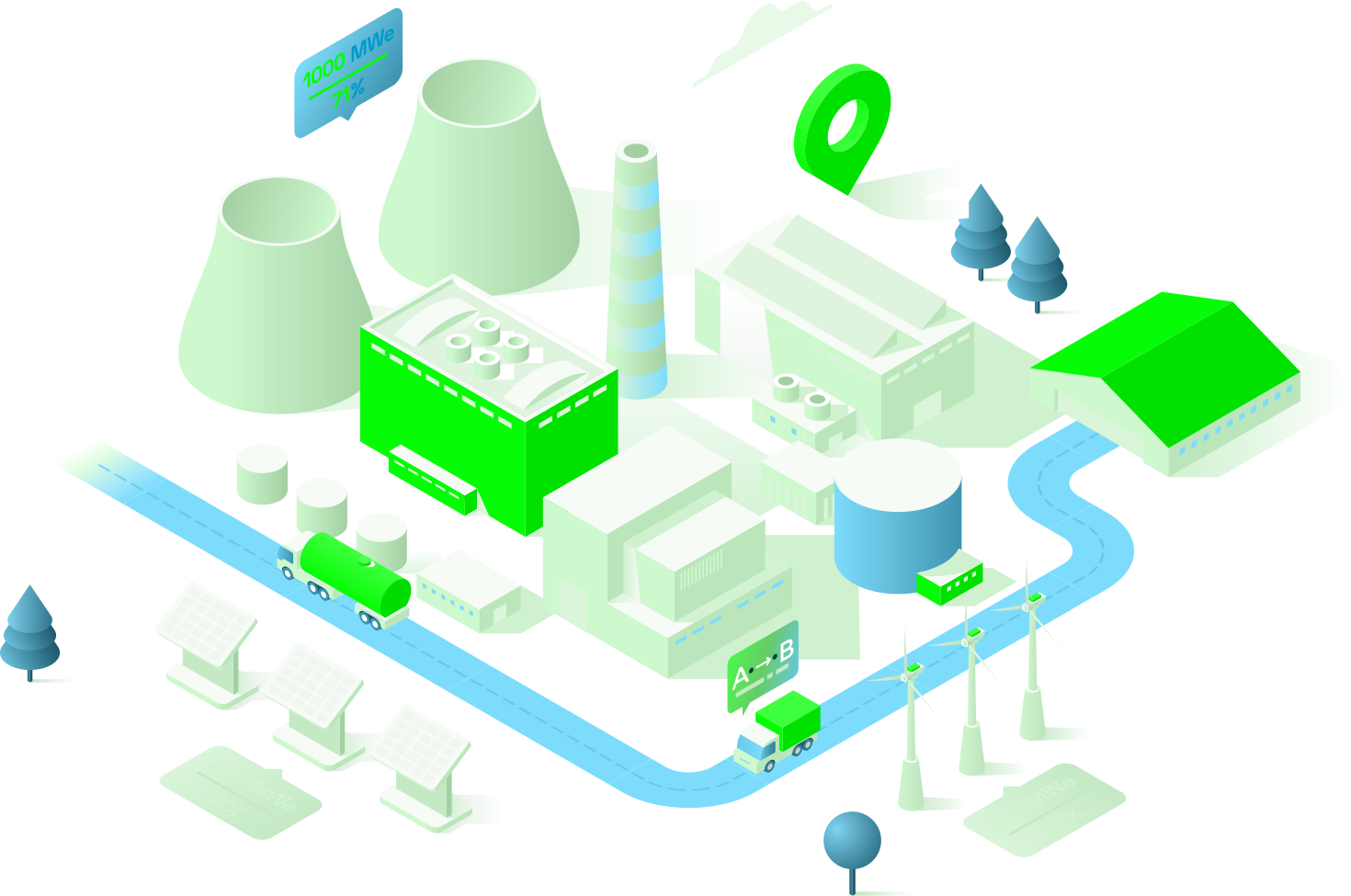
AI energy software development is the process of designing, building and deploying software that uses machine learning to forecast, optimize and automate energy operations. It is how AI in the energy sector moves from pilot projects into daily use. These systems turn smart meter, SCADA, sensor and weather data into predictions that operators trust and act on. Machine learning in energy is most often applied to forecasting, grid management, asset maintenance and emissions tracking.
Each product we build starts with your data and a clear KPI baseline. We prove value on historical data first and then move the software into live operations. Most clients begin with one use case and expand once results are verified.
Energy AI Software
Unplanned failures in transformers, turbines and inverters are costly and often preventable. Our predictive maintenance software analyzes vibration, temperature and historian data to flag degradation early and rank assets by risk. Teams receive prioritized work orders inside their EAM system.
Energy AI Software
Commercial and industrial sites lose money through poor scheduling and equipment drift. An AI energy management system learns consumption patterns across buildings, HVAC and production lines, then automates load shifting to cut peak demand charges. Our builds support ISO 50001 practices and generate audit-ready reports.
Energy AI Software
Manual emissions reporting is slow and error prone. We build carbon emissions monitoring software that calculates Scope 1, 2 and 3 emissions in line with the GHG Protocol. ESG reporting AI then drafts disclosure-ready summaries and flags data gaps before auditors do.
Energy AI Software
Inaccurate load forecasts force utilities to buy expensive balancing power. Our energy demand forecasting software combines smart meter history, weather and calendar effects to deliver day-ahead and intraday load forecasting with prediction intervals. Forecasts feed directly into scheduling and trading workflows.
Energy AI Software
Renewable output shifts with cloud cover and wind speed, which makes it hard to schedule and sell. Our solar energy forecasting and wind energy forecasting platforms use numerical weather prediction, satellite irradiance and plant telemetry to produce probabilistic forecasts from 15 minutes to several days ahead. This renewable energy forecasting cuts curtailment and imbalance penalties.
Energy AI Software
Distributed solar, EV charging and battery storage are making networks harder to manage. Our smart grid analytics software reads AMI and SCADA data to detect congestion, voltage issues and technical losses. Grid optimization models then recommend dispatch and battery storage schedules, while operators keep final control.
Energy AI Software
Unplanned failures in transformers, turbines and inverters are costly and often preventable. Our predictive maintenance software analyzes vibration, temperature and historian data to flag degradation early and rank assets by risk. Teams receive prioritized work orders inside their EAM system.
Energy AI Software
Commercial and industrial sites lose money through poor scheduling and equipment drift. An AI energy management system learns consumption patterns across buildings, HVAC and production lines, then automates load shifting to cut peak demand charges. Our builds support ISO 50001 practices and generate audit-ready reports.
Energy AI Software
Manual emissions reporting is slow and error prone. We build carbon emissions monitoring software that calculates Scope 1, 2 and 3 emissions in line with the GHG Protocol. ESG reporting AI then drafts disclosure-ready summaries and flags data gaps before auditors do.
Energy AI Software
Inaccurate load forecasts force utilities to buy expensive balancing power. Our energy demand forecasting software combines smart meter history, weather and calendar effects to deliver day-ahead and intraday load forecasting with prediction intervals. Forecasts feed directly into scheduling and trading workflows.
Energy AI Software
Renewable output shifts with cloud cover and wind speed, which makes it hard to schedule and sell. Our solar energy forecasting and wind energy forecasting platforms use numerical weather prediction, satellite irradiance and plant telemetry to produce probabilistic forecasts from 15 minutes to several days ahead. This renewable energy forecasting cuts curtailment and imbalance penalties.
Energy AI Software
Distributed solar, EV charging and battery storage are making networks harder to manage. Our smart grid analytics software reads AMI and SCADA data to detect congestion, voltage issues and technical losses. Grid optimization models then recommend dispatch and battery storage schedules, while operators keep final control.
Energy software only creates value once it runs inside daily operations. We integrate with SCADA, historians, AMI, GIS, ERP and EAM platforms using standard protocols including OPC UA, Modbus, DLMS/COSEM and IEC 61850. Deployment runs on AWS, Azure, Google Cloud, on premises or at the edge. Security follows IEC 62443 and NERC CIP principles, with role-based access, audit trails and human oversight on critical decisions.
Our process proves value early and reduces risk. Each phase ends with a clear deliverable and a go or no-go decision. You stay in control of scope and budget.



KriraAI is an AI development company founded in 2022 that builds production-grade AI systems for enterprise clients across 22+ industries. Energy clients choose us because data science, software engineering and integration sit in one accountable team. Every AI energy software development project is tied to a measurable KPI from day one.
Software is built to run inside live workflows from the first sprint.
SCADA, AMI, historian and market data.
Operators see why the software made each recommendation.
Proof of concept, dedicated team or end-to-end build.
Software is built to run inside live workflows from the first sprint.
AI energy software development is building software that uses machine learning to forecast demand, optimize grids, maintain assets and track emissions. It connects to existing energy systems. The goal is lower cost, higher reliability and faster decisions.
The energy industry uses AI for load forecasting, renewable output prediction, grid optimization, predictive maintenance and emissions reporting. Retailers also use it for churn prediction. Most companies start with forecasting because the data already exists.
AI models learn how weather, time of day, holidays and economic activity drive consumption. They capture patterns traditional statistical methods miss and update as new data arrives. The result is more accurate forecasts with clear confidence ranges.
Yes, AI improves solar and wind forecasts by combining weather models, satellite data and plant telemetry. Probabilistic forecasts show expected output and its uncertainty. We always benchmark accuracy against your current method.
Oil and gas companies use AI for production optimization, predictive maintenance of rotating equipment and pipeline anomaly detection. Generative AI helps engineers search technical documents. Safety-critical decisions remain under human control.
Generative AI in energy uses large language models to summarize reports, search technical documents and draft ESG disclosures. AI agents can also automate tasks such as data reconciliation. Outputs are grounded in your own data to reduce errors.
Cost depends on the number of use cases, data readiness and integration scope. A focused proof of concept costs far less than a full platform build. We share a fixed estimate after the discovery phase.
A focused proof of concept typically takes six to eight weeks. Production deployment usually follows within two to three months, depending on integration scope. Starting with one use case keeps timelines predictable.
Yes, AI software can integrate with SCADA and AMI systems without replacing them. We connect through OPC UA, Modbus, DLMS/COSEM or existing APIs. Current operations stay stable while predictions are added.
AI automates Scope 1, 2 and 3 emissions calculation from energy, fuel and supplier data in line with the GHG Protocol. It flags anomalies and missing records early. Teams get audit-ready reports with far less manual work.