Twelve months ago, most business leaders I spoke to treated AI agents like a “we’ll get there someday” project. Now? They’re calling me in a mild panic. Because “someday” just showed up at their front door.
The rise of AI agent platforms isn’t just another tech wave. It’s the architecture of the next business operating model. And if you’re still evaluating whether you should care… you might already be late.
But here’s the thing: choosing the best AI agent platforms in 2025 is not about picking whatever has the flashiest demo or biggest marketing budget. It’s about matching the AI agent development platforms to your actual workflows, risks, and revenue goals.
An AI agent platform is a software environment where autonomous or semi-autonomous programs—called agents—operate to perform business tasks. These agents can handle AI agents for customer service, workflow automation, predictive analytics, or even cross-departmental coordination.
Think of them as employees that never sleep, don’t get distracted, and can analyze terabytes of data while you’re having your morning coffee.
Autonomous AI agents 2025 – Self-governing systems capable of independent decision-making.
Multi-agent AI platforms – Coordinated systems of agents working together for complex processes.
Hybrid models – AI agents guided by human oversight for sensitive or high-impact tasks.
The leap in next-gen AI agent technology—from natural language reasoning to low-latency predictive models—means today’s AI can handle nuanced, context-heavy work that was off-limits two years ago.
From finance to manufacturing, AI agents for business automation are moving from pilots to production systems. The cost of inaction is now visible: slower response times, higher operational costs, and missed revenue windows.
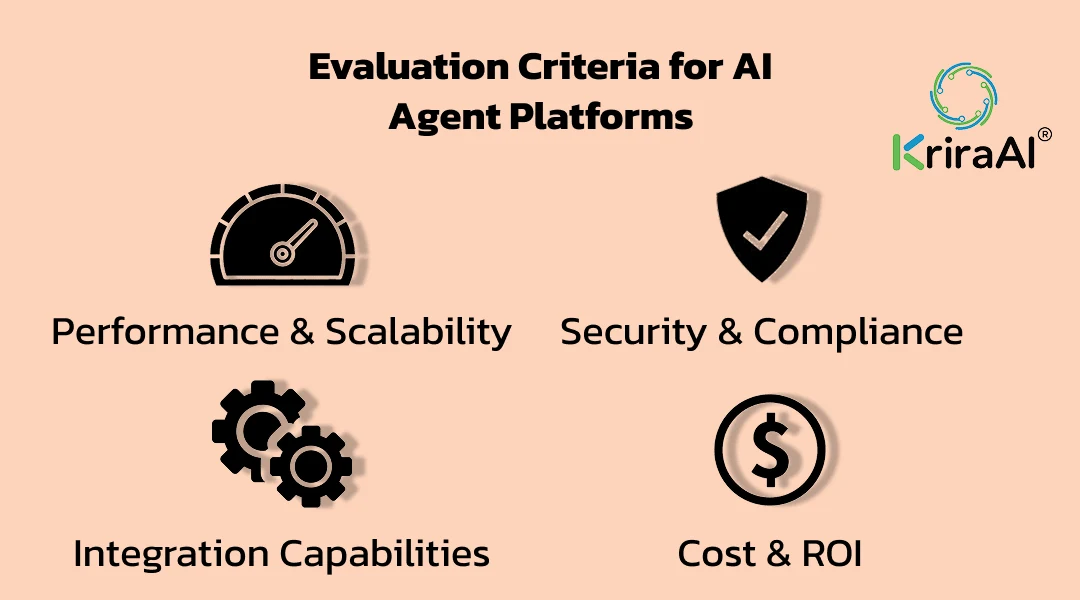
You want AI-powered agent solutions that don’t just work for 50 users but can handle 5,000 without meltdown.
The right AI agent integration for enterprises is one that plays well with your CRM, ERP, and even your dusty old legacy systems.
Especially in regulated industries, enterprise AI agent platforms must meet strict compliance requirements—GDPR, HIPAA, PCI-DSS.
It’s not just “how much to hire AI developer” but how quickly that investment translates into measurable ROI.
Features: Custom AI agent development platforms, enterprise AI agent integration, autonomous AI agents 2025, multi-agent AI platforms, AI agents for workflow automation and predictive analytics.
Pros: Human-centric design, industry-specific customization, strong transparency in delivery, cross-domain expertise (finance, healthcare, manufacturing, e-commerce).
Cons: Fully tailored builds may take longer than off-the-shelf platforms.
Features: Predictive analytics, workflow automation, customer service AI, finance risk modeling.
Pros: High scalability, strong compliance features.
Cons: Premium pricing.
Features: Modular design, community-driven updates, customizable AI agent tools for developers.
Pros: No licensing cost, huge developer community.
Cons: Requires in-house AI expertise to configure.
Features: Multi-agent collaboration, real-time translation for customer service, AI agents for predictive analytics.
Pros: Easy integration with ERP and CRM tools.
Cons: Limited customization compared to open-source.
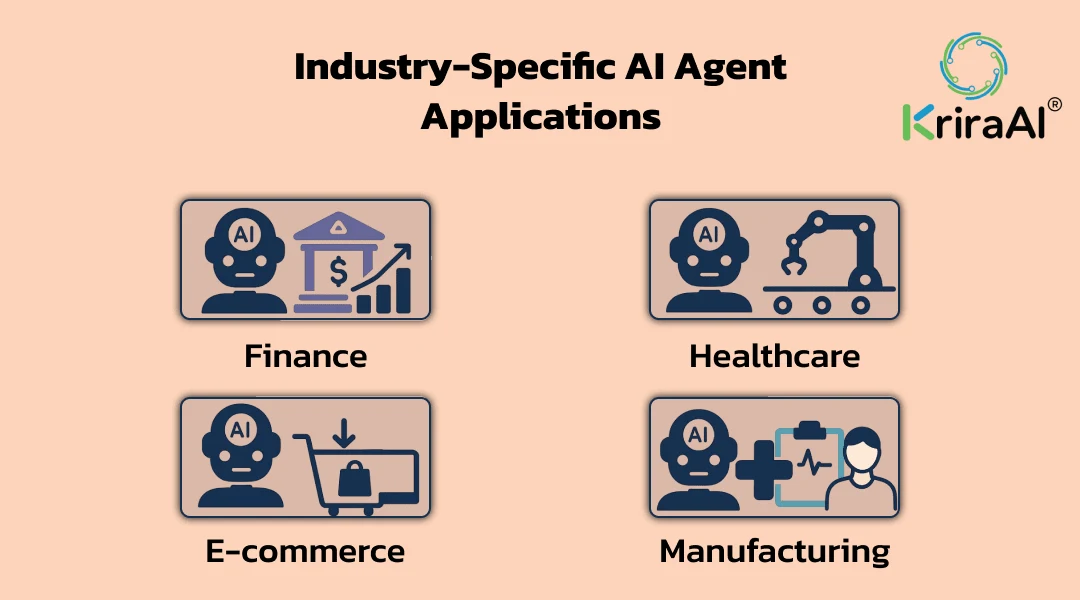
AI agents for predictive analytics help banks spot fraud patterns in seconds instead of days.
Autonomous agents manage scheduling, insurance pre-authorizations, and diagnostic data review—without burning out staff.
Multi-agent AI platforms track inventory, personalize marketing, and handle AI agents for customer service at scale.
AI agents for workflow automation monitor machine performance and trigger maintenance before costly downtime.
Digital transformation isn’t just about adding AI—it’s about adding the right AI. The best AI agent company for you is the one that understands your industry’s DNA and builds solutions around it.
If you’re evaluating platforms, don’t fall for hype videos. Get into AI agent software comparison mode, ask vendors about ROI, and—if possible—test with real workflows before committing.
They automate complex processes, improve decision speed, and free human teams for higher-value work.
Open-source offers control and cost savings; commercial offers faster deployment and vendor support.
It can range from $5,000 for small-scale projects to $100,000+ for enterprise-grade systems.
EnterpriseFlow AI, NexaAgents Cloud, and OpenAgentX are top contenders.
Yes, if they meet industry-specific compliance and have robust security protocols.
Founder & CEO
Divyang Mandani is the CEO of KriraAI, driving innovative AI and IT solutions with a focus on transformative technology, ethical AI, and impactful digital strategies for businesses worldwide.