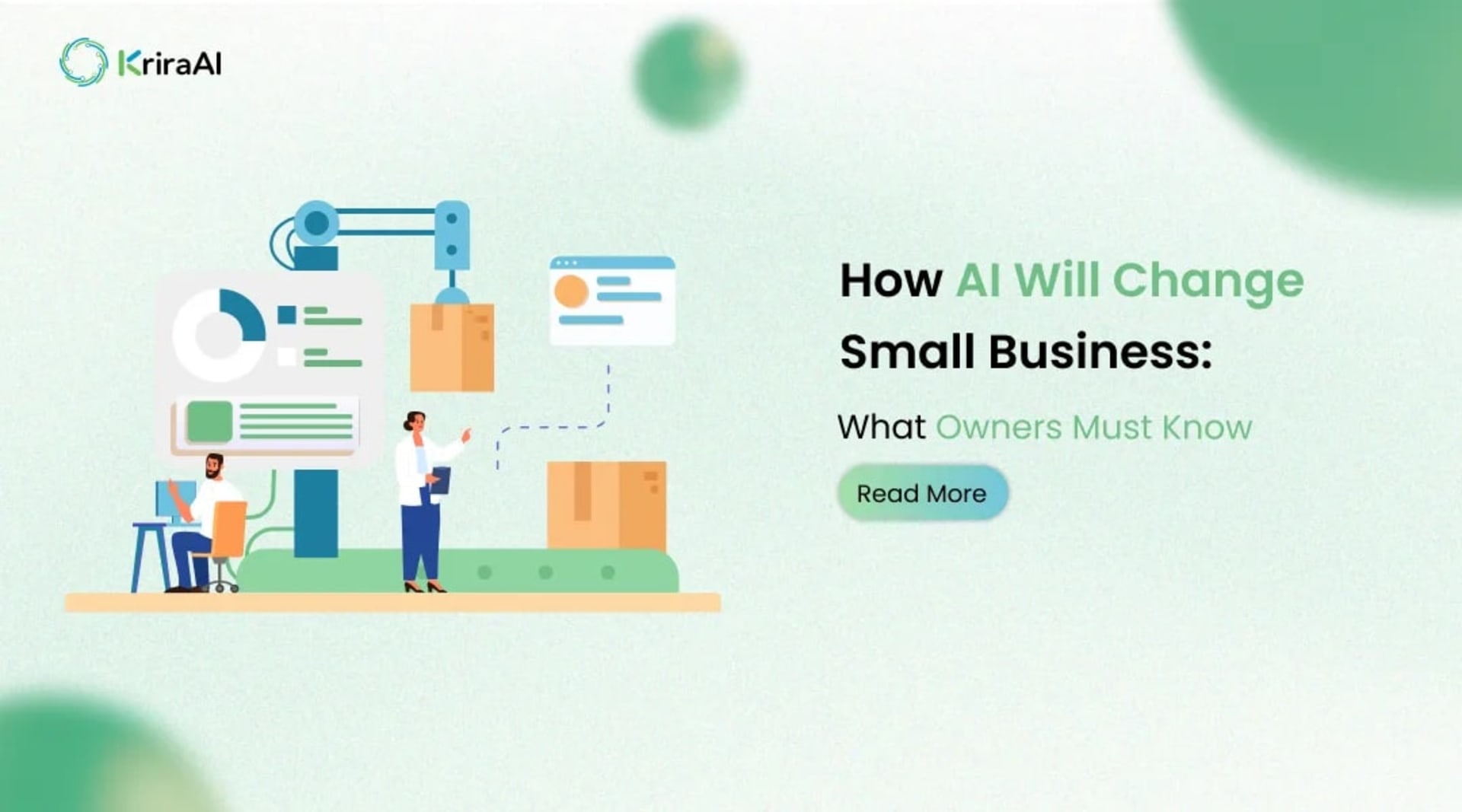
Picture a small bakery on a quiet corner street in 2029. The owner, a woman named Priya, used to spend her Sunday evenings hunched over spreadsheets, guessing how many loaves to bake for the week ahead. She now opens an app before her morning coffee. It tells her that a local school event next Thursday will likely push demand for her cinnamon rolls up by a third. It has already drafted three social media posts, written a reply to a customer complaint from yesterday, and flagged that her flour supplier's prices are about to rise. None of this required a marketing team, an accountant, or a technology department. It required a phone and a system that, just five years earlier, only a company the size of Starbucks could have afforded to build.
This is not a distant fantasy. It is the direction small business technology is already moving in, and the pace is about to quicken sharply. For decades, the gap between small businesses and large corporations was not really about good ideas or hard work. It was about resources. Big companies could afford data teams, customer service departments, marketing agencies, and financial analysts. Small businesses could not, so they made do with instinct, long hours, and a lot of guessing. That gap is now closing, and it is closing faster than most business owners realize.
This blog is about how AI will change small businesses between now and 2030, told honestly, with real timelines and real consequences rather than hype. It is written for the owner of a salon, the founder of a small accounting firm, the manager of a family-run hardware store, and anyone who has ever felt like they were competing against giants with one hand tied behind their back. We will walk through what changes, when it changes, which jobs shift, which concerns are legitimate, and what you can actually do to prepare. By the end, you should be able to explain this shift clearly to a colleague over lunch, without needing a single technical term to do it.
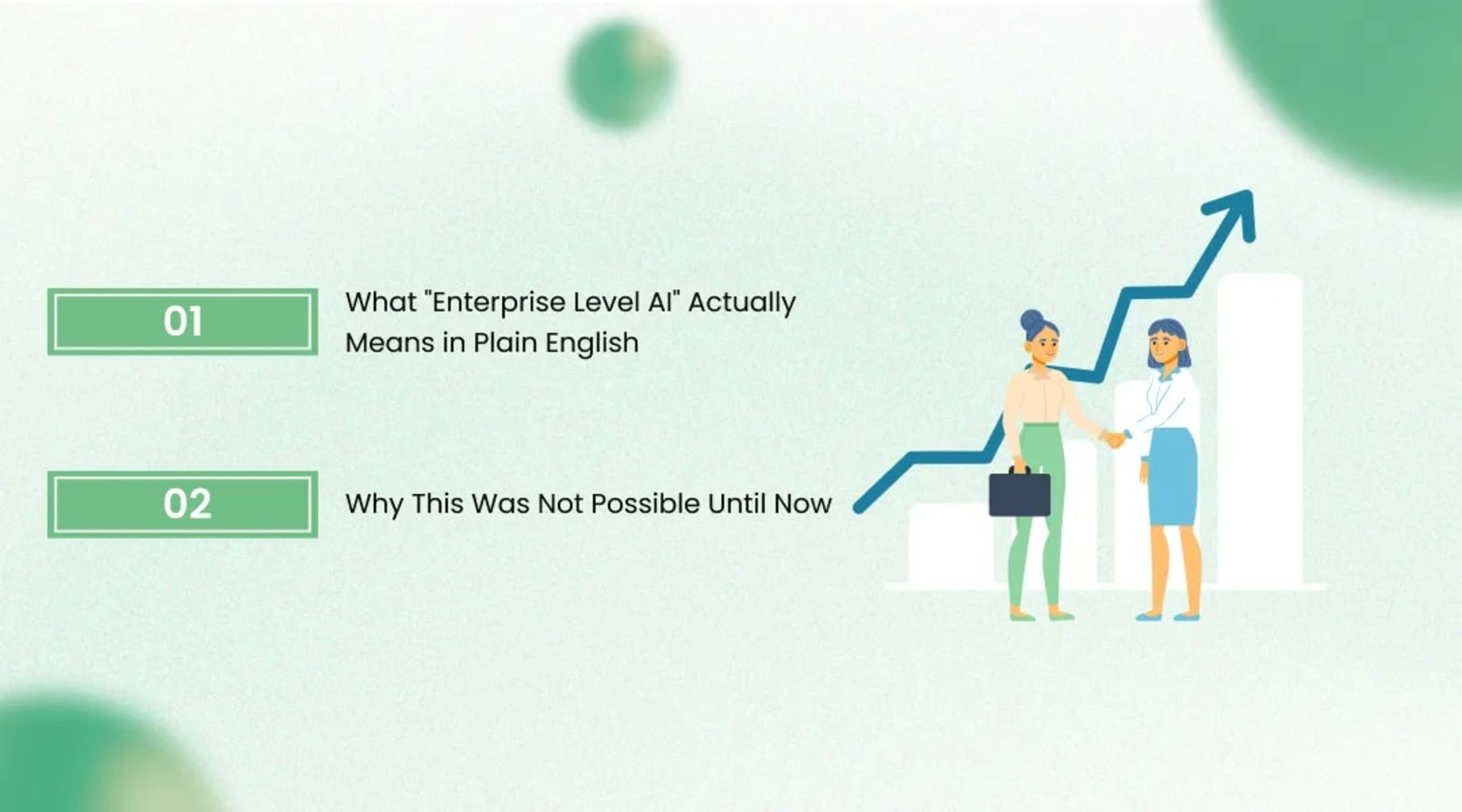
For most of modern business history, scale meant safety. Large companies could spread the cost of expensive tools across thousands of employees and millions of customers. A small business owner simply could not justify hiring a full marketing department or a data analyst for a five-person shop. That math is now changing, and it is changing because the cost of intelligent software is collapsing.
When people say a tool gives small businesses "enterprise level" capability, they mean something simple. It means a corner store can now access the kind of customer insight, automated communication, and planning support that used to require a department of specialists. Think of it like the shift from needing a personal accountant to using accounting software. The expertise gets built into the tool itself, so the business owner does not need to hire the expert directly.
A large retailer like Target has long used software to predict which products will sell well in which stores during which weeks. A small boutique owner could never afford to build that kind of forecasting system from scratch. Within the next few years, similar forecasting will arrive built into ordinary point of sale systems, priced low enough that a single store owner can simply turn it on.
Three things had to happen before this became realistic for small businesses. First, the cost of running these systems had to fall sharply, and it has fallen by a significant margin almost every year since 2022. Second, the tools had to become usable without a technical background, through plain conversation rather than complicated software menus. Third, the software had to be built directly into everyday tools small businesses already use, like point of sale systems, accounting platforms, and messaging apps.
All three of these conditions are now largely in place. What remains is adoption, meaning the slow but steady process of business owners learning what these tools can do and building them into daily routines. That adoption curve is the real story of the next five years, and it will not happen all at once. It will happen in stages, which is exactly what the next section maps out.
It is tempting to think of AI adoption as a single dramatic event, but that is not how it will unfold for small businesses. It will arrive in three distinct waves, each building on the one before it. Understanding these waves will help you know what to expect, and when to act, rather than reacting in a panic later.
During this period, the changes will be mostly invisible to customers but very real for owners. Software that small businesses already use, such as point of sale systems, scheduling tools, and accounting platforms, will quietly add intelligent features in the background. A restaurant's reservation system will start suggesting staffing levels. A retail checkout system will start flagging which products are likely to run out.
Most small business owners will not think of this as "using AI." They will simply notice that their existing tools got smarter. By the end of 2027, it is reasonable to expect that a majority of small businesses in retail, food service, and personal services will be using at least one tool with built-in intelligent automation, even if they do not describe it that way.
This is when the shift becomes visible and competitive pressure builds. Small businesses that adopted these tools early will have a noticeable edge in speed, customer response time, and cost control. Customers will start to expect instant replies, personalized recommendations, and faster service, because they are receiving that experience from competitors who adopted earlier.
During these two years, expect three major shifts to become common across small and mid-sized businesses:
Customer service will become available around the clock through automated chat and voice systems that handle routine questions and only hand off complex issues to a human.
Marketing content, including social posts, email campaigns, and basic ad copy, will be drafted automatically based on what is selling and what customers are asking about.
Financial forecasting, inventory planning, and staff scheduling will shift from manual spreadsheets to automated suggestions that owners simply approve or adjust.
By 2030, using these tools will feel as ordinary as using a smartphone or accepting card payments. The businesses that resisted adoption will face a genuine competitive disadvantage, not because the technology is exotic, but because their customers will simply expect faster, more personalized service than they can deliver manually. This does not mean every small business will look identical. It means the baseline expectation for speed and personalization will rise across nearly every industry that serves consumers directly.
This is the heart of how AI will change small business, and it deserves a close, honest look. The advantage will not come from one single tool. It will come from small businesses gaining capability in three areas that were previously reserved for companies with deep pockets.
Large companies have always had an edge in marketing because they could afford to test dozens of ad versions, analyze which ones worked, and refine constantly. A small bakery could never run that kind of testing because it required a marketing team and a real budget. Within the next few years, this kind of testing and refinement will be built directly into advertising platforms small businesses already use.
A hair salon owner in 2028 will likely be able to describe her ideal customer in plain language, and the system will generate, test, and refine ad versions automatically, reporting back only the results that matter. This is the same kind of capability that large beauty brands use today, simply made available at a fraction of the cost and without requiring any marketing expertise from the owner.
Every small business owner knows the quiet drain of administrative work, including invoicing, scheduling, payroll questions, and supplier communication. This work rarely generates revenue directly, but it consumes hours that could otherwise go toward serving customers or growing the business. Over the next several years, a large share of this work will shift to automated systems that draft documents, answer routine questions, and flag only the items that genuinely need a human decision.
Consider a small accounting firm with four employees. By 2029, much of the routine data entry and basic client questions that once consumed junior staff time will be handled automatically, freeing those employees to focus on advisory work that actually requires human judgment. This shift will not eliminate the need for skilled professionals, but it will change what they spend their time doing.
Perhaps the most visible shift will happen in customer service. Today, a small business with one or two employees simply cannot offer the same response speed as a large company with a dedicated support team. Customers calling a small plumbing business after hours often get voicemail, while customers contacting a large company get an immediate response, even if it is automated.
By 2027, it will be common for small service businesses to offer instant responses around the clock through automated text and voice systems that can answer basic questions, schedule appointments, and only escalate genuinely complex issues to the owner. This is a direct and measurable way that AI small business competitive advantage will show up in daily operations, closing a gap that has existed for decades between small and large companies.
The pace and shape of this shift will look different depending on the type of small business. It helps to look at three categories that will experience this change in distinct ways.
This includes salons, repair shops, dental clinics, and similar businesses that depend heavily on appointments and direct customer interaction. AI for local service businesses will mostly show up as scheduling assistance, automated appointment reminders that reduce no shows, and instant answers to common questions like pricing or availability. A small clinic, for example, will likely see fewer missed appointments simply because reminder and rebooking systems become far more proactive and personalized than a basic text message ever could be.
Small retailers and online sellers will see the earliest and most dramatic shifts because so much of retail already runs through digital systems. Inventory forecasting, personalized product recommendations, and automated customer support will become standard features rather than premium add-ons. A small online seller seven years from now will likely have access to the same kind of personalized recommendation engine that an online retail giant uses today, simply built into the platform they already sell through.
Accountants, lawyers, consultants, and similar professionals will see a different kind of change. The routine, repetitive parts of their work, such as document review, basic research, and drafting standard correspondence, will increasingly be handled by automated systems. This will not replace the expertise these professionals offer, but it will compress the time spent on preparation, shifting more of their working hours toward judgment, strategy, and direct client relationships.
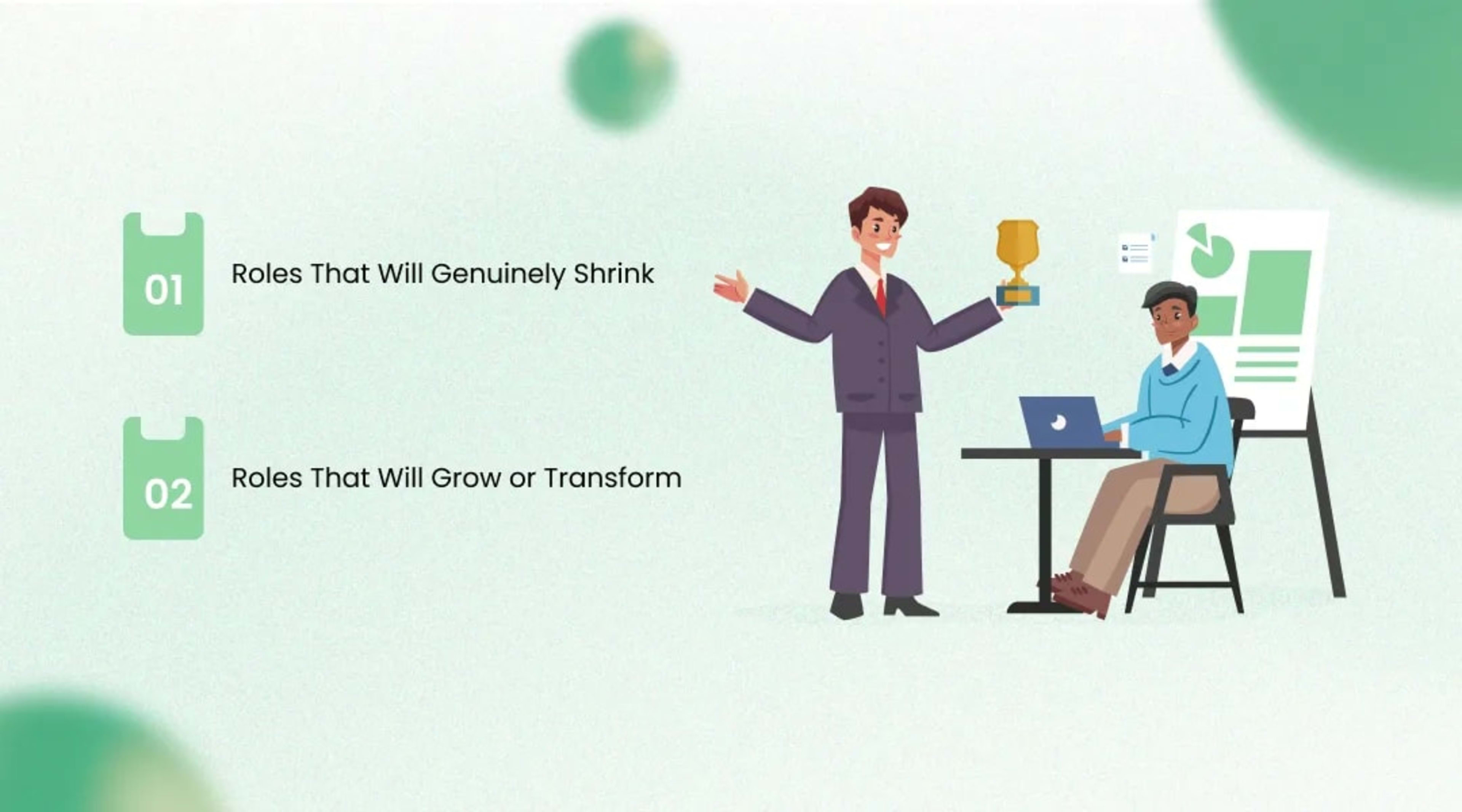
This is the question every business owner and employee genuinely wants answered, and it deserves a straight answer rather than reassurance or fear. The truth sits between the two extremes that often dominate this conversation.
Some roles will see real and lasting reduction in demand, particularly those built almost entirely around repetitive, predictable tasks. It is worth naming these clearly rather than dancing around them.
Basic data entry and routine bookkeeping tasks will shrink significantly as automated systems handle invoice processing and reconciliation.
Entry-level customer service roles focused purely on answering frequently asked questions will reduce in number, though not disappear entirely.
Simple scheduling and appointment coordination roles will be largely absorbed into automated booking systems.
Basic content writing tasks, such as routine product descriptions and simple social posts, will see reduced demand for purely manual drafting.
At the same time, new demand will emerge in areas that require judgment, relationship building, and oversight of these new systems. Small businesses will increasingly need people who can manage and check the output of automated tools, not just operate them blindly. Customer relationship roles will actually grow in importance, because as routine interactions become automated, the human conversations that remain will carry more weight in building loyalty.
There will also be a steady rise in demand for what might be called AI oversight skills within small businesses, meaning the ability to review automated work for accuracy, catch mistakes, and know when a situation needs a human touch instead of an automated response. This is not a technical skill in the traditional sense. It is closer to quality control, applied to a new kind of coworker.
It would be dishonest to present this shift as entirely positive, and a good guide does not pretend otherwise. There are genuine concerns worth addressing directly, with honesty rather than reassurance for its own sake.
While the cost of these tools is falling, falling is not the same as free. Small businesses with very tight margins will need to be selective about which tools genuinely pay for themselves through saved time or increased sales, rather than adopting every new feature out of curiosity. The good news is that pricing models are increasingly shifting toward pay-as-you-use structures, meaning a small business only pays for what it actually uses rather than a large upfront fee.
Automated systems will sometimes get things wrong, whether that means an incorrect product recommendation or a scheduling error. Business owners are right to be cautious about handing over customer-facing decisions entirely without human review, especially in the early stages of adopting a new tool. There is also a legitimate question about how customer data gets used and stored, and business owners should expect to ask clear questions about this before adopting any new system, rather than assuming it is automatically handled responsibly.
Many small businesses succeed precisely because customers value personal connection, something a larger competitor often cannot offer. There is a real risk that over-relying on automation could erode exactly the warmth and personal relationship that gave a small business its edge in the first place. The businesses that navigate this well will use automation for routine tasks while deliberately protecting the moments where human connection matters most.
Preparation does not require becoming a technology expert. It requires a clear, honest assessment of where your time and money currently go, and a willingness to test new tools in small, low-risk ways. The following steps offer a practical starting point for any small business owner thinking seriously about how to prepare your small business for AI.
Identify the three most time-consuming repetitive tasks in your business, such as scheduling, invoicing, or answering common customer questions, since these are the most likely first candidates for automation.
Start with one tool rather than several at once, and give yourself a fixed trial period, such as ninety days, to judge whether it genuinely saves time or improves customer experience.
Keep a human checkpoint on anything customer-facing during the first few months of using a new tool, reviewing outputs regularly until you trust the system's accuracy.
Talk to other small business owners in your industry about what they have tried, since peer experience is often more useful than marketing claims from a vendor.
Set a simple budget ceiling for experimentation each quarter, so you can test new tools without risking financial strain on the core business.
Train at least one employee, even part-time, to understand how the tools work well enough to troubleshoot basic issues without needing outside help every time.
Businesses that take these steps gradually, rather than all at once, tend to build genuine confidence in these tools rather than frustration. This is also where a partner like KriraAI becomes useful, since KriraAI works specifically with businesses trying to figure out which tools are worth adopting and how to introduce them without disrupting daily operations.
Three things matter most from everything covered here. First, how AI will change small businesses is not a distant or abstract question anymore; it is a gradual but accelerating shift that will reach a clear tipping point between 2028 and 2029. Second, the businesses that benefit most will not be the ones that adopt every new tool immediately, but the ones that adopt thoughtfully, starting with the tasks that drain the most time and testing carefully before expanding. Third, the human elements of small business, including trust, relationships, and judgment, will not disappear; they will simply matter more as routine work gets automated around them.
This is precisely the kind of transition KriraAI was built to help businesses navigate. KriraAI builds practical AI systems for real businesses, not abstract technology demonstrations, focusing on measurable outcomes like time saved, customer response speed, and revenue impact rather than chasing every new capability for its own sake. KriraAI works with business owners who want to understand what is genuinely worth adopting now, what can wait, and how to introduce these tools without disrupting the daily operations that already work well. If you are wondering where your own business fits into this timeline, exploring how KriraAI approaches AI adoption for businesses like yours is a sensible next step toward making this transition with clarity rather than guesswork.
No, AI will not replace small business owners, and it is unlikely to fully replace most employees either. It will absorb routine, repetitive tasks, while human judgment, relationship building, and oversight of these tools become more valuable, not less, over the coming years.
Costs vary widely, but the overall trend points toward lower entry prices and pay-as-you-use pricing models. Many small businesses can begin with tools costing less than a typical monthly software subscription, gradually expanding usage as they see measurable returns in time saved or sales gained.
The shift is already underway and will accelerate noticeably between 2026 and 2029. By 2030, most small businesses in retail, food service, and professional services are expected to use at least one meaningful automated tool as a normal part of daily operations.
Small businesses will gain access to personalized marketing testing, automated around-the-clock customer service, demand forecasting, and routine document drafting, all capabilities that previously required dedicated departments that large companies could afford but small businesses could not.
Start small by identifying one repetitive task to automate, test a tool for a fixed trial period, and keep a human checking the results closely at first. Working with a guide like KriraAI can also help you choose tools that match your specific business needs without requiring technical expertise
Founder & CEO
Divyang Mandani is the CEO of KriraAI, driving innovative AI and IT solutions with a focus on transformative technology, ethical AI, and impactful digital strategies for businesses worldwide.