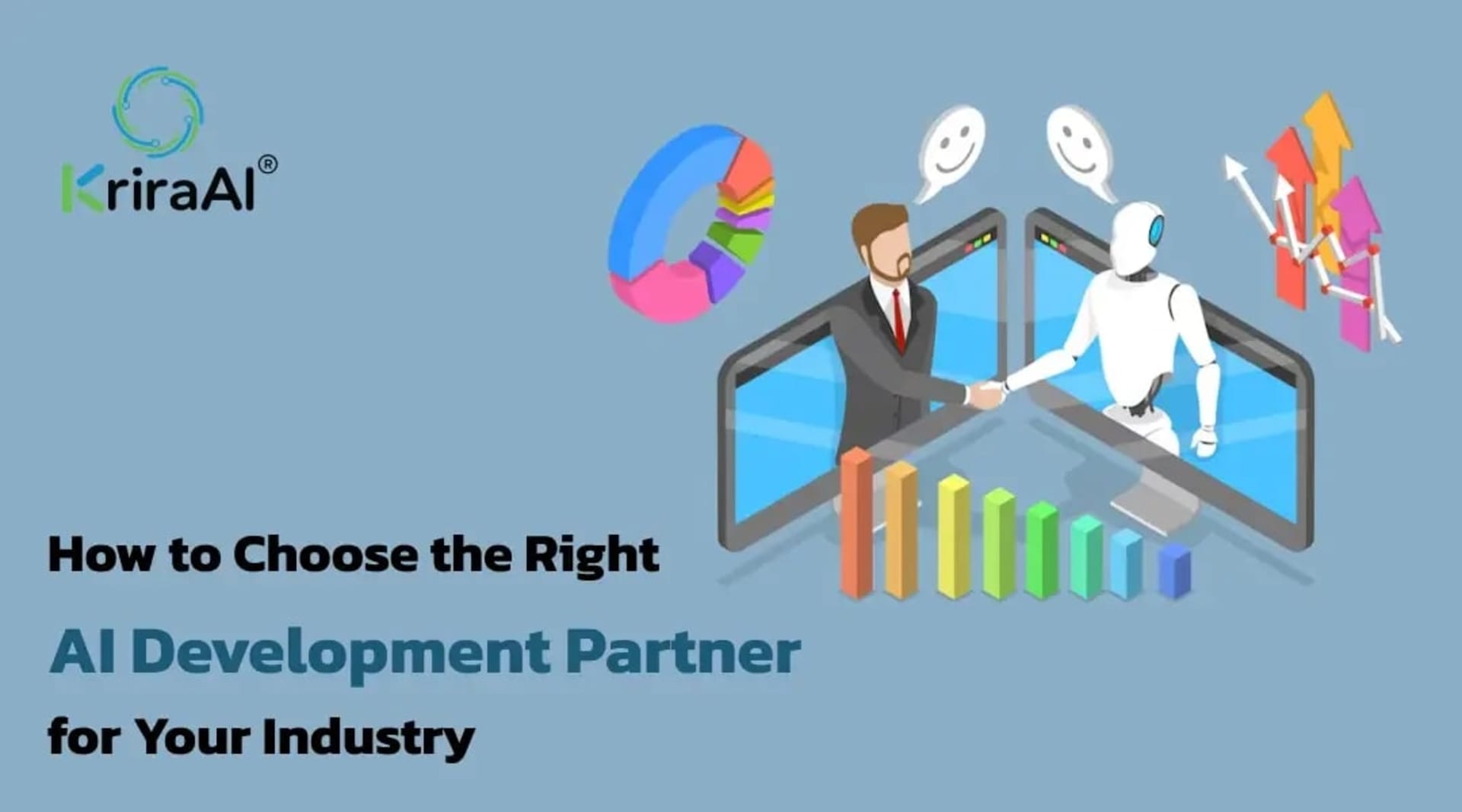
Let’s start with the obvious: most AI vendors sound exactly the same.
Everyone claims to be "AI-first", "data-driven", or "pioneers in intelligent automation". But when you're staring down a high-stakes decision—one that could define the trajectory of your business—what you really want is someone who , speaks human, and won’t vanish post-delivery.
I’ve seen too many businesses get seduced by flashy demos and slide decks, only to end up with expensive prototypes that gather dust. Choosing the right AI development partner isn’t about tech. It’s about trust, context, and shared stakes.
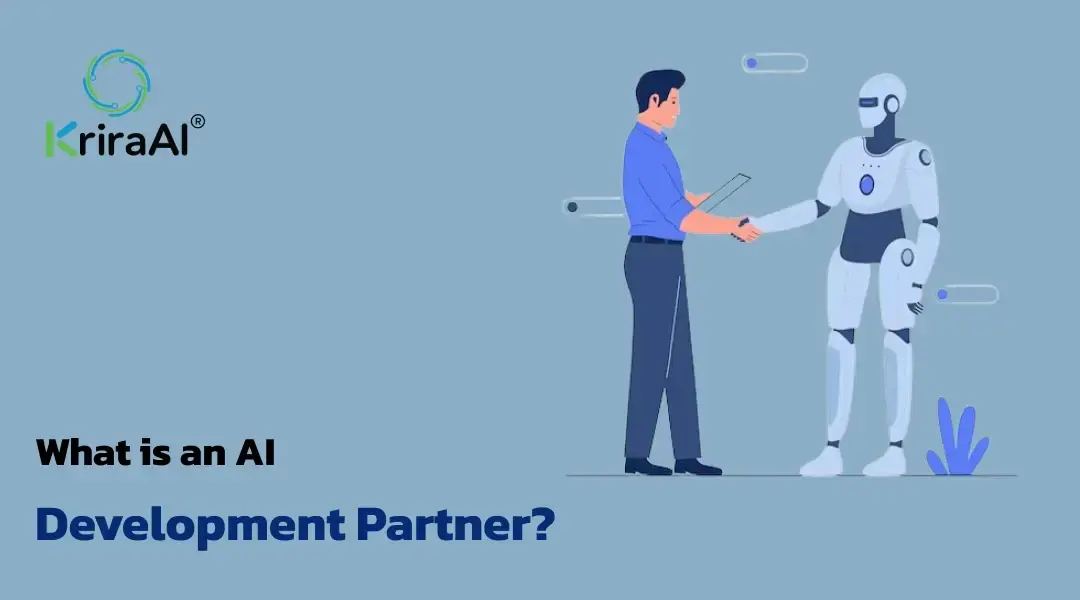
Let’s clarify what we're really talking about.
An AI development partner isn’t just a company that codes machine learning models. It’s a team that understands your business model, translates that into intelligent systems, and builds solutions that evolve with you.
The keyword here is partner—not vendor, not freelancer, not “that offshore dev team we found on LinkedIn.”
Your AI partner should:
Actively challenge your assumptions
Bring domain-aware ideas to the table
Be invested in your long-term ROI, not just the next invoice
An AI solution for a hospital is wildly different from one for a logistics firm. That’s not opinion—it’s architectural truth.
For example:
In healthcare, we’ve built NLP tools that analyze patient feedback while maintaining HIPAA compliance.
In eCommerce, we’ve developed AI voice agents that understand regional dialects in India to improve conversion on COD orders.
In manufacturing, it's all about predictive maintenance tied into IoT sensor feeds.
See the pattern? If your partner isn’t asking detailed questions about your workflows, regulations, and user behaviors... they’re not ready to build your AI.
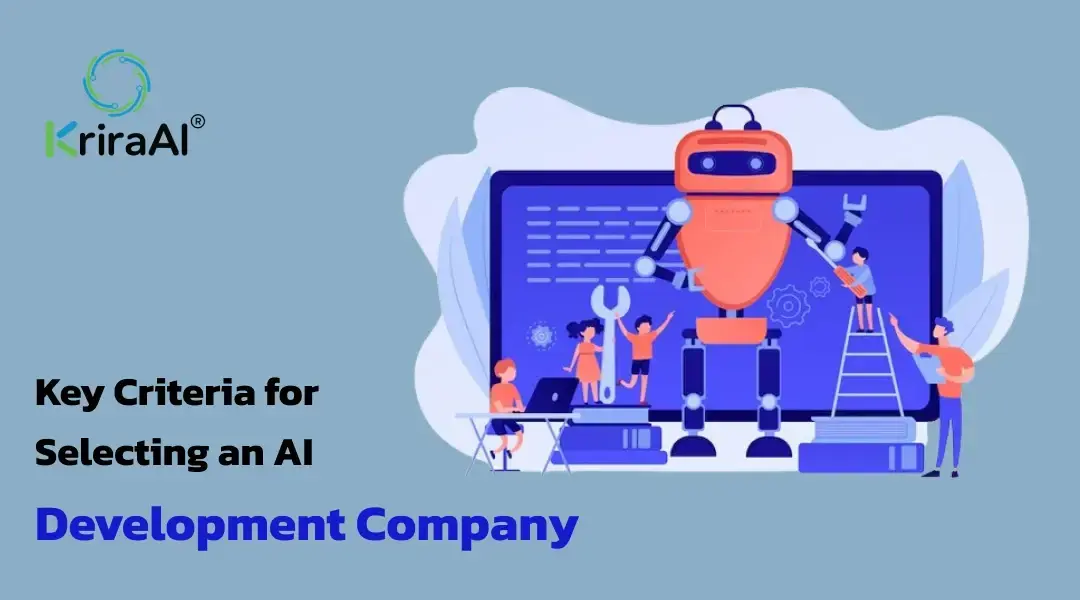
Ask directly: "Have you solved a problem like mine before?" Generic AI experience doesn’t cut it. You want someone who understands the dynamics of your vertical - whether that’s managing claim fraud in insurance or student retention in EdTech.
No, you don’t need to understand the code—but you do need to ask:
Do they build custom AI models, or just plug OpenAI into a UI?
Can they work across Azure, AWS, GCP—or are they married to one stack?
Can they integrate with your legacy systems without demanding a full rebuild?
You’d be shocked how many “AI developers” can’t explain backpropagation. Look for:
A mix of data scientists, MLOps engineers, and domain specialists
Certifications (e.g., TensorFlow Developer, AWS ML Specialty)
Real GitHub activity—not just resumes with buzzwords
This one’s underrated. You need a team that:
Gives weekly progress demos
Is brutally honest about what’s working (and what’s not)
Writes documentation that a human can read
They agree to everything. If they’re not pushing back, they’re not thinking.
They confuse you with jargon. If they can't explain it simply, they don't understand it.
They treat PoC like delivery. A demo is not a deployable product.
They disappear after handover. If post-deployment support isn’t in writing, you’re already screwed.
PoCs are your BS filter.
Any AI development firm can talk smart. But ask for:
A relevant PoC or pilot program that uses your real data
Case studies with measurable outcomes (e.g., “reduced order processing time by 40%”)
Client references you can actually call—not vague logos on their homepage
Especially critical if you’re in healthcare, finance, or logistics.
Ask:
Where will your data be stored?
How do they handle GDPR/CCPA compliance?
Is their pipeline audited for vulnerabilities?
We once turned down a project because the client wouldn’t secure PHI data. No deal is worth risking your reputation.
AI isn’t a one-off app. It’s an evolving system.
Your partner should provide:
A clear roadmap of model updates, retraining schedules, and feedback loops
Support SLAs (not just “email us if it breaks”)
Insight into how your models will adapt to new data over time
Healthcare: Look for NLP and diagnostics experience, not just chatbot demos
Retail & eCommerce: You want personalization engines and recommendation systems—not just catalog automation
Manufacturing: MLOps + IoT integration is key
Logistics: Predictive analytics and real-time data ingestion pipelines
EdTech: Adaptive learning systems > simple automation
FinTech: Fraud detection, risk modeling, compliance tracking
We’ve worked with companies in all these sectors. And the biggest wins came when we specialized deeply, not generalized broadly.
The AI model you deploy today won’t be enough tomorrow.
You need:
Continuous training on new datasets
Monitoring for model drift
Ongoing feedback from users to improve accuracy
That’s why we believe in partnership, not project-based delivery. You deserve someone who sticks around—not ghosts you post-handoff.
Choosing the right AI development partner isn’t about ticking boxes on a checklist. It’s about finding a team that sees what’s at stake, cares enough to challenge you, and has the scars to prove they’ve been here before.
At KriraAI, we’re not the flashiest firm out there. But we’re the team you call when you need something that works, scales, and actually solves your problem.
It depends on scope, but for context, our typical mid-sized AI projects range from ₹10–25L over 3–6 months.
That’s okay. A good AI partner will help you clarify the problem before proposing the solution.
If your use case requires proprietary control, custom modeling, or compliance—no. You’ll want more flexibility.
Absolutely—but the solution needs to be scoped smart. We’ve built AI tools for 10-person teams that delivered massive ROI.
Ask for live demos, case studies, and real client contacts. If they dodge, walk away.
Founder & CEO
Divyang Mandani is the CEO of KriraAI, driving innovative AI and IT solutions with a focus on transformative technology, ethical AI, and impactful digital strategies for businesses worldwide.