Let me be blunt.
Most people talking about AI agents in 2026… haven’t actually built one.
They’ve watched demos. Read threads. Maybe played with a tool or two. But production-grade AI agent development? That’s a different beast.
I’ve built these systems. Seen them fail. Fixed them at 2 AM. Shipped them anyway.
So this isn’t theory. This is what actually works.
At its core, an AI agent is simple:
It takes input. Thinks. Decides. Acts.
But here’s where most explanations fall apart: they ignore autonomy.
An AI agent doesn’t just respond. It decides what to do next.
That’s the difference between a toy and something useful.
Traditional software waits.
AI agents act.
Instead of writing rigid workflows, you define goals,s and the agent figures out the path.
Let me ask you something:
Would you rather hardcode 50 rules… or define one objective and let the system handle the rest?
Exactly.
That's why businesses are shifting toward AI agents for automation, especially retail businesses adopting AI agents for customer support, sales, and day-to-day operations.
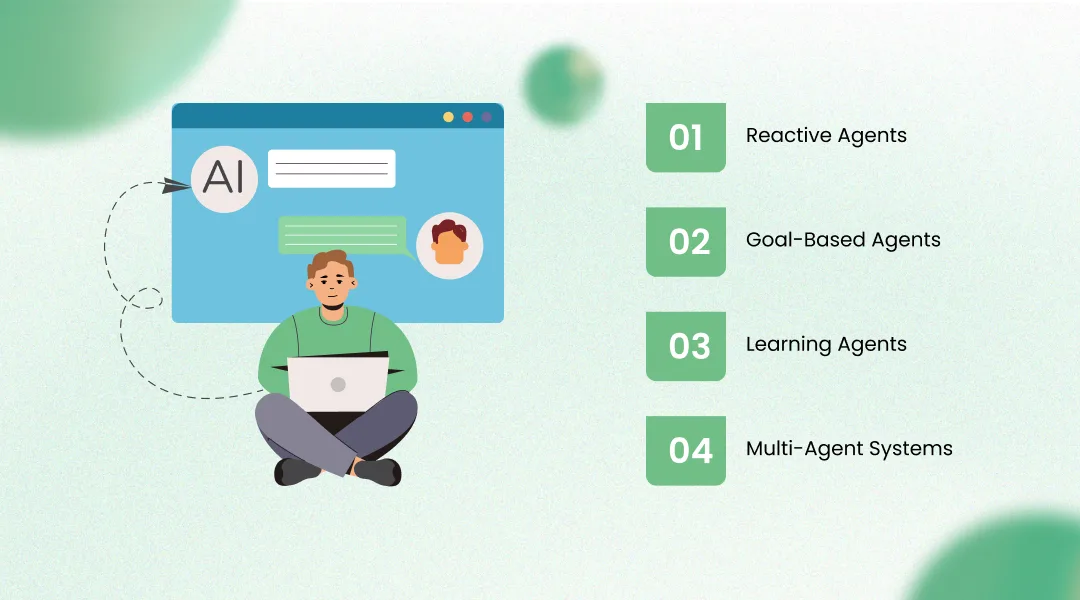
No memory. No planning. Just input → output.
Fast. Cheap. Limited.
They work toward a defined objective.
Think: “Book meetings,” “Close leads.”
They improve over time using feedback loops.
This is where things get interesting.
Multiple agents collaborating.
(Yes, agents talking to other agents. Sounds chaotic. Sometimes it is.)
Handling calls like a human.
This is where Custom AI Voice Agent Development becomes critical because generic solutions fail fast in real conversations.
Agents resolve tickets, escalating only when needed.
Lead qualification. Follow-ups. CRM updates.
All automated.
Your own assistant that manages tasks, emails, and reminders.
This is the part most blogs mess up.
So pay attention.
Where data comes from:
User input
APIs
Voice
This is where reasoning happens.
Not just text generation decision-making logic.
Short-term: current conversation Long-term: user history, preferences
Skip this, and your agent feels dumb and at scale, that's exactly why agent memory needs proper governance, not just a vector store bolted on
APIs. Databases. Functions.
Without tools, your agent can’t do anything useful.
Text, voice, actions.
That’s your final delivery.
Python
JavaScript (Node.js)
LangChain
CrewAI
AutoGen
(If you're searching for a proper LangChain AI agent guide, start with orchestration, not prompts.)
OpenAI
Open-source models (LLaMA, Mistral)
Pinecone
Weaviate
For voice agents:
Whisper
ElevenLabs
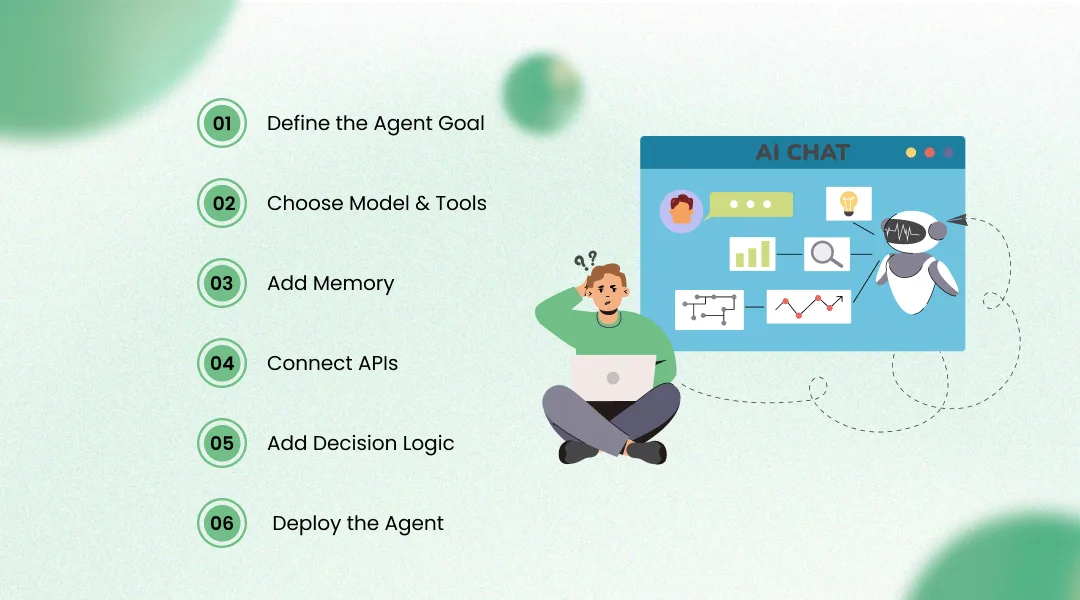
Let’s get practical.
Be specific.
Bad: “Help users.” Good: “Answer support queries and escalate billing issues”
Pick your LLM and required APIs.
Use vector databases for context storage.
This is where your agent becomes useful.
CRM. Payment systems. Databases.
This is the secret sauce.
Not prompts. Logic. Step 6: Deploy the Agent
Backend server
API endpoints
UI or voice interface
Now it’s real.
Agents working together toward a shared goal.
It means agents dynamically selecting tools, and increasingly that means understanding how MCP standardizes tool calling for agents across different systems
Injecting real-time knowledge.
Minimal human intervention.
(Also… maximum chaos if done wrong.)
Let’s clear this up.
Chatbot:
Predefined responses
Script-based
AI Agent:
Dynamic decisions
Goal-oriented
If you’re still building chatbots in 2026…
You’re already behind.
You don’t need 10 tools on day one.
Start simple.
Stateless agents are useless for real workflows.
Yes, prompts matter,r but they’re not everything.
We’re moving toward:
Fully autonomous business processes
Voice-first interfaces
AI employees (not assistants)
And here’s the uncomfortable truth:
Companies that don’t adopt this early… will struggle.
I’ve seen it happen already.
Building an AI agent isn't about tools;ls it's about thinking differently, and it's the kind of shift the team at KriraAI works through with clients every day
It’s about thinking differently.
From rules → goals From scripts → decisions
If you get that shift, everything else becomes easier.
And if you don’t?
You’ll keep building smarter chatbots… while others build actual agents.
Define goal → choose model → add memory → connect tools → add logic → deploy.
LLMs, frameworks (LangChain), vector DBs, APIs, and backend infrastructure.
Agents make decisions. Chatbots follow scripts.
From $1,000 (basic) to $50,000+ depending on complexity.
Depends on your use case but working with a specialized AI Agents Company or Best AI Voice Agent development company ensures production-ready systems.
Founder & CEO
Divyang Mandani is the CEO of KriraAI, driving innovative AI and IT solutions with a focus on transformative technology, ethical AI, and impactful digital strategies for businesses worldwide.