I’ll be honest with you.
Most businesses I talk to in 2026 aren’t struggling because they lack AI. They’re struggling because they picked the wrong kind.
They bought tools. Not solutions.
And now they’re stuck with dashboards nobody opens and bots that annoy customers more than help them.
So let me ask you something.
Do you actually need an AI agent or just a smarter workflow?
I’ve spent the last few years building and deploying AI systems at KriraAI. Not demos. Real systems. The kind that handles thousands of customer queries, qualifies leads, and sometimes even closes deals.
This guide? It’s everything I wish my clients knew before they started.
AI Agents are autonomous software systems that can perform tasks, make decisions, and interact with users without constant human input.
Simple.
But also misunderstood.
Think of an AI agent like a digital employee.
It listens (via chat, voice, APIs)
It thinks (using models + logic)
It acts (responds, triggers workflows, updates systems)
That’s it.
No magic. Just structured intelligence.
And when built right, these AI agents for business automation can handle repetitive work faster and more consistently than any human team, as demonstrated by how autonomous AI agents for complex business processes can manage more sophisticated workflows.
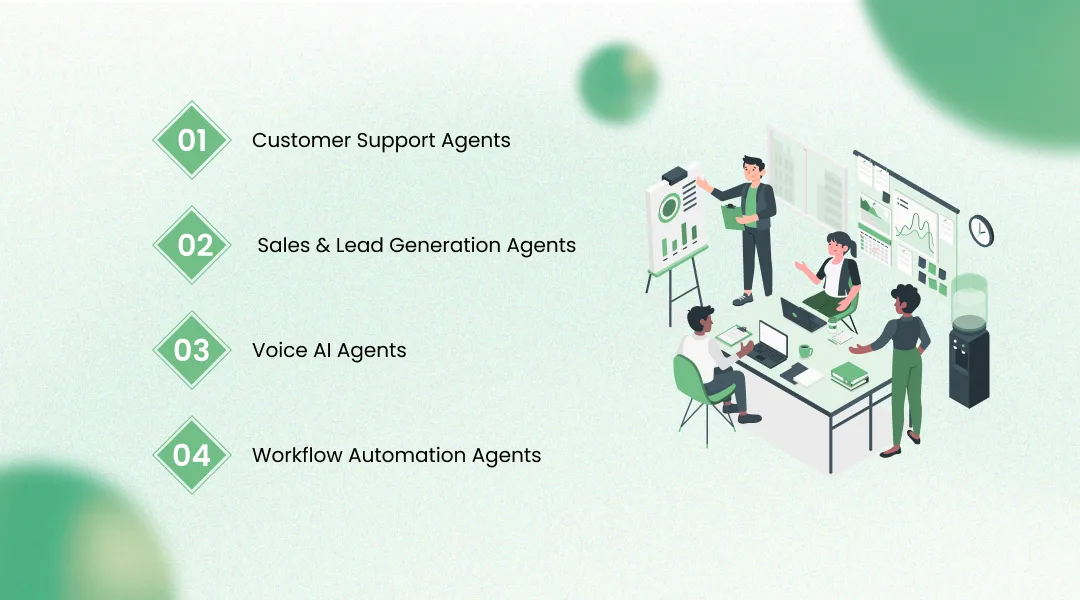
Not all AI Agents are created equal. That’s where most businesses mess up.
Handle FAQs, tickets, complaints
Reduce support workload by up to 70% (based on my projects)
Key use: AI agents for customer service
Qualify leads
Follow up instantly
Personalize outreach
These are your AI sales agents and chatbots, but smarter.
Answer calls
Book appointments
Handle inbound/outbound communication
This is where AI voice agents for business shine, especially with real-time AI voice assistant capabilities.
Connect tools (CRM, email, analytics)
Automate internal operations
This is the backbone of serious business AI automation tools.
Let’s cut through the fluff.
You don’t need a 10-person support team anymore. You need 2 humans + 1 smart system.
AI doesn’t sleep. Doesn’t take breaks. Doesn’t miss leads at 2 AM.
Fast responses. Consistent answers. No “please wait 24 hours.”
Better lead handling = more conversions. I’ve seen 30–45% increases. Real numbers.
This is what you came for.
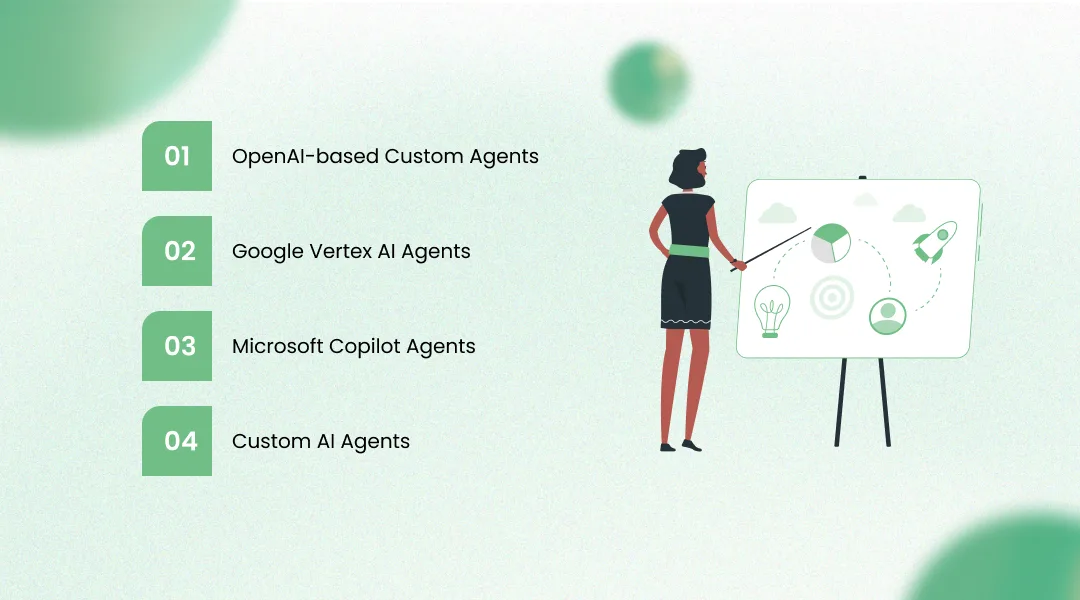
Here’s my no-nonsense list of the best AI agents for business 2026.
Best for: Advanced customization
Features: NLP, reasoning, integrations
Pricing: Usage-based
Pros: Flexible, powerful
Cons: Requires technical setup
Best for: Enterprise-scale operations
Features: Data integration, automation
Cons: Expensive for SMBs
Best for: Teams using the Microsoft ecosystem
Features: Office integration, automation
This is where things get interesting.
At KriraAI, we don’t sell generic tools. We build systems tailored to your workflows.
Because here’s the truth:
Your business is not generic. Your AI shouldn’t be either.
As an AI Agents Company, we’ve built:
Sales agents that close leads
Support agents that reduce tickets by 60%
Internal agents that automate operations
And yes, we’ve even deployed AI Agents for Finance workflows like invoice processing and fraud detection.
Best for: Non-technical teams
Features: Workflow automation
Cons: Limited intelligence layer
This confusion needs to end.
Feature | AI Agents | Chatbots |
Intelligence | High | Low |
Decision-making | Yes | No |
Learning | Continuous | Limited |
Use cases | Complex workflows | FAQs |
If you just want FAQ replies → Chatbot.
If you want real automation → AI Agents.
Simple.
This is where most businesses fail.
Don’t start with tools. Start with problems.
Custom solutions cost more upfront but save more in the long term.
Your AI must work with your CRM, tools, and workflows.
Otherwise? It’s useless.
Let me show you how this plays out in real life.
Order tracking
Customer queries
Upselling
Appointment booking
Patient support
Lead qualification
Onboarding automation
Property inquiries
Call handling
Lead nurturing
Here’s where things get serious.
In 2026, we’re seeing:
Multi-agent systems (agents talking to agents)
Voice-first interfaces replacing forms
Deep personalization
And the biggest shift?
AI is moving from “tool” to “team member.”
Let that sink in.
I’ve seen businesses waste money chasing AI trends.
I’ve also seen companies double their revenue by implementing the right system.
The difference?
Clarity.
If you take one thing from this article, let it be this:
AI is not an advantage. Right implementation is.
They collect input, process it using models, and execute tasks like responding or automating workflows.
It ranges from $500/month (tools) to $10,000+ (custom solutions).
Yes, for complex workflows and personalization.
Focus on your use case, integrations, and scalability—not just features.
E-commerce, SaaS, healthcare, finance, and real estate.
Founder & CEO
Divyang Mandani is the CEO of KriraAI, driving innovative AI and IT solutions with a focus on transformative technology, ethical AI, and impactful digital strategies for businesses worldwide.