I’ve sat in too many meetings where the dashboard looked perfect.
Clean charts. Green indicators. Everything “on track.”
And yet… decisions were late. Opportunities missed. Teams reacting instead of acting.
Here’s the uncomfortable truth: most businesses don’t have a data problem. They have a timing problem.
And that’s exactly where AI SaaS solutions enter the picture—not as another tool, but as a shift in how decisions happen.
Let’s strip the buzzwords.
AI SaaS solutions are cloud-based software platforms that don’t just store or display data, they think with it. They analyze patterns, predict outcomes, and trigger actions automatically.
Simple.
Traditional SaaS:
Shows what happened
Requires human decisions
Static workflows
AI SaaS:
Predicts what will happen
Suggests or takes actions
Learns over time
Think of it this way.
Traditional SaaS gives you a map. AI SaaS gives you a GPS that reroutes in real time.
Let me ask you something.
How many tools does your business use right now?
Five? Ten? Twenty?
And yet… decisions still feel slow.
Most SaaS tools operate in isolation. They don’t “talk.” They don’t think together.
Reports come after the fact. By the time you see the issue, it’s already cost you.
Teams still interpret dashboards manually. That’s not scale—that’s dependency.
You’re drowning in data but starving for clarity.
(Yes, I’ve seen companies spend lakhs on tools… and still rely on Excel exports.)
Here’s where things get interesting.
AI SaaS for real-time automation doesn’t wait. It reacts instantly.
Data flows in. AI analyzes it immediately. No lag.
If X happens, the system triggers Y. No human needed.
Instead of reacting, the system anticipates.
Imagine your system detecting a drop in sales and launching a campaign automatically.
No meetings. No delays.
Just action.
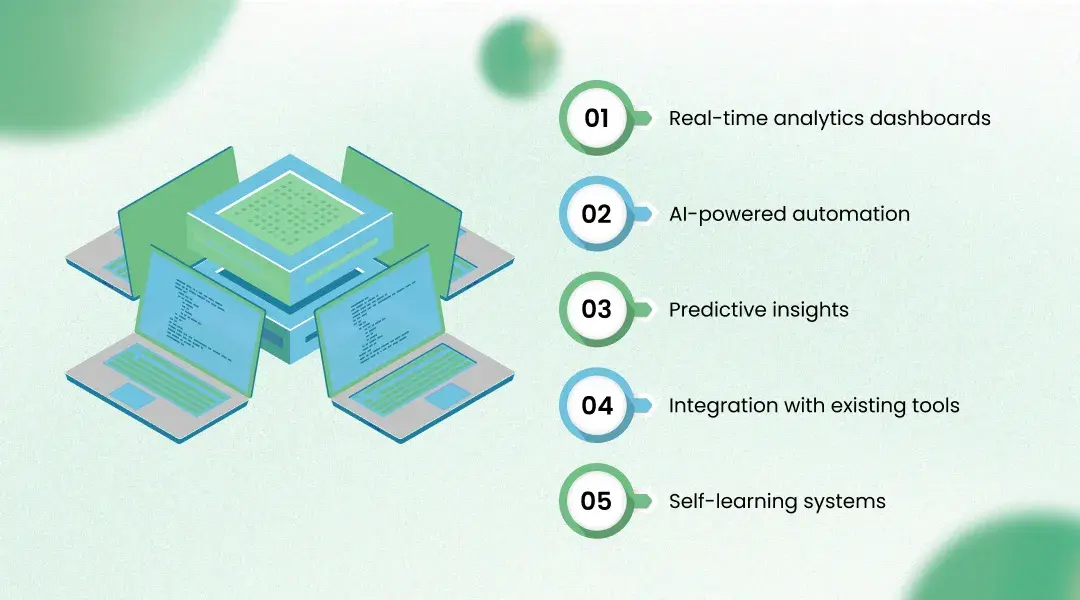
Not all AI SaaS platforms are equal. The good ones share a few traits.
Not just visuals—live insights that evolve every second.
Processes that run without constant human supervision.
Forecasting demand, churn, risks—before they happen.
Because replacing everything? Unrealistic.
The more data they process, the smarter they get.
Let’s talk outcomes.
Because at the end of the day, no one cares about features.
Decisions shift from hours to seconds.
Less manual effort. Fewer errors.
Teams focus on strategy, not repetitive tasks.
Real-time responses. Personalized interactions.
Growth without proportional increase in workload.
This is why many companies now actively look for the Best AI development Company, because building the right system matters more than buying another tool.
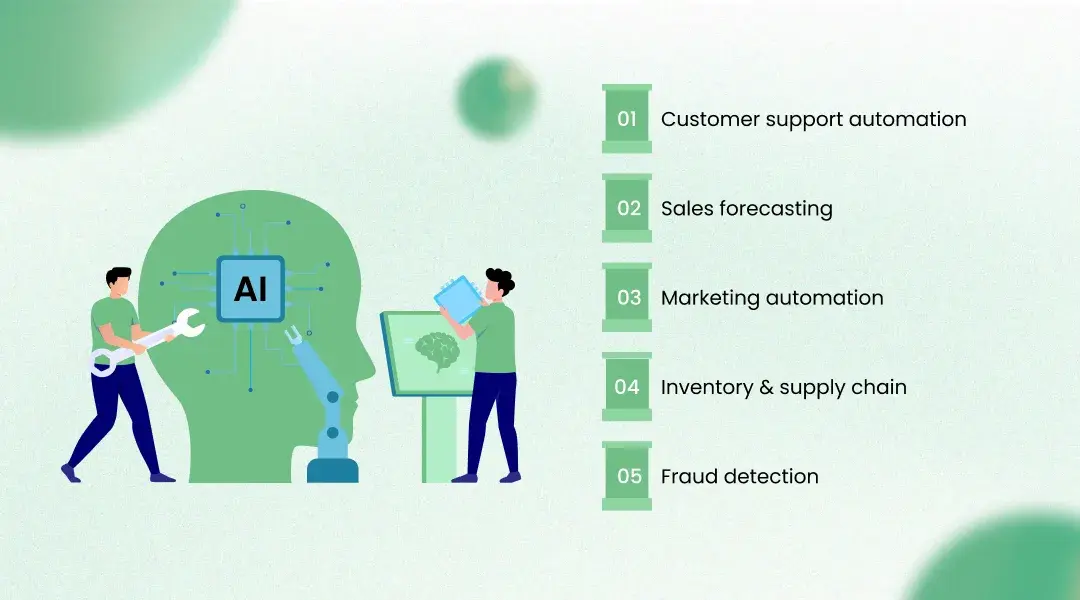
Let’s make this real.
AI handles queries instantly, routes complex issues, and learns from conversations.
Predict revenue trends and adjust strategies on the fly.
Campaigns that adapt based on live user behavior.
Stock levels adjust automatically based on demand signals.
Suspicious activity flagged instantly—not hours later.
One of our clients reduced fraud response time from 6 hours to under 5 minutes.
Five minutes.
Pause and think about that.
Let’s simplify.
Aspect | Traditional SaaS | AI SaaS |
System Type | Static | Intelligent |
Response | Reactive | Proactive |
Decision Making | Manual | Automated |
Learning | None | Continuous |
It’s not an upgrade.
It’s a different philosophy.
This is where most businesses go wrong.
They choose features instead of fit.
Start with your problem. Not the tool.
Can it work with what you already use?
Will it grow with you?
Because no two businesses are identical.
Cheap tools can be expensive mistakes.
Let’s not pretend this is easy.
Garbage in, garbage out. Clean your data first.
Legacy systems don’t always cooperate.
Upfront investment can feel heavy—but long-term gains justify it.
Teams resist change. Always.
I’ve seen projects fail not because of tech… but because people didn’t trust it.
Solution?
Start small. Prove value. Scale gradually.
This is where things shift from interesting to inevitable.
Systems that run entire workflows without human intervention.
Digital agents making decisions, coordinating tasks, optimizing outcomes.
Everything connected. Everything responsive.
No delays.
No guesswork.
Just continuous adaptation.
Let me be blunt.
If your business is still relying on dashboards alone, you’re already behind.
Not because dashboards are bad.
But because they’re passive.
AI-powered SaaS solutions change that. They move your business from observation to action. From delay to immediacy.
And if you’re serious about building something that actually works—not just looks impressive, you need more than tools.
You need the right thinking. The right architecture. The right partner.
AI SaaS solutions are cloud-based platforms that use artificial intelligence to analyze data, automate workflows, and provide predictive insights in real time.
It reduces manual work, speeds up decision-making, and automates repetitive processes, allowing teams to focus on strategic tasks.
Traditional SaaS provides data and requires manual action, while AI SaaS analyzes data, predicts outcomes, and can automate decisions.
Yes. With the right implementation, even small businesses can benefit from automation, cost savings, and improved efficiency.
Focus on your business needs, integration capabilities, scalability, customization, and long-term ROI instead of just features.
Founder & CEO
Divyang Mandani is the CEO of KriraAI, driving innovative AI and IT solutions with a focus on transformative technology, ethical AI, and impactful digital strategies for businesses worldwide.