Let me be blunt.
Most businesses don’t have a revenue problem. They have a decision problem.
I’ve seen companies spend lakhs on marketing, hire aggressive sales teams, and still… plateau. Not because the market is bad. Not because the product is weak.
But because they’re guessing.
This is a real AI case study from a mid-sized SaaS + eCommerce hybrid business we worked with at KriraAI. And no, this isn’t a fairy tale. It’s messy, practical, and painfully honest.
The result? 3X revenue growth in under 9 months.
But the interesting part isn’t the number. It’s how we got there.
Before AI, the company looked “fine” on the surface. Revenue was steady. Traffic was decent.
But under the hood?
Plenty of visitors. Very few buyers. They didn’t know why.
Manual processes everywhere. Decisions took days instead of minutes.
Data existed—but it was scattered, unused, and misunderstood.
Let me ask you something.
Do you actually know why your best customers buy? Or are you just assuming?
(That question usually makes people uncomfortable. Good. It should.)
We didn’t start with tools. We started with clarity.
Predictive analytics models
Customer segmentation algorithms
AI-driven recommendation engine
Automated lead scoring system
Instead of replacing systems, we enhanced decision-making layers.
Because here’s the truth: AI doesn’t fix bad strategy. It amplifies it.
Traditional tools report what happened. AI predicts what will happen—and suggests what to do next.
That’s the difference between reacting and leading.
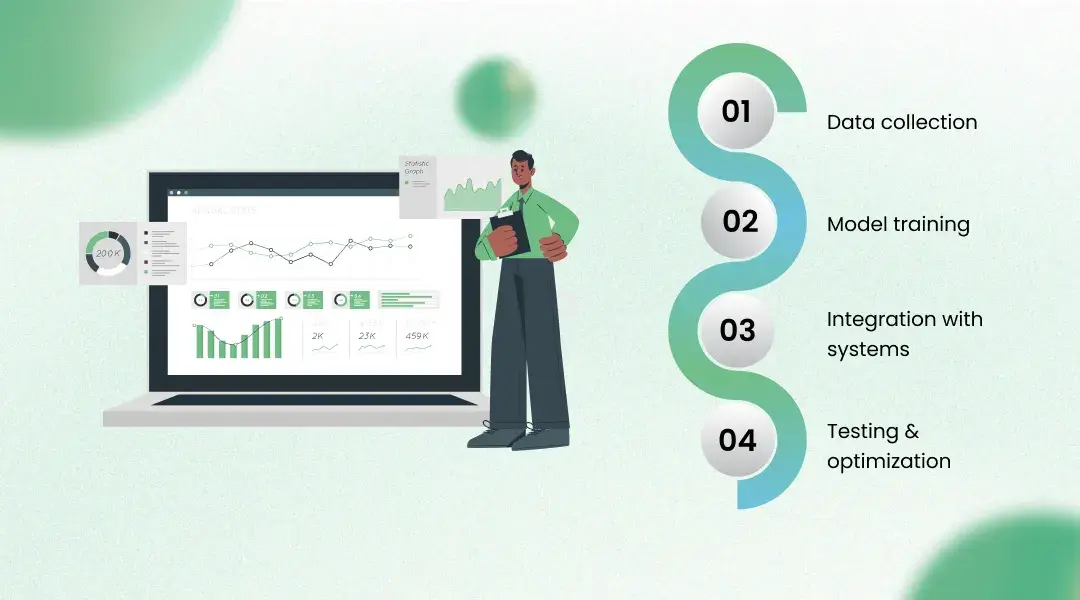
No magic. Just structured execution.
We unified data from CRM, website, and sales channels.
Messy. Incomplete. Real-world data always is.
We trained models on:
Customer behavior
Purchase patterns
Engagement signals
Integrated AI into:
Sales dashboards
Marketing automation tools
Customer support workflows
We didn’t trust the first output. We tested. Adjusted. Re-tested.
(If someone tells you AI works perfectly from day one, run.)
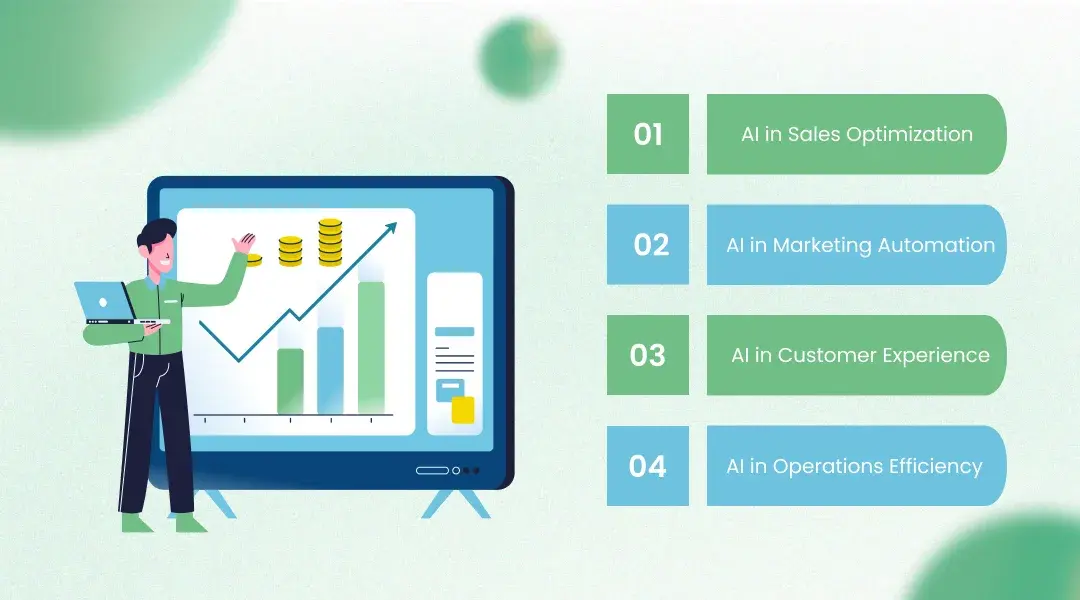
This is where things got interesting.
AI identified high-intent leads.
Sales team stopped chasing everyone—and started closing the right ones.
Result? Higher conversion with less effort.
Campaigns became behavior-driven, not assumption-driven.
Personalized messaging. Better timing. Smarter targeting.
AI recommendation engine increased average order value.
Customers saw what they actually wanted.
Not what the company thought they wanted.
Routine decisions were automated.
Which freed up human teams for high-value work.
Simple shift. Massive impact.
There’s always a moment.
For this company, it came in month 3.
Suddenly:
Sales cycles shortened
Marketing spend became efficient
Customer engagement improved
The bottlenecks? Gone.
Not because we worked harder. Because we worked smarter decisions into the system.
Let’s talk numbers.
Conversion rate: +120%
Customer acquisition cost (CAC): -35%
Average order value: +60%
Overall revenue: 3X growth
Timeline? 9 months.
This wasn’t overnight success. It was consistent, compounding improvement.
Now the question everyone asks:
Was it worth it?
Initial investment: Moderate Return: Exponential over time
~4–5 months
After that? Pure upside.
This is what a real AI ROI case study looks like. Not theory. Not hype.
Here’s what I’ve learned after 20+ implementations.
Jumping to tools without strategy
Ignoring data quality
Expecting instant results
AI is a system, not a feature
Start small, scale fast
Focus on decision-making, not automation
(And here’s the uncomfortable one…)
Most businesses don’t fail at AI. They fail at clarity.
You don’t need millions to start.
You need direction.
Audit your data
Identify revenue leaks
Start with one AI use case
Measure everything
If you’re asking the question, you’re already late.
Customer insights
Sales efficiency
Marketing ROI
If you're searching for a Best AI development Company or a reliable AI Company in India, focus on partners who understand business, not just code.
Here’s where it gets serious.
AI isn’t a one-time project. It becomes your growth engine.
Companies that integrate AI into decision-making will:
Move faster
Adapt better
Outperform consistently
Others?
They’ll keep guessing.
I’ve seen both sides.
Businesses that hesitate and stay stuck. And businesses that act and transform.
This wasn’t about technology. It was about clarity, execution, and trust in data.
So I’ll leave you with this:
Are you running your business on insights… or instincts?
Because that answer decides everything.
AI improves decision-making by analyzing data patterns, optimizing sales, personalizing marketing, and reducing inefficiencies, directly impacting revenue growth.
ROI varies, but most businesses see returns within 4–6 months through improved conversions, reduced costs, and better targeting.
Yes. AI is scalable and can start with small use cases, making it accessible and highly beneficial for SMEs.
Initial improvements can appear within 2–3 months, with significant results typically within 6–9 months.
Sales optimization, customer experience personalization, marketing automation, and operational efficiency are the most impactful areas.
Founder & CEO
Divyang Mandani is the CEO of KriraAI, driving innovative AI and IT solutions with a focus on transformative technology, ethical AI, and impactful digital strategies for businesses worldwide.