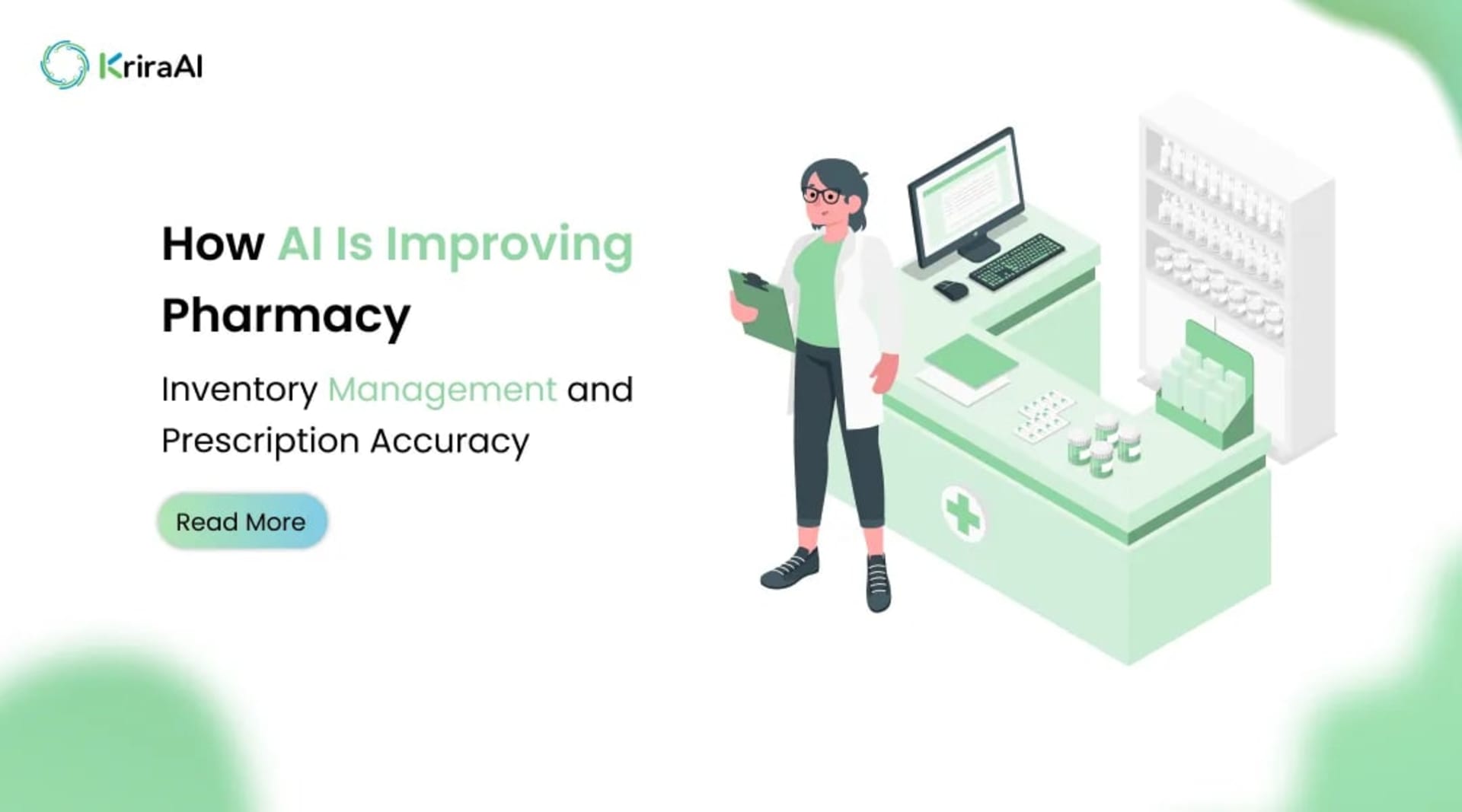
Three years ago, I walked into a mid-sized hospital pharmacy in Gujarat.
The shelves were full. The staff looked busy. The software dashboard looked impressive.
Yet they were losing money every single week.
Expired insulin. Missing antibiotics. Emergency purchases at premium rates. And one near-miss prescription error that almost became a legal nightmare.
This is the reality of traditional pharmacy management.
And this is exactly where AI in pharmacy inventory management stops being a buzzword and starts becoming survival infrastructure.
Let me show you why.
At its core, AI in pharmacy inventory management means using intelligent systems that analyze data - past sales, seasonal trends, prescription patterns, to automatically predict demand, monitor stock, and reduce errors.
Not robots running around. Not sci-fi automation.
Just software that thinks before problems happen.
A modern pharmacy inventory management system with AI does three critical things:
Collects historical data (sales, prescriptions, supplier timelines).
Uses machine learning models to predict future demand.
Automates alerts, reorders, and risk detection.
I’ve personally deployed AI in healthcare inventory management systems that reduced emergency procurement by 38% within six months. The math isn’t magic. It’s pattern recognition at scale.
And pharmacies generate a lot of patterns.
Let’s be honest.
Manual systems don’t fail dramatically. They fail quietly. Slowly. Expensively.
One product runs out. Another expires untouched.
You’ve seen it.
How does AI reduce pharmacy stockouts and expired medicines? By predicting demand before your intuition does.
Pharmacies lose 2–5% revenue annually due to expired stock. Most owners don’t even track it accurately. They just “absorb” the loss.
That silent leakage hurts more than visible mistakes.
Spreadsheets. Paper logs. Semi-integrated ERP systems.
One decimal mistake. One skipped entry. Chaos.
This one keeps me up at night.
Fatigue. Similar drug names. Dosage confusion.
Human beings are brilliant. But we are not infallible.
This is where AI in prescription accuracy becomes life-saving.
Literally.
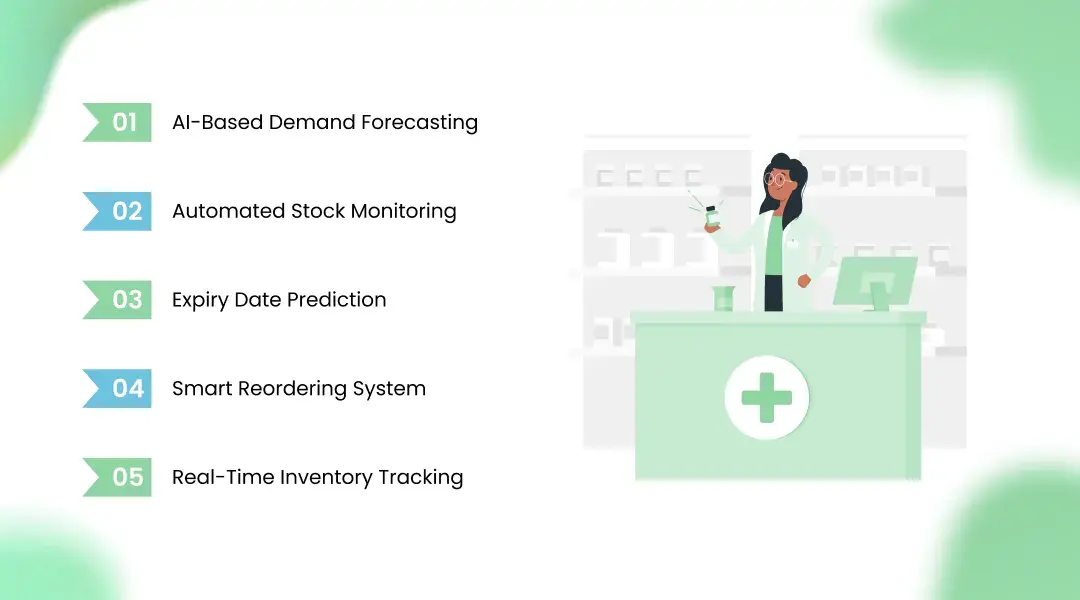
Now let’s talk solutions.
AI models analyze seasonal trends, epidemic patterns, doctor prescription behavior, and even local weather data.
Yes. Weather.
When I implemented AI for pharmacy management for a retail chain, the system predicted a dengue-related surge before suppliers even adjusted pricing.
Prediction beats reaction. Every time.
Instead of monthly audits, AI tracks inventory movement in real time.
If stock movement deviates from normal patterns, alerts trigger instantly.
No more waiting until month-end to discover disaster.
AI doesn’t just track expiry dates. It predicts which batches are at risk of expiring unsold based on velocity.
This allows dynamic discounting or redistribution across branches.
One client reduced expired inventory by 42%. That’s not theory. That’s cash saved.
AI calculates optimal reorder quantities based on supplier lead times and demand forecasts.
Not guesswork. Not “what we ordered last time.”
Intelligent timing.
Integrated dashboards provide live visibility across multiple branches.
For chains, this changes everything.
Artificial intelligence in pharmacy transforms blind spots into clarity.
Now let’s shift gears.
Inventory mistakes hurt profits. Prescription mistakes hurt people.
Different level of seriousness.
AI cross-checks prescriptions against standardized databases instantly.
Typos. Duplicate entries. Inconsistent dosage.
Flagged.
Immediately.
Can AI prevent prescription errors in pharmacies? In many cases - yes. Especially preventable ones.
AI systems scan combinations of medications for potential interactions in milliseconds.
No human can manually evaluate thousands of interaction possibilities that fast.
Age. Weight. Medical history.
AI compares dosage recommendations against clinical guidelines.
If something looks off, it raises a flag before dispensing.
Integrated patient history triggers automatic warnings for known allergies.
No memory reliance. No guesswork.
Handwritten prescriptions are a risk factor.
AI-supported digital prescriptions reduce ambiguity and improve clarity.
I once reviewed a case where a poorly written prescription nearly led to a 10x dosage error. That moment changed how seriously I advocate for AI in pharmacy.
Because sometimes, technology is not about efficiency.
It’s about protection.
Large hospitals use AI in healthcare inventory management to manage thousands of SKUs across departments.
Automated alerts prevent critical medicine shortages in ICUs.
Think about that for a second.
An ICU without essential drugs is not an operational issue. It’s a crisis.
Retail chains use pharmacy inventory management systems with AI to balance stock between branches.
If one location has surplus and another faces shortage, redistribution recommendations appear instantly.
Margins improve. Waste reduces.
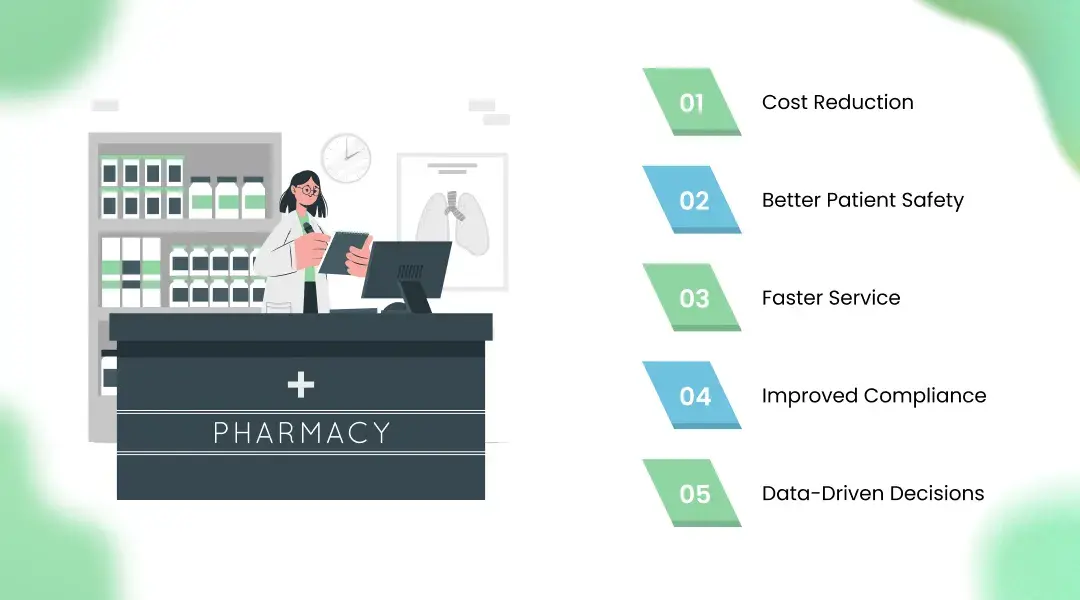
Let’s simplify.
Lower expired stock. Fewer emergency purchases. Optimized procurement.
Direct financial impact.
Reduced prescription errors. Interaction checks. Allergy alerts.
Trust improves.
Automated stock visibility means quicker dispensing.
Customers don’t wait while staff “check the back room.”
AI logs actions and tracks audit trails.
Regulatory inspections become less stressful.
Instead of gut instinct, owners use dashboards backed by evidence.
This is the quiet strength of AI for pharmacy management.
Let’s not pretend this is effortless.
Pharmacies handle sensitive patient data.
Is AI safe for handling pharmacy patient data?
Only if implemented correctly. Encryption, compliance standards, secure architecture - non-negotiable.
Legacy software can be messy.
I’ve integrated AI into 10-year-old pharmacy ERPs. It’s possible. But it requires experience.
This is why choosing the right partner matters. (And yes, this is where working with a Best AI development Company makes a difference.)
What is the cost of implementing AI in pharmacy management?
It varies. Small pharmacies can start with modular solutions. Large hospitals require custom architecture.
But here’s the real question:
How much is your current inefficiency costing you?
We’re just getting started.
AI will predict medication demand based on regional disease outbreaks before they escalate.
Dosage recommendations tailored to patient genetics and history.
Robotic dispensing integrated with AI in pharmacy inventory management.
Faster. Safer. Smarter.
And no, this doesn’t replace pharmacists.
It upgrades them.
Pharmacy management isn’t just about shelves and software.
It’s about trust.
Trust that the right medicine is available. Trust that prescriptions are accurate. Trust that systems won’t fail silently.
Artificial intelligence in pharmacy doesn’t remove human judgment.
It reinforces it.
If you’re exploring practical implementation - not hype - partnering with an experienced team matters. Whether you’re evaluating vendors or looking for the Best AI development Company, clarity should come before commitment.
Because AI should solve real problems.
Not create new ones.
AI analyzes sales trends and predicts demand, ensuring optimal stock levels and minimizing overstocking or shortages.
AI significantly reduces preventable errors by detecting drug interactions, incorrect dosages, and allergy conflicts.
Costs vary based on scale and customization, but modular AI solutions are available for small and mid-sized pharmacies.
Yes, when implemented with proper encryption, compliance standards, and secure data architecture.
Absolutely. Scalable AI solutions can be tailored for both small pharmacies and large hospital systems.
Founder & CEO
Divyang Mandani is the CEO of KriraAI, driving innovative AI and IT solutions with a focus on transformative technology, ethical AI, and impactful digital strategies for businesses worldwide.