I’ve sat in war rooms where support dashboards were glowing red.
Hundreds of pending tickets. Customers waiting. Managers stressed. Revenue quietly leaking out the back door.
And the most painful part? The team was working hard. Really hard.
This is where AI in customer support stops being a buzzword and starts becoming oxygen.
I’m a Senior AI Solutions Strategist at KriraAI. I’ve led more than 20 implementations of AI customer support automation across e-commerce, SaaS, fintech, and enterprise teams. And I can tell you something confidently:
Speed isn’t a luxury in support. It’s survival.
Let’s be honest.
When a customer reaches out, they’re not in a good mood.
They’re confused. Or frustrated. Or stuck.
The first reply sets the emotional tone. A fast response says: “We see you.”
A slow one says: “You’re not a priority.”
Every minute matters. And customers remember how long they waited more than what you actually said.
Support delays don’t stay private anymore. They go to social media. Review platforms. Public forums.
Speed is reputation insurance.
Want a blunt truth?
Delayed replies cost sales.
Cart abandonment. Subscription cancellations. Refund requests. All of them spike when response time stretches beyond acceptable limits.
So when people ask me, “How AI improves response time?” — this is the business case.
Let’s clear the confusion.
AI in customer support means using machine learning, natural language processing, and automation systems to assist or handle customer interactions in real time.
Traditional support:
Manual ticket sorting
Limited working hours
Human-only replies
AI-powered support:
Instant acknowledgment
Automated ticket categorization
Smart routing
Predictive suggestions
It’s not about replacing humans.
It’s about removing delay.
AI chatbot for customer support
Machine learning for ticket classification
Sentiment analysis
Automated knowledge retrieval systems
This is where AI for customer service teams becomes practical, not theoretical.
Now we get tactical.
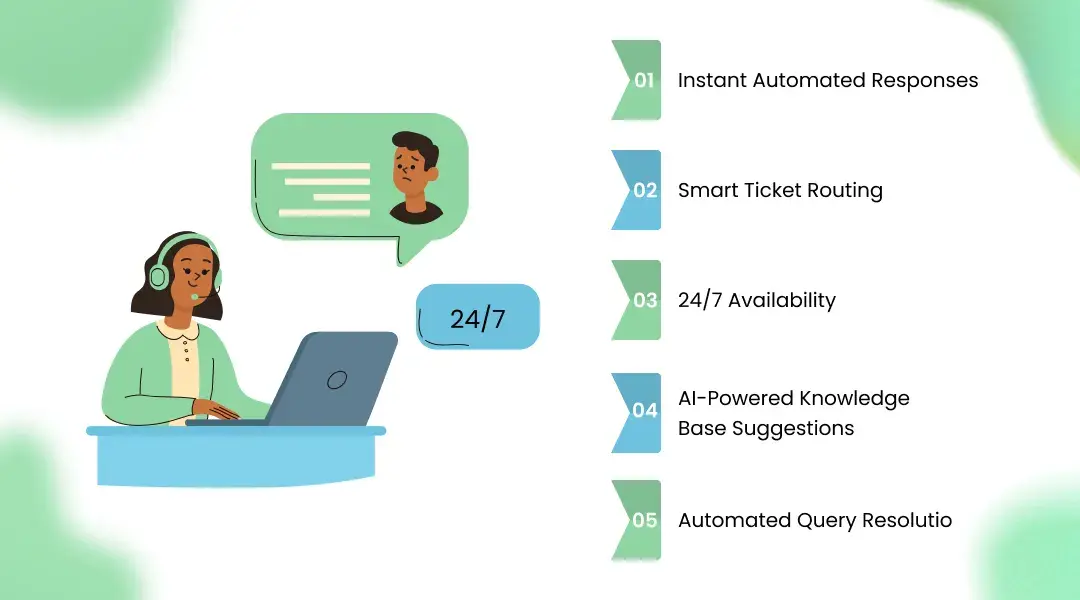
The first thing AI fixes? Silence.
An AI chatbot for customer support responds instantly. Even at 2:17 AM.
No “We’ll get back to you in 24 hours.” Immediate acknowledgment.
And that alone reduces perceived waiting time by up to 40% in most deployments I’ve managed.
Here’s a hidden bottleneck most companies ignore.
Tickets sitting in the wrong queue.
AI-based classification reads the message, detects intent, urgency, and even sentiment — and routes it to the right person instantly.
No manual triage.
No confusion.
That’s customer support automation using AI in action.
Customers don’t check your office hours before having a problem.
AI doesn’t sleep.
Whether it’s weekend traffic spikes or festive season sales, AI customer service solutions maintain constant coverage.
This is where support agents secretly fall in love with AI.
Real-time suggestions. Auto-filled answers. Context-aware prompts.
Instead of searching for answers, agents get them pushed directly into their workflow.
Seconds saved per ticket. Multiplied by thousands.
Do the math.
Most support tickets are repetitive.
“Where is my order?” “How do I reset my password?” “What is your refund policy?”
AI resolves these instantly. No human involvement required.
And suddenly, your team is free to handle the complex issues that actually require empathy and judgment.
Let me ask you something.
Do you really want a bot handling an angry VIP customer threatening to cancel a ₹5 lakh contract?
Exactly.
The future isn’t bot vs human.
It’s hybrid.
AI handles repetitive queries. Humans handle emotional complexity.
Escalation systems ensure that if sentiment drops or intent becomes sensitive, the case moves to a human instantly.
Speed plus empathy.
That balance is where smart companies win.
When response time drops, here’s what I consistently see:
CSAT scores rise because customers feel heard.
Fast support reduces churn. Especially in SaaS models.
Here’s the part CFOs love.
AI customer support automation reduces dependency on large tier-1 support teams for repetitive issues.
Agents stop drowning in routine tickets.
Morale improves. Burnout drops.
And yes, ROI becomes measurable within months.
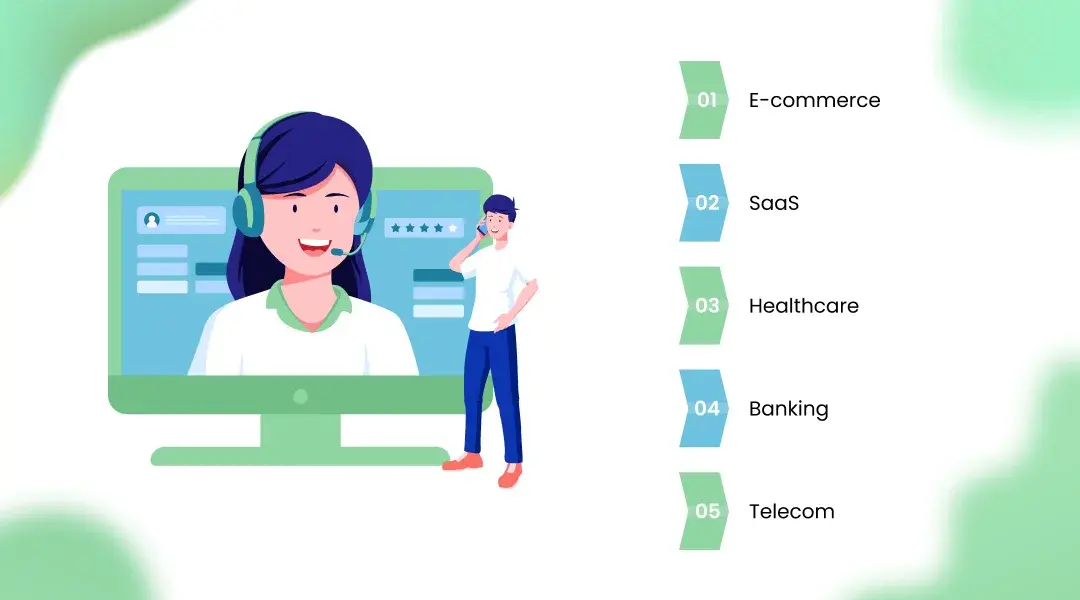
This isn’t limited to one sector.
Order tracking, returns, refund automation.
Technical troubleshooting, onboarding queries.
Appointment scheduling, patient FAQs.
Account queries, transaction alerts.
Plan changes, billing questions.
Across all of these, AI in customer support reduces friction dramatically.
Not all tools are equal.
When clients approach us at KriraAI — often after failed experiments — I ask them to check five things:
Strong NLP capability
Omnichannel support (email, chat, WhatsApp, social)
CRM integration
Analytics dashboard
Scalability
Choosing the right partner matters. That’s why businesses evaluating the Best AI development Company often look beyond flashy demos and focus on implementation depth.
Let’s not pretend this is frictionless.
Bad data = bad responses.
Solution? Clean historical ticket data before deployment.
Support teams sometimes fear job loss.
Transparency fixes this. Position AI as an assistant, not a replacement.
Automation should not sound robotic.
Careful conversational design keeps tone warm and brand-aligned.
I’ve seen companies hesitate.
I’ve seen others act.
The difference? Months later, one group is still firefighting. The other has breathing room.
If your team is overwhelmed, if response times are slipping, if customers are getting impatient — the question isn’t whether AI helps.
It’s how long you can afford to wait.
And if you’re exploring implementation, partner with a team that builds tailored systems, not generic bots. That’s how sustainable impact happens.
AI automates instant replies, routes tickets intelligently, and resolves repetitive queries without human delay.
No. AI supports agents by handling routine tasks, allowing humans to focus on complex and emotional issues.
Most businesses see reduced operational costs, improved CSAT, and measurable efficiency gains within months.
Depending on complexity, basic AI chatbot deployment can take 4–8 weeks, while advanced systems may take longer.
Yes. Scalable AI customer service solutions can be customized for startups, SMEs, and enterprises alike.
Founder & CEO
Divyang Mandani is the CEO of KriraAI, driving innovative AI and IT solutions with a focus on transformative technology, ethical AI, and impactful digital strategies for businesses worldwide.