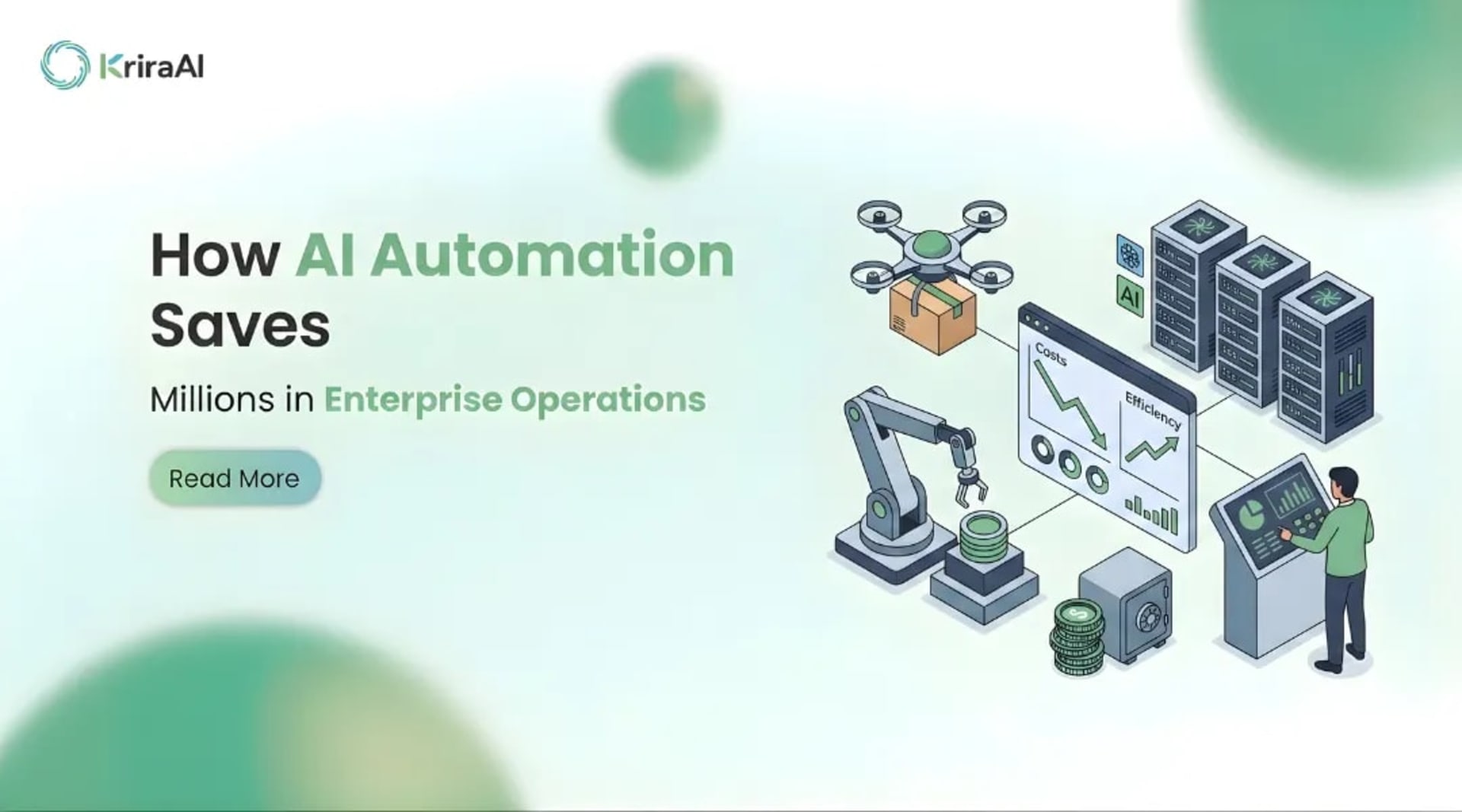
At 1:40 AM, a CFO once told me something I haven’t forgotten.
“Everything looks efficient on paper. But our costs keep rising. Quietly.”
That word - quietly - is the real problem.
Because enterprise inefficiency doesn’t explode. It leaks.
A few extra hours here. A delayed decision there. A mistake nobody notices until it compounds. By the time leadership reacts, millions are already gone.
And here’s the uncomfortable truth: most enterprises don’t have a cost problem.
They have an invisible inefficiency problem.
That’s where AI automation in enterprise operations changes everything.
Let’s keep this simple.
AI automation is not just about automating tasks. It’s about creating systems that think, learn, and improve decisions over time.
Traditional automation follows rules.
AI automation adapts.
Traditional Automation: Fixed workflows. If X happens, do Y. No flexibility.
AI Automation: Learns patterns. Predicts outcomes. Adjusts actions dynamically.
Think of it like this:
Traditional automation is a calculator.
AI automation is an analyst.
And analysts? They save money.
Let me be blunt.
Most cost leaks are hiding in plain sight.
Humans doing repetitive tasks = slow execution + higher cost.
One small mistake in finance or operations? It multiplies.
By the time reports are ready, the opportunity is already gone.
Teams working on the wrong priorities. Systems running inefficiently.
Quick question.
How many decisions in your organization are still based on outdated data?
Exactly.
This is where things get real.
Not theory. Not hype. Just what I’ve actually seen.
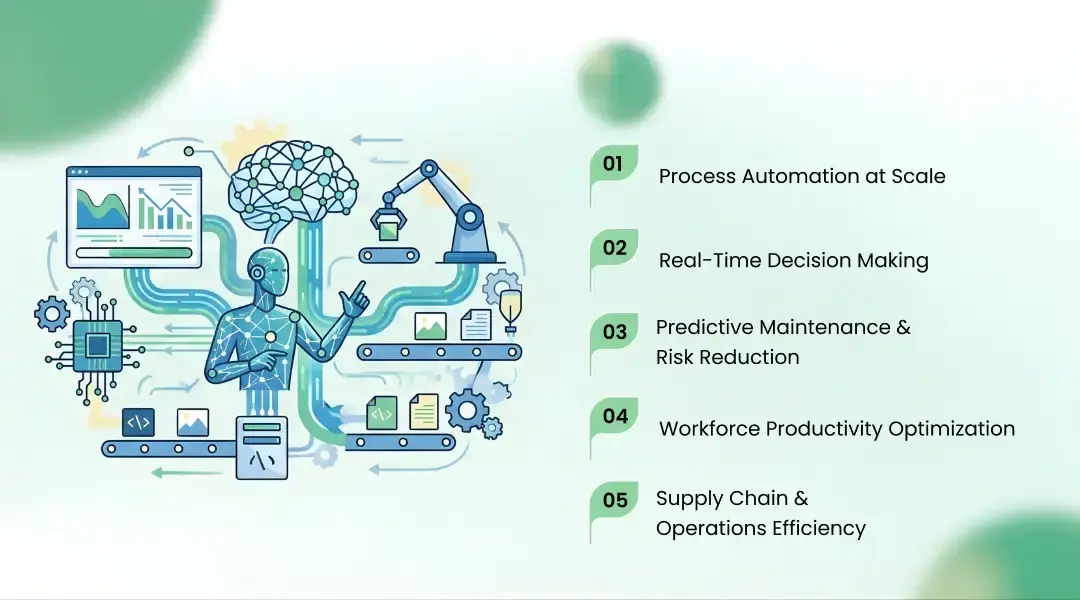
AI doesn’t just automate tasks, it scales them.
I worked with a logistics company where invoice processing took 12 minutes per file. Thousands of files daily.
After AI automation? Under 30 seconds.
Multiply that across a year.
Now multiply that across departments.
That’s not savings.
That’s transformation.
Most enterprises operate on delayed intelligence.
AI changes that.
Instead of waiting for reports, decisions happen in real-time.
Inventory adjustments. Fraud detection. Demand forecasting.
Instant.
And when decisions are faster, losses shrink.
Machines don’t fail randomly. They show signs.
AI catches those signs early.
I’ve seen manufacturing units reduce downtime by over 35% just by predicting failures before they happen.
No breakdowns. No emergency repairs. No production loss.
Just smooth operations.
Let’s address the fear.
No, AI is not replacing your workforce.
It’s removing the work they shouldn’t be doing.
Repetitive tasks disappear. Decision-making improves. Productivity spikes.
One client reduced operational workload by 40% without cutting a single employee.
They simply made their team… smarter.
Supply chains are messy.
Too many variables. Too many dependencies.
AI brings clarity.
Demand prediction. Route optimization. Inventory balancing.
And suddenly, waste drops. Costs stabilize. Margins improve.
This is why AI for enterprise operations is no longer optional.
It’s inevitable.
Let’s ground this in reality.
Automated invoice processing, fraud detection, and financial forecasting.
AI-driven agents handling 70–80% of queries without human intervention.
(Yes, customers still feel heard. That part matters.)
Predictive maintenance + quality control = fewer defects, less downtime.
Patient scheduling, diagnostics support, and operational efficiency improvements.
These aren’t experiments.
They’re already happening.
Here’s where most enterprises get stuck.
They think automation = solved problem.
It’s not.
Traditional: Rule-based
AI: Data-driven and adaptive
Because rules break.
And when they break, systems stop.
AI doesn’t break the same way.
It learns.
Let’s talk numbers.
Because at the end of the day, that’s what matters.
Initial investment: Moderate to high
Operational savings: Exponential over time
A mid-sized enterprise invests $200K in AI automation.
Within 12 months:
Reduces manual labor costs by 30%
Cuts error-related losses by 25%
Improves operational efficiency by 40%
Net impact?
Millions saved over 2–3 years.
That’s AI automation ROI.
And yes, this is where choosing the right Best AI development Company makes all the difference.
Let’s not pretend this is easy.
It’s not.
Bad data = bad outcomes.
Legacy systems don’t always play nice.
Upfront investment scares leadership.
But here’s the shift:
The cost of not implementing AI is often higher.
I’ve seen projects fail.
And I’ve seen them succeed.
The difference? Approach.
Identify high-impact processes
Audit your data readiness
Start small, scale fast
Measure ROI continuously
Optimize and expand
Not every vendor understands enterprise complexity.
You need a partner who builds solutions, not just sells tools.
That’s where Enterprise AI Assistant development services come into play.
Custom-built. Context-aware. Designed for your operations.
Let me say something bold.
The future isn’t AI-assisted enterprises.
It’s autonomous enterprises.
Systems that:
Make decisions
Optimize processes
Predict outcomes
Without constant human intervention.
We’re not fully there yet.
But we’re closer than most people think.
AI automation isn’t about technology.
It’s about control.
Control over costs. Control over operations. Control over outcomes.
And if there’s one thing I’ve learned after years in this field…
The companies that win are the ones that act before inefficiencies become visible.
So the real question isn’t:
“Can AI save money?”
It’s this:
How much are you losing by waiting?
Costs vary based on complexity, but most enterprise projects range from $50K to $300K initially, with significant long-term savings.
Yes. Mid-sized companies often see faster ROI because inefficiencies are easier to fix and scale.
Typically within 6–18 months, depending on implementation scope and process optimization.
Start with repetitive, high-volume tasks like data entry, customer support, and reporting workflows.
No. It enhances productivity by removing repetitive work, allowing teams to focus on strategic tasks.
Founder & CEO
Divyang Mandani is the CEO of KriraAI, driving innovative AI and IT solutions with a focus on transformative technology, ethical AI, and impactful digital strategies for businesses worldwide.